


Assessing the Impact of the 1.1 Percent Statutory Levy
I remember reading the consultation drafts for the statutory levy back in 2023 and assuming the final number would land somewhere softer than it did. The voluntary Research, Education and Treatment scheme — the predecessor — had collected around £50 million in 2023/24, and 94 percent of that came from just four operators. The remaining 96 percent of the licensed industry was contributing pocket change. When the Department for Culture, Media and Sport set the statutory online rate at 1.1 percent of gross gambling yield, it wasn’t a tweak. It was a structural rewrite of how the regulated sector funds harm reduction.

“The 2025 reforms represent a decisive shift in UK gambling regulation and with the introduction of a statutory levy, targeted stake limits, and enhanced consumer protections, the UK is positioning itself as a global leader in responsible gambling regulation,” Clifford Chance’s IP team wrote in their 2025 commentary on the reforms. That word — “decisive” — is doing a lot of work. The levy changes who pays, how much, and to whom. It also changes the shape of operator economics in ways that punters feel without ever seeing the levy line item.
Levy Rates by Sector: Online 1.1 Percent, Land-Based 0.5 Percent, AGCs and Bingo 0.2 Percent
The levy isn’t a single number. It’s a tiered structure across gambling sectors, scaled roughly to operator margin and harm exposure. The headline numbers: remote (online) operators pay 1.1 percent of GGY. Land-based casinos and betting shops pay 0.5 percent. Adult Gaming Centres, on-course bookmakers and bingo halls pay 0.2 percent. Society lotteries and external lottery managers pay 0.1 percent.
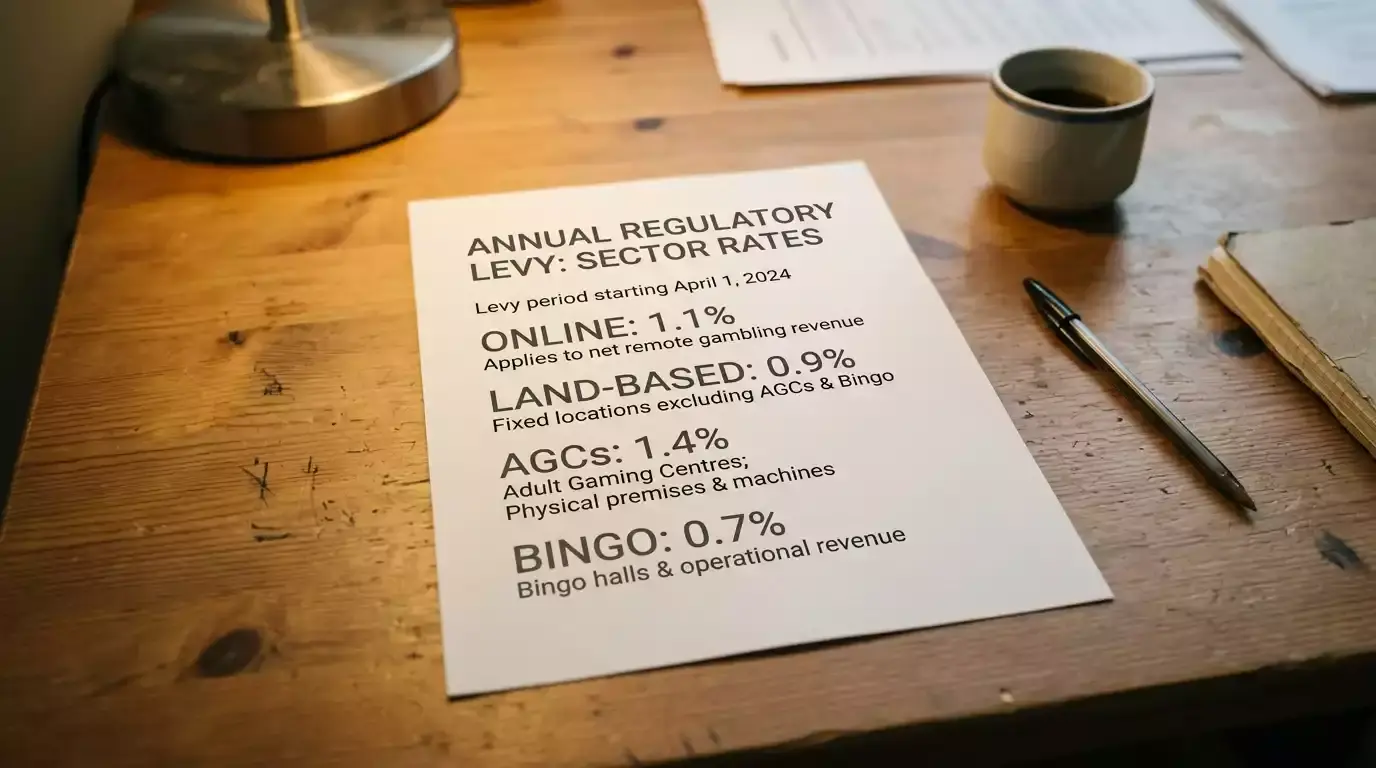
The rate disparity reflects two things. The first is that online sectors have higher margins and generate the largest share of total UK GGY — £7.8 billion in remote alone for FY 2024/25, a 13.1 percent rise year over year. Online betting GGY within that came in at £2.6 billion. A 1.1 percent levy on those numbers raises serious money. The second is that DCMS analysis associated the online sector with disproportionately higher harm exposure relative to other gambling formats, justifying the elevated rate.
The tiered structure has a side-effect that took the industry a few months to fully absorb. Operators that span multiple sectors — a brand with both online and land-based betting shops, for instance — have to calculate the levy on a sector-by-sector basis rather than as a single blended figure. Compliance reporting got noticeably more complex, particularly for the larger groups that integrate sectors operationally but now need to report them separately for levy purposes.
The £90-100 Million Annual Target and Where the Money Goes
The DCMS target for the levy is £90 to £100 million annually by 2027, ramping from the first collection year. The funds are earmarked for three categories: research into gambling and gambling harms, prevention programmes including education and awareness campaigns, and treatment services for problem gambling. The split between the three has been debated extensively — early drafts proposed a roughly equal three-way share, but the final structure weights treatment more heavily because NHS gambling clinics had been struggling with capacity constraints under the voluntary system.
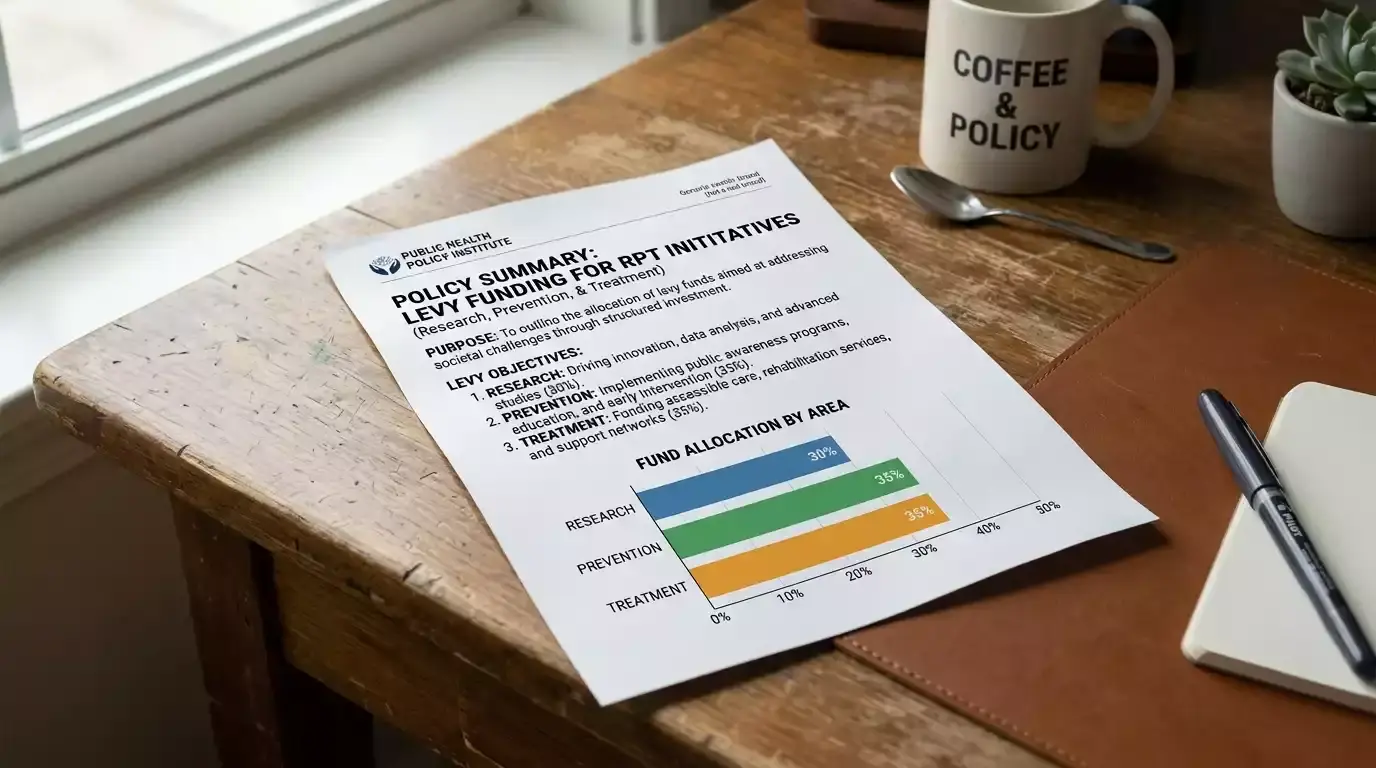
NHS England’s specialist clinic network is one of the visible beneficiaries. The 34 percent rise in gambling treatment presentations between 2019 and 2024 had already stretched the existing infrastructure, and clinics were waiting on year-by-year funding commitments that made strategic planning difficult. The statutory levy provides multi-year visibility — funds are committed under statute, not negotiated each year — which lets the clinical infrastructure plan capacity expansion properly.
Research grants are distributed via UK Research and Innovation and via direct DCMS-administered routes. The research category covers prevalence surveys, longitudinal harm research, evaluation of interventions, and underlying economic studies of gambling participation. Prevention sits with GambleAware and successor organisations, funding awareness campaigns, harm-reduction tools, and outreach work to younger demographics where the PGSI 8+ figure runs as high as 19 percent among under-25 gamblers.
Payment Mechanics: First Payments Due 1 October 2025
The Gambling Levy Regulations 2025 set the first payment date as 1 October 2025. Operators are required to report their GGY for the qualifying period, calculate the applicable levy at their sector rate, and remit the funds to a designated central account administered by HM Revenue and Customs.

The reporting cadence is annual, but operators are required to make their first payment from operating activity covering the period from 6 April 2025 onwards. The April-to-October window meant the first payment captured roughly six months of activity, a transition arrangement that smoothed the introduction of the regime without giving operators a free year. From 2026 onwards, the levy operates on a full annual cycle aligned to the fiscal year.
Compliance enforcement sits with the Gambling Commission, working in coordination with HMRC. Operators that under-report GGY face the standard penalties under their licence conditions — fines proportionate to the under-reporting, public regulatory action where the conduct is serious, and ultimately licence reviews for repeat or significant breaches. The deterrent is meaningful because UKGC licence loss is commercially fatal for any operator focused on the UK market.
Who Actually Pays: Operator Margin or Punter Prices?
The economic question every levy regime eventually faces is who actually bears the cost. The legal answer is the operator. The practical answer depends on the competitive structure of the market segment.

In high-margin segments like online slots — which generated £745 million in Q1 2025/26 alone, up 14 percent year over year — operators have margin headroom to absorb a 1.1 percent levy without changing the customer-facing product. The hit lands on operating profit, which matters at the corporate level but doesn’t change return-to-player percentages or odds offered to customers.
In lower-margin segments like sports betting — particularly cricket, where the underlying overrounds on competitive markets like Test match-winner books are already in the 5 to 7 percent range — the 1.1 percent levy is a more meaningful slice of operating margin. Operators in this segment have two adjustment levers: tighten promotional spend (which most operators have done, with bonus offers visibly reduced across 2025) or quietly widen overrounds on lower-traffic markets where competitive pressure is thinner.
The honest assessment is that some of the levy is passing through to customers in the form of marginally tighter prices on niche cricket markets, while most is absorbed at the operator margin level in the high-volume mainstream markets where competition between operators caps how much can be passed through. Smaller operators — those with thinner balance sheets and weaker pricing power — have been more visibly affected, with some niche operators consolidating or exiting the UK market over the levy transition period. The larger operators have absorbed it as a cost of business.
The other half of the 2025 reform agenda — the customer-facing side — sits in the affordability check regime, which I cover in my piece on the £150 threshold and what happens behind it.
