

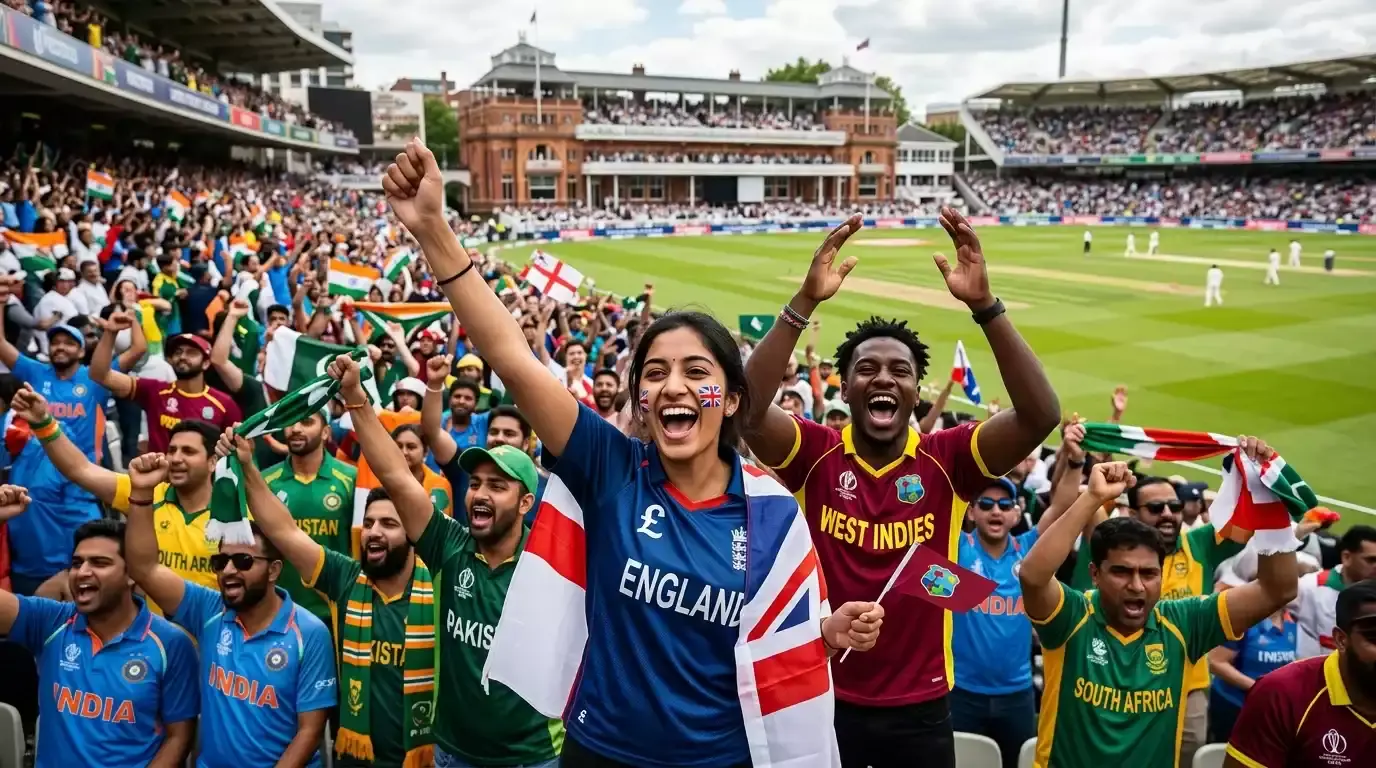
Year-Round Liquidity Driven by UK Cricket Demographics
I spent an afternoon in a Bradford curry house during the 2024 Pakistan-Sri Lanka series and watched the place erupt three times in 90 minutes — once for a wicket, twice for boundaries. The match was being played on the other side of the world at 6 in the morning local Karachi time. The Bradford crowd was wide awake at 1pm UK time, fully engaged with cricket that had no formal connection to England, no UK broadcaster running it as a marquee event, and no commercial attention from the mainstream UK sports media. The cricket was being followed because the audience had personal connections to it, and those connections drove demand that British sports calendars don’t capture.
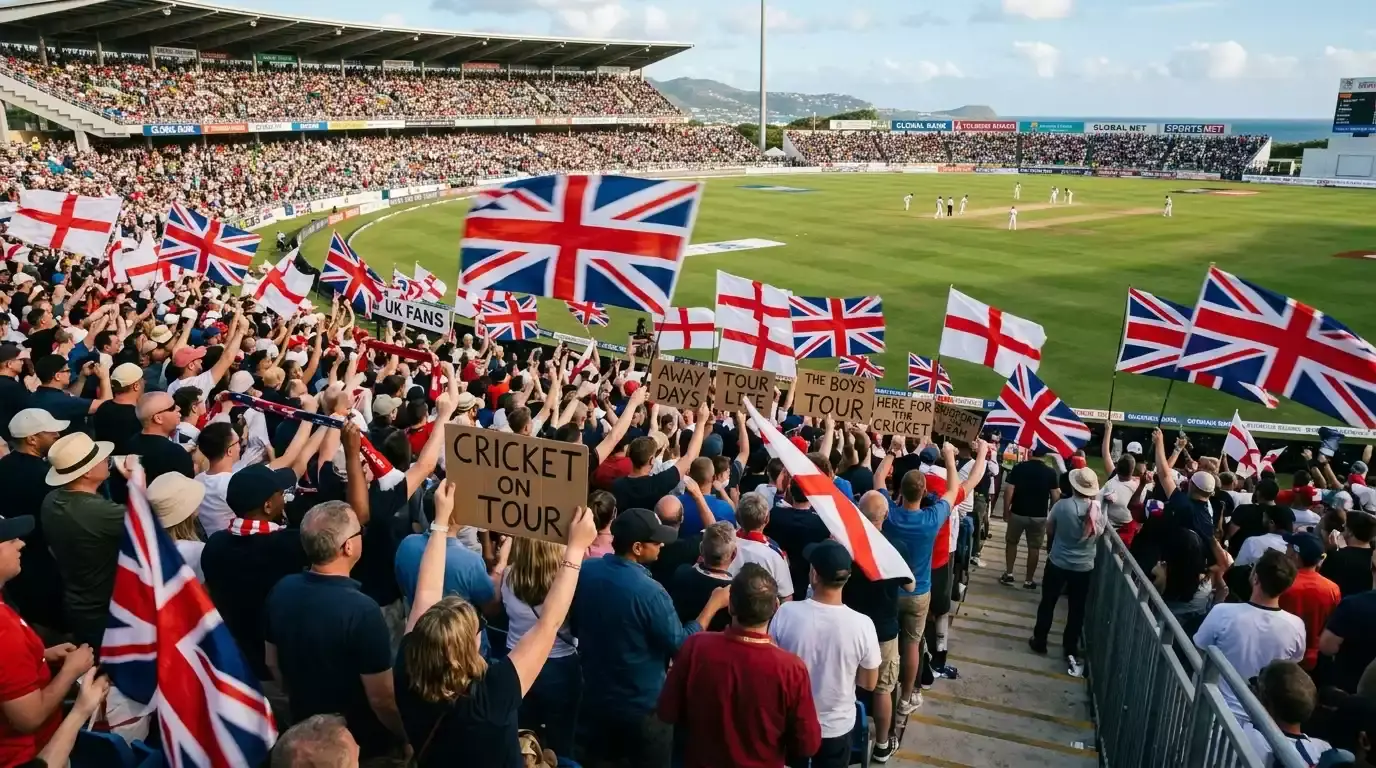
The structural insight is straightforward: UK cricket demand is shaped by diaspora communities as much as by the formal English cricket calendar. South Asian, Caribbean and other multicultural communities follow their home cricket calendars closely, and that following sustains UK betting volume on international fixtures that would otherwise sit far outside the regulated sector’s commercial focus. The 12.7 million UK online gambling accounts as of Q1 2025/26 — up 10 percent year over year — include a meaningful share of users whose betting profile is built around international cricket rather than around football or domestic English fixtures.
The Communities That Power Year-Round Demand
The South Asian community in the UK numbers in the millions across communities with origins in India, Pakistan, Bangladesh and Sri Lanka. Cricket sits at the centre of cultural identity in all four origin nations, and the connections to home-nation cricket remain strong across generations of UK residents. Indian Premier League matches, Pakistan Super League matches, Bangladesh Premier League matches and Sri Lanka’s Lanka Premier League all draw substantial UK viewership, with associated betting demand on UK-regulated sportsbooks.
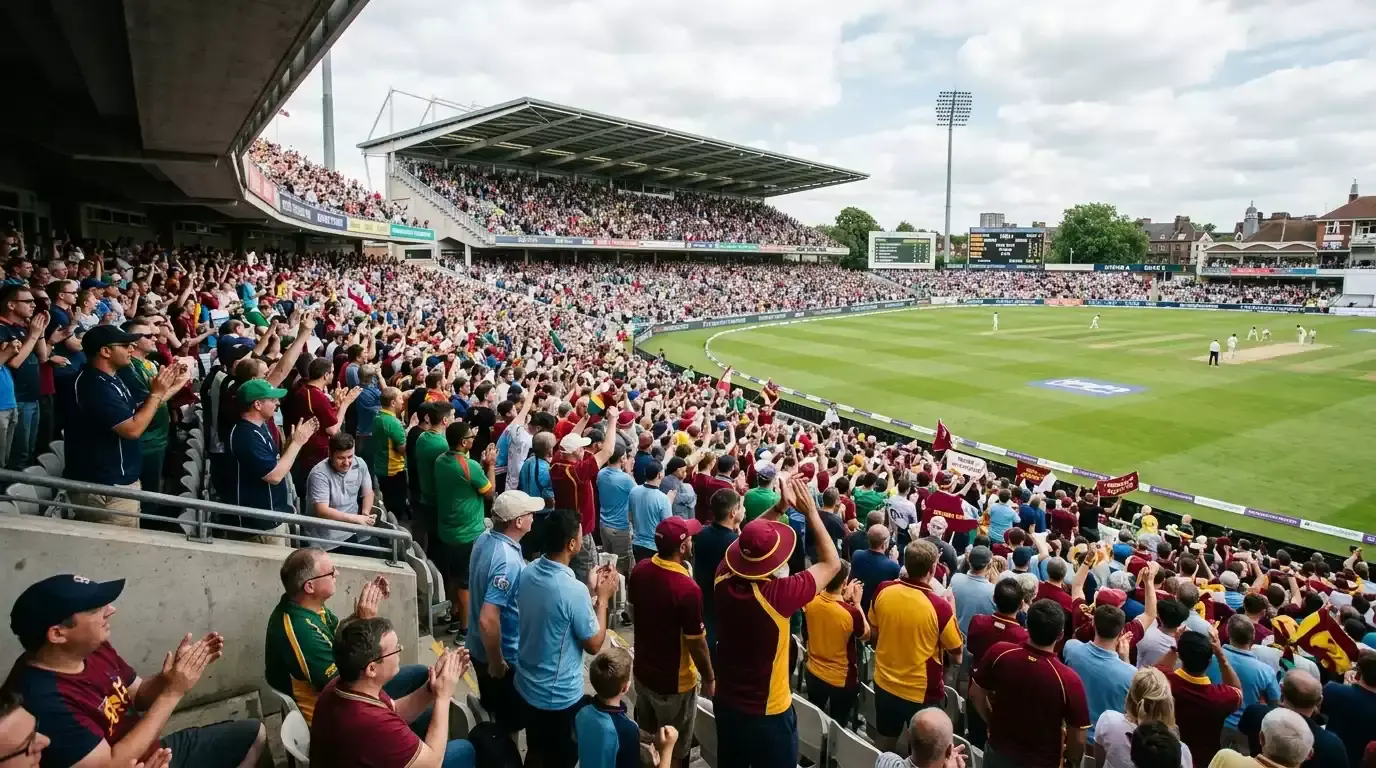
The Caribbean community in the UK — primarily from Jamaica, Trinidad, Barbados and Guyana — has different cricket allegiances but a similar pattern of engagement. West Indies international fixtures, the Caribbean Premier League, and bilateral series involving Caribbean nations all generate UK viewing and betting volume that the wider British sports audience doesn’t share. The audience composition is different to the South Asian segment, but the structural pattern — engagement with cricket from home nations, sustained across multiple generations of residency — is comparable.
The Australian, New Zealand and South African communities in the UK are smaller but contribute additional demand layers. Australian cricket — particularly the Big Bash League and bilateral fixtures — draws attention from the expatriate Australian community, with associated betting volume on UK books that price the Big Bash deeply. The cumulative effect across all these communities is that UK cricket-following audiences are genuinely diverse, with engagement patterns that follow community connections rather than purely commercial UK marketing.
Tournaments They Follow Outside the UK Season
The international tournament calendar that runs alongside the English domestic season provides the backbone of multicultural community engagement. The IPL runs March to May, before the English domestic season opens. The Pakistan Super League sits in February to March. The Big Bash runs December to February. The SA20 in South Africa and the ILT20 in the UAE overlap with the Big Bash in different timings.

Bilateral international series running between cricket-following nations provide additional year-round demand. India playing Australia in any format draws UK viewership across both South Asian and Australian diaspora communities. England touring the subcontinent draws engagement across multiple communities simultaneously. ICC tournaments — World Cups, Champions Trophy, World Test Championship Final — are the highest-engagement events, drawing UK audiences across virtually every cricket-following diaspora community to the same fixtures.
Domestic competitions in cricket-following nations carry through-the-year demand at lower intensity. The Ranji Trophy in India — first-class cricket equivalent to the County Championship — has small but engaged UK followings within the Indian diaspora. The Quaid-e-Azam Trophy in Pakistan operates similarly within the Pakistani diaspora. UK-licensed sportsbooks don’t always price these competitions at depth, but the audience interest exists and represents an under-served segment that some operators have begun to address.
Betting Implications: Liquidity, Pricing, In-Play Coverage
The practical consequences of multicultural audience composition show up across UK cricket betting markets in three ways. The first is liquidity. UK-licensed sportsbooks support deeper markets on IPL matches than they do on equivalent foreign sports leagues without comparable diaspora following. An IPL group-stage match in May can carry the same depth of pre-match and in-play markets as a Vitality Blast match, despite the IPL being a foreign league with no formal English cricket connection.

The second is pricing competitiveness. Multiple UK operators compete for diaspora community betting volume on the major international cricket fixtures, which produces tighter prices than would prevail in a market with only commercial English cricket interest. Match-winner overrounds on marquee IPL fixtures sit at the same 5 to 7 percent range as Vitality Blast matches, despite the IPL being a foreign competition. The competitive intensity of operator targeting of diaspora communities sustains pricing that the underlying English cricket interest alone would not.
The third is in-play coverage. The in-play markets on major international cricket fixtures involving home nations of UK diaspora communities are deeper and more dynamic than the equivalent markets for matches without comparable audience following. Books invest in trader resources and pricing engines that can support these markets at high quality because the betting volume justifies the investment. The cumulative effect is that UK punters following international cricket through UK-regulated operators get a product that closely matches what they would find from operators in the home cricket nations themselves.
Regulator Response: Multilingual Safer Gambling Messaging
The UK Gambling Commission has progressively recognised the multicultural composition of the UK gambling audience in its consumer protection work. Safer gambling messaging — the “when the fun stops, stop” campaign and successor materials — has been adapted into multiple languages reflecting the major diaspora communities. Hindi, Urdu, Bengali, Punjabi, Tamil and other South Asian languages now feature in operator compliance materials, with mandatory translation requirements for certain consumer protection content.
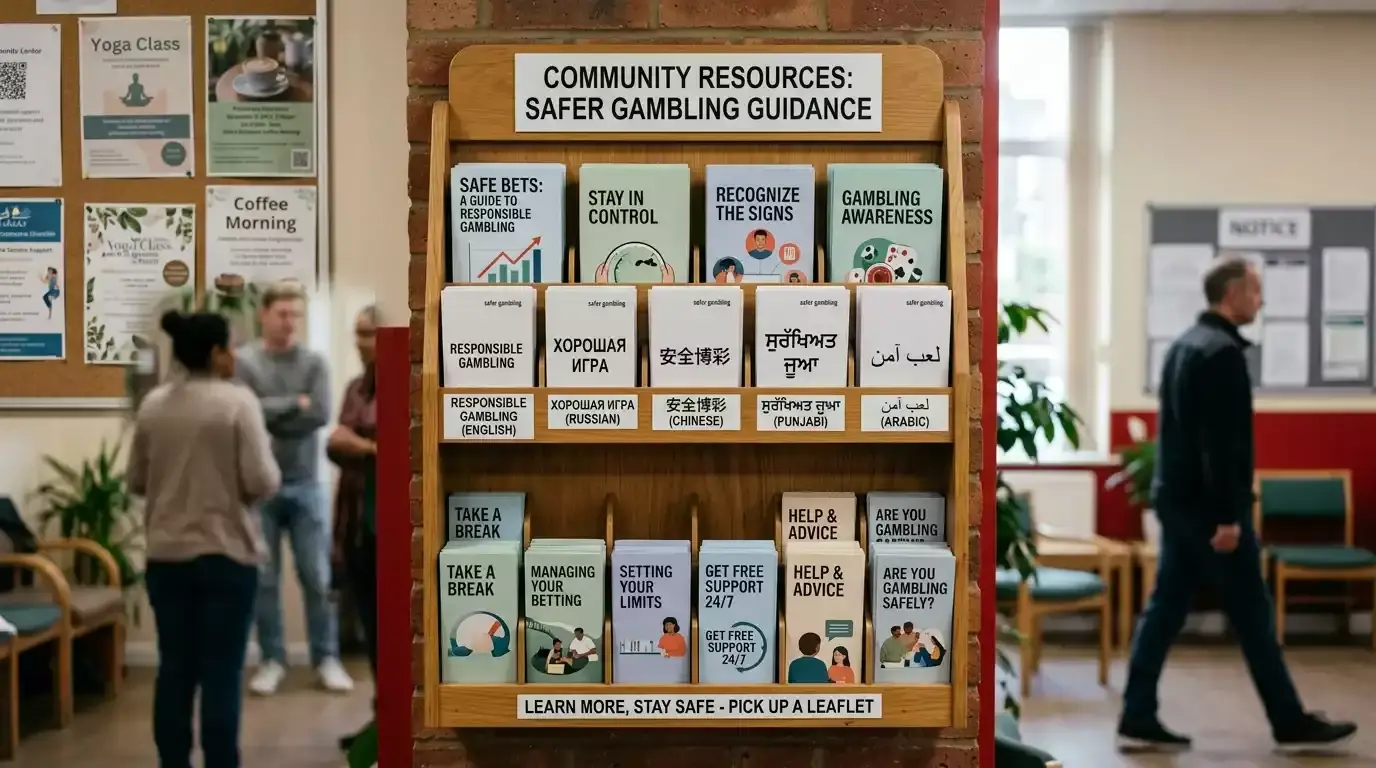
GambleAware and successor organisations have expanded outreach work into community-specific channels. Cricket-following communities receive harm-reduction content through community media, religious organisations and cultural events as well as through general mainstream channels. The recognition that gambling harm has different cultural texture in different communities — different stigma profiles, different help-seeking patterns, different family-engagement norms — has shaped how the harm-reduction infrastructure presents itself to multicultural audiences.
The Cricket Regulator and ECB have engaged with multicultural community partners on integrity outreach. Player education includes content on the specific approach patterns that target cricketers from particular cultural backgrounds, with awareness of the family and community pressures that can intersect with corruption attempts. The institutional infrastructure has grown to match the audience composition, although the work remains incomplete and some communities are better served than others by the current arrangements.
The way this year-round multicultural demand structures the actual UK cricket betting calendar is the focus of my piece on the UK cricket betting calendar and why there is no real off-season.
