


Targeting High Liquidity Pools in Ashes Betting Markets
I track the way books open prices on Test series, and the Ashes is always the moment the market wakes up. The 2025-26 series was no exception — the moment England’s squad was announced for the Brisbane Test the front-page books had outright lines, individual Test lines, top run-scorer markets, top wicket-taker markets, urn-retention markets and series-handicap markets all live within an hour of each other. That’s not normal. For a typical bilateral Test series, books drip-feed markets over several days. The Ashes opens with the full menu because the demand is there to fill it.

This isn’t sentiment, it’s stake flow. The Ashes is the single most-bet Test series on UK sportsbooks, by a meaningful margin over any other red-ball cricket fixture. With Vitality confirmed as the England national kit back-of-shirt partner through the 2025-26 Ashes and beyond, the series has commercial reach that extends well beyond traditional cricket audiences — which means the betting books face a different liquidity profile to a routine New Zealand tour or a low-key Test against Sri Lanka.
Series Outright vs Individual Test Markets
The first decision an Ashes punter makes is which timescale to bet on. The series outright market resolves at the end of the fifth Test, weeks or months after you place your bet. Individual Test markets resolve in five days each. The two markets answer related but distinct questions.
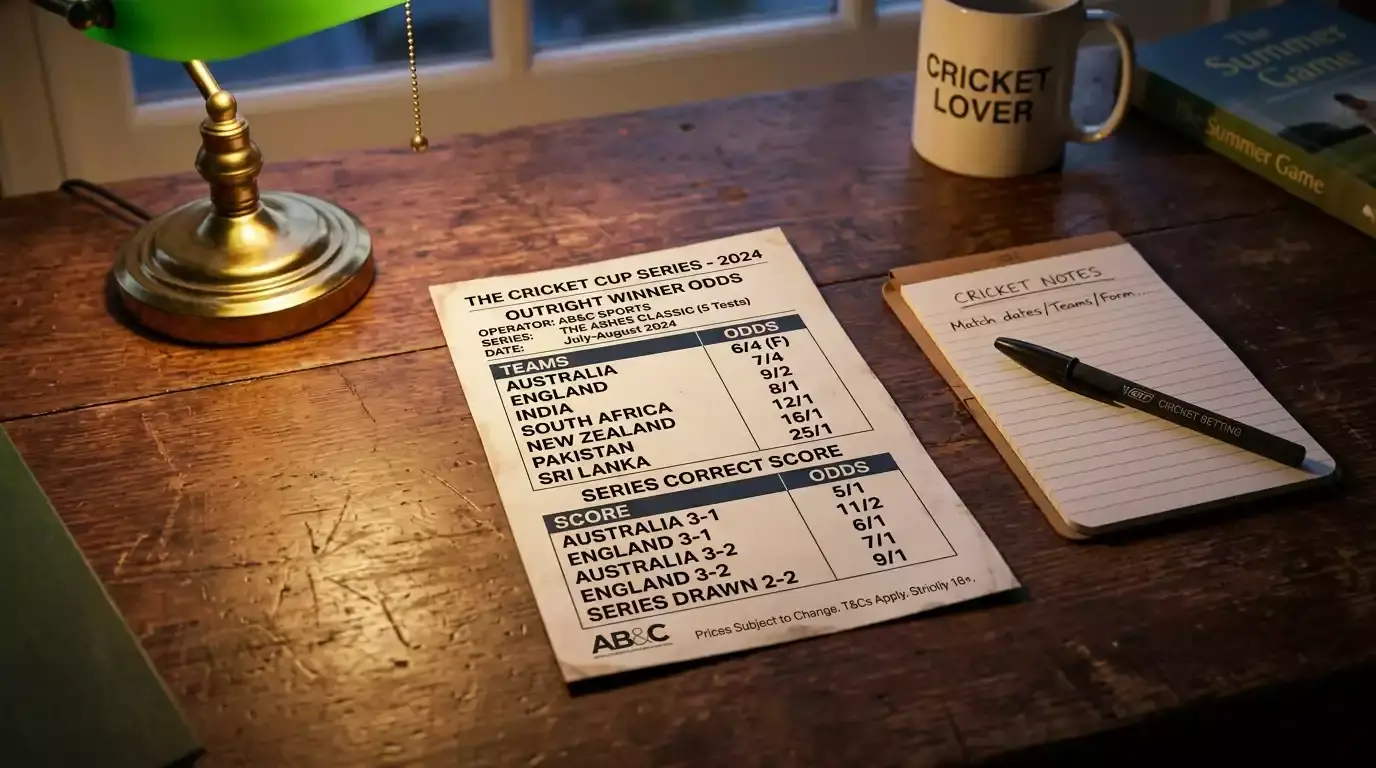
Series outright pricing tends to favour the home side. England at home start as favourites in nearly every recent series, regardless of recent form, because conditions matter enormously in five-day cricket and the visiting side is always adjusting to climate, pitch and crowd. Books typically open the home favourite somewhere between 8/13 and 4/6 for an outright series win, with the away side at 6/4 to 7/4 and the draw market somewhere around 7/1 to 12/1. The home edge isn’t just historical — it shows up in the underlying win-rate data with enough consistency for the book to price it confidently.
Individual Test markets carry shorter timescales and different value patterns. The first Test of a series is the most aggressively priced because both sides are unknowns at that point — books haven’t seen how the visiting top order copes with the home seam attack, or how the home spinners are performing on the early surfaces. The first Test often has the widest line spread between sportsbooks, which is where price-shopping pays. By the third Test the market has settled, the data is in, and pricing tightens across operators.
The trade-off between series and individual is straightforward: series bets compound your read across five matches and pay better if you’re right, individual bets reset every week and give you five chances to be wrong without ruining the entire campaign. Most disciplined punters I know split stakes — a smaller series outright and stake-managed individual bets.
Ashes Series Handicap and How the Lines Move
The series handicap market converts the five-Test series into a points-based race, typically with the favourite handicapped by 1.5 or 2.5 Test wins. England 1.5 handicap means England need to win the series by two or more clear Tests for the bet to land. A 1-1 series with three draws settles handicap bets against England at -1.5.
Handicap markets move in a way that tells you a lot about how the book is reading the series. A drift from -1.5 to -2.5 on England usually follows a sequence of two clear England wins in the first two Tests — the book is acknowledging that the rest of the series is now harder to call cleanly. A shortening on the same handicap suggests the book sees the favoured side struggling. Watching handicap moves alongside individual Test results is one of the most reliable ways to read where the book’s risk really sits.
The market that I keep an eye on is the “winning margin” grid — books that publish prices for 3-0, 3-1, 3-2, 4-0, 4-1, and 5-0 outcomes from a five-Test series. These are essentially exotic outright bets, and the pricing is much wider than the headline outright market. A 3-1 home win bet at 9/2 in a series where the home outright is at 8/13 implies that the book sees a meaningful drift in probability between “England win the series” and “England win the series by exactly two clear Tests”. If your read on the matchups says one Test is significantly tighter than the others, the winning-margin grid is where that read pays.
Home Advantage Across Recent Ashes Series
Home advantage in the Ashes is real, measurable and partly conditioned by the surfaces each board prepares. England home Ashes series since 2001 have produced a clear pattern of English wins on seam-friendly surfaces with overhead conditions; Australia home Ashes series since 2001 have produced clean Australian wins on pace-friendly, bouncy surfaces at venues like the WACA and the Gabba. The cross-over result — an away win in either direction — has been rare and tends to coincide with specific match-up advantages that override the venue effect.

The data needs caveats. Five-Test series produce small samples, and a single bad first Test can swing an entire outright. England’s 2010-11 away win and Australia’s 2013-14 home win both followed scripts that were partly format and partly squad composition. The home edge as a structural factor is real, but the size of the edge in any given series depends on first-choice fast-bowling availability, the composition of the captain group, and the specific pitch preparation strategies the host board commits to.
For a punter using historical home advantage as part of the read, the figure to lean on is roughly 60 to 65 percent home win rate across the last 25 years of Ashes Tests, against a long-term aggregate that’s closer to 55 percent for Test cricket as a whole. The Ashes premium on home advantage exists, but it’s smaller than casual punters assume.
Series Top Run-Scorer and Top Wicket-Taker: Pricing the Awards
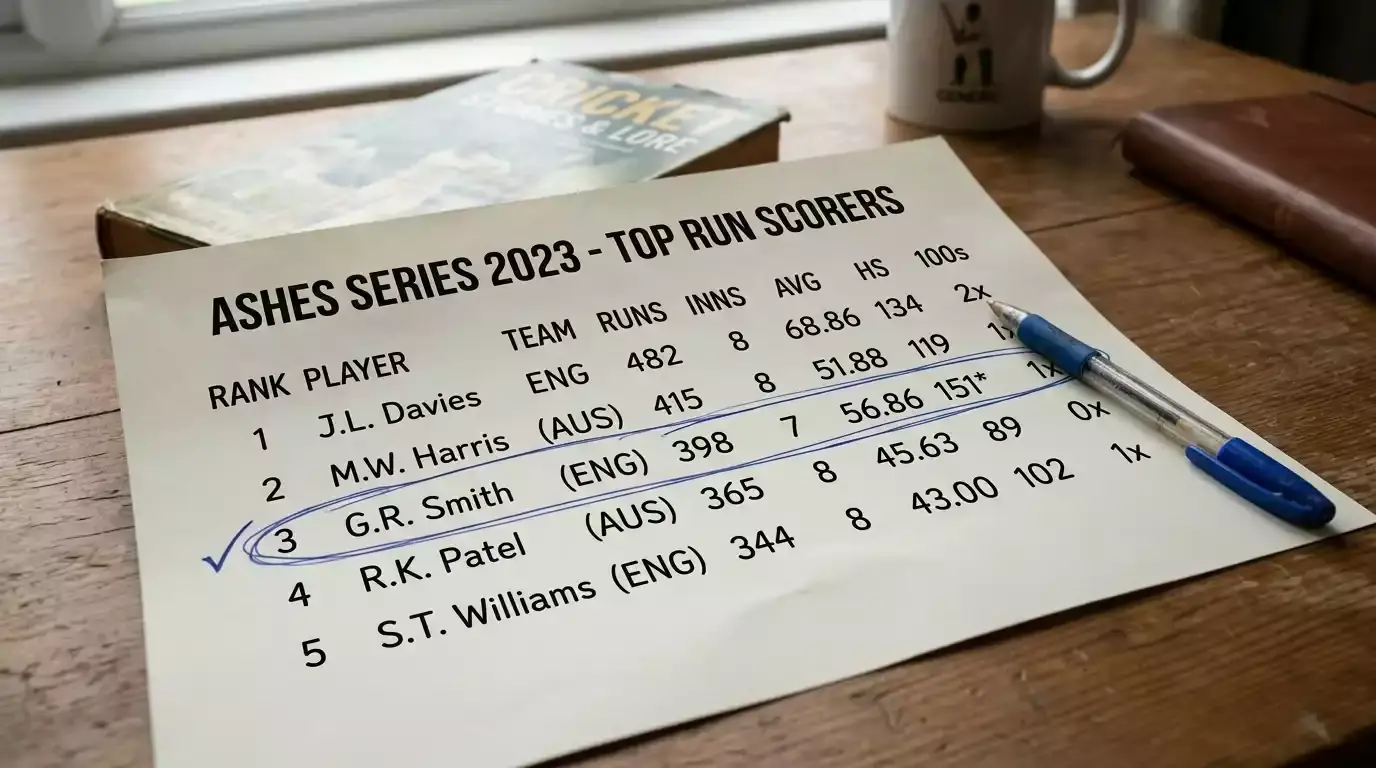
Top run-scorer and top wicket-taker of the series are season-long awards markets that reward concentrated, durable form. The top run-scorer typically comes from the top three of one batting line-up — opening pairs and number threes get the bulk of the deliveries faced across five Tests, and the cumulative count favours them structurally. Books price this reality in, but not perfectly. A middle-order batter who is genuinely the best in either side will be priced at 5/1 or 6/1 when their fair price might be closer to 4/1 — the books over-weight opening-position bias and under-weight the quality differential.
Top wicket-taker is the more interesting market. The natural favourites are the first-choice opening bowlers of the home side, who get the new ball under helpful conditions across five Tests. Books anchor on this, but the actual top wicket-taker is often the fourth or fifth bowler who comes on at the right moments and bowls long spells on flat surfaces. A pace bowler from the away side is typically priced at 9/2 or 10/1 for top wicket-taker even when their underlying probability is closer to 4/1, because the book defaults to home-side seam bowlers.
Both markets pay handsomely if you back the right name early. The downside is they resolve at the end of the series, which is a long lock-up of capital. Bankroll discipline matters — these are season-defining bets, not week-to-week ones.
Drawn Series and Urn Retention: A Specific Settlement Rule
The Ashes urn isn’t a sporting trophy in the formal sense. It’s a symbolic artefact held permanently at Lord’s, but the “holder” of the Ashes for betting purposes is the side that last won the series. A drawn five-Test series — 2-2 with one draw, or 1-1 with three draws — means the holder retains the urn. This matters for any settlement on “who holds the Ashes after this series” markets.

The convention across UK sportsbooks is that a drawn series settles urn-retention bets in favour of the previous holder, but settles series-winner bets as a void or as a separate “no winner” outcome depending on the operator. Read the rules before placing a series outright — some books treat 2-2 as a winning bet for the holder (because they retain), others treat it as a refund. The distinction is worth checking before the fifth Test starts and the implication of the result becomes obvious.
For Test markets where the draw probability is the dominating factor in pricing, the more flexible two-way alternative is covered in my article on draw no bet in Test cricket.
