


Evaluating UK Cricket Integrity Alert Frequencies
Cricket is the fourth most popular sport in the world by audience and roughly the fortieth by global commercial value. In 2025 it produced 59 suspicious matches in the Sportradar integrity dataset — more than triple the previous year and more than triple any annual level going back to 2021. That asymmetry is the story this entire article is about.
I have watched cricket integrity stories accumulate for eight years from the angle of a working bettor, and the pattern is consistent. Cricket attracts a disproportionate share of global match-fixing because the sport’s structure makes it attractive to corruptors. There are an enormous number of discrete betting events per match — every ball, every over, every wicket, every partnership is its own settlement. Lower-tier franchise leagues operate with weak governance and weak salaries. Online betting on cricket is dominated by markets in jurisdictions where regulation is patchy and enforcement minimal. Corruption finds the path of least resistance, and in global sport that path frequently leads through cricket.
The flip side: the integrity infrastructure around cricket is among the most sophisticated in any sport. The ICC Anti-Corruption Unit has been operational for a quarter of a century. The Sportradar integrity service watches every televised cricket match in the world. The ECB Cricket Regulator, an independent body since 2023, sits over English domestic cricket with the full backing of the country’s law-enforcement and disciplinary machinery. UK-licensed operators are required to report unusual betting patterns to the Commission. The system works imperfectly, but it works, and it catches more than the public realises.
This piece walks the data, the institutions, the codes, and the cases that matter for a UK cricket bettor in 2026.
The 2025 Integrity Numbers: 1,116 Suspicious Matches, 59 in Cricket, 56 Percent AI Lift
The most informative dataset on global sports integrity comes from Sportradar’s annual Integrity in Action report. The 2025 edition, published early in 2026, is the document I open first when anyone asks me how seriously to take cricket integrity right now.
The headline numbers across all sports: 1,116 suspicious matches flagged in 70 sports during 2025, a 1 percent decline from 2024. The system monitored more than one million matches in total, meaning 99.5 percent of monitored events were judged free from suspicion. That ratio is the part everyone focuses on first, and it is genuinely encouraging in aggregate.
The cricket numbers are the part that should stop a UK bettor’s scrolling. 59 suspicious matches in cricket during 2025. The report described that figure as more than triple any level going back to 2021. In a single calendar year, cricket moved from a sport that produced low-double-digit integrity alerts to a sport producing a number that demands a serious institutional response. Whether that reflects more fixing or better detection is one of the open questions in the integrity community. The honest answer is probably both, but the trend is unmistakeable.
Sportradar attribute a significant portion of the lift to their AI-driven detection system, the Universal Fraud Detection System Artificial Intelligence layer — UFDS AI. The system identified 56 percent more suspicious matches in 2025 than in 2024 by flagging anomalous patterns that human analysts had previously missed. The absolute number of matches flagged by UFDS AI rose from 436 in 2024 to 682 in 2025. The interpretation is that the technology is doing more of the surveillance work and pulling additional cases out of the pattern data that human review alone would not have caught.

Education matters in the long-term picture. Sportradar’s Integrity Education programme reached more than 34,000 participants in 2025, up 25 percent on 2024. The audience includes players, coaches, support staff, officials, and increasingly young athletes entering professional structures. The thesis is that fixing is sustained by recruitment, and recruitment is hardest in environments where players already understand the rules, the penalties, and the surveillance machinery they would be running against.
The regional picture: Europe saw 385 suspicious matches in 2025, down 66 on the previous year and continuing a two-year decline. The contrast with cricket’s trajectory is sharp and structural — European football integrity has been the subject of intense effort for a decade and the results are starting to show. Cricket, with its more recent investment in integrity infrastructure, is still catching up.
Andreas Krannich, who leads Sportradar’s integrity services, framed the 2025 picture by noting that the relative stabilisation of suspicious match numbers is encouraging while reinforcing the importance of continued vigilance, and that match-fixing remains an evolving threat requiring sustained investment in technology, intelligence, education and collaboration. That is the official position. It also matches what I see from the bettor’s side of the table — the surveillance is real, it is improving, and it does not catch everything.
The ICC Anti-Corruption Unit and Where International Cricket Is Watched
The ICC Anti-Corruption Unit is the longest-running institutional response to cricket fixing. It was established in 2000 in the immediate wake of the Hansie Cronje scandal, the case that pulled the lid off the relationship between international cricket and Asian fixing syndicates. Twenty-six years on, the ACU is one of the most experienced anti-corruption operations in any sport.
The unit’s remit is international cricket and ICC events. World Cups, Champions Trophies, the World Test Championship final, ICC qualifiers. Domestic leagues — the IPL, the Big Bash, the Vitality Blast, the County Championship — are the responsibility of the relevant national governing body and its own integrity infrastructure. The ACU does not police a Vitality Blast fixture. The ECB Cricket Regulator does.
What the ACU actually does at an ICC event is intensive. Players are required to declare their phones and personal devices. Player areas are physically secured against unauthorised access. ACU officers travel with teams, monitor team hotels, and maintain a 24-hour intelligence presence at every fixture. Players are required to report any approach by a corruptor — failure to report is itself a code breach punishable by a ban. The educational curriculum is mandatory and renewed annually.
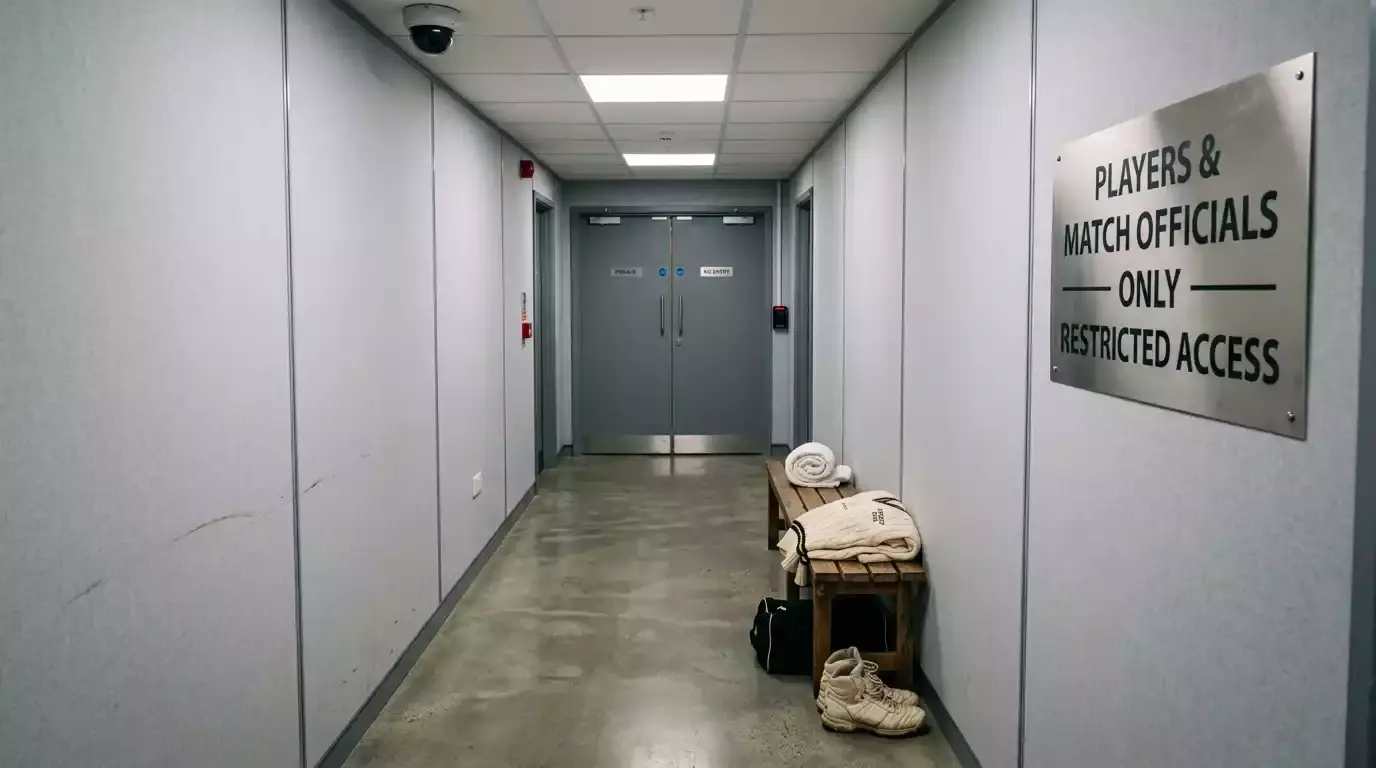
Alex Marshall, the unit’s general manager, has spent considerable public commentary explaining where the unit’s confidence sits and where its concern sits. The confidence: international cricket, watched by the ACU and the international media simultaneously, is genuinely safe. The concern, in his words: corruptors are constantly looking for routes into the game, particularly in badly-run lower-level franchise leagues, and the units that monitor those leagues are smaller, less experienced, and operating in jurisdictions where governing bodies can be uneven in their seriousness.
The data backs the assessment. The Sportradar 2025 suspicious-matches dataset shows the cricket integrity problem is concentrated below the international tier. The handful of suspicious matches that emerge at ICC events almost always involve a single player or a coordinated approach that gets caught early. The bulk of the 59 suspicious matches in 2025 sits in lower franchise leagues — leagues the ACU does not police and where the policing that exists is patchier. That structural gap is, in the ACU’s own framing, the single biggest integrity threat to the global game today.
The ECB Cricket Regulator: An Independent Body Since 2023
I remember the ECB announcement in 2023 that took most of cricket’s domestic integrity work out of the ECB itself. The move created the Cricket Regulator as an independent body, with its own director, its own powers, and a deliberate firewall from the commercial machinery of English cricket. Setting up the regulator was the single most important structural reform UK cricket has made on integrity in a generation.
The Regulator’s remit is wide. Anti-corruption — corrupt approaches, breach of the ECB Anti-Corruption Code, suspicious betting patterns. Anti-discrimination — formal complaints under the ECB Code of Conduct around discrimination on protected grounds. Doping — the testing programme and discipline for the English domestic game. Misconduct — broader player behaviour issues that fall outside the other categories. One body. Four pillars. A clear chain of authority that no longer runs through the commercial side of the ECB.

The Regulator’s first director was Dane Lewis, appointed in 2023, a former senior police chief with three decades of operational law-enforcement experience. The choice was deliberate. The job is investigative and disciplinary; the qualifications are policing and regulation, not cricket administration. The structure has held since launch, and the Regulator has been involved in the two highest-profile UK cricket integrity cases of the period — Brydon Carse in 2024 and Mugheez Ahmed Sheikh in 2025.
Chris Howard, the Regulator’s director on the Mugheez Ahmed Sheikh case in 2025, characterised the bribery attempt as a corrupt scheme that could have had serious implications for the integrity of cricket in England, Wales, and beyond. The framing matters. The Regulator does not treat domestic integrity cases as parochial concerns. A bribery attempt aimed at a county coach is, in the Regulator’s view, an attack on the wider integrity infrastructure that protects the international game as well.
Where the Regulator works particularly well: it has the power to bring disciplinary cases independently of the ECB executive. Where it works less well: its jurisdiction does not extend into individual contractual arrangements between clubs and players, and the line between regulatory matters and contractual matters is sometimes uncomfortable for the parties involved. Three years in, the model is broadly working. The cases that have come before the Regulator have been handled cleanly, with documented evidence, and outcomes that hold up to public scrutiny. That was not guaranteed.
The ECB Code of Conduct on Gambling Sponsorships, 2025 Season Onwards
From the start of the 2025 county season, every professional cricket club in England and Wales has been operating under a new commercial framework. The ECB Code of Conduct on gambling sponsorships came into force at the season’s opening and applies to all Professional County Clubs and to all teams competing in The Hundred. The Code does not ban gambling sponsorship. It conditions it.
The Code sits on four pillars. The first is reinvestment in cricket — gambling partnerships entered into by clubs must demonstrably contribute to the development of the game, not simply rebadge a logo on a shirt. The second is integrity safeguards — partnerships must include explicit commitments around education, monitoring, and the avoidance of conflicts of interest. The third is social responsibility — sponsorship arrangements must incorporate education messaging around responsible gambling, age verification, and harm reduction. The fourth is reporting — every gambling sponsorship contract must be reported to the ECB within 14 days of agreement, with the contract terms shared in summary form.

The licensing dimension is the part that often gets missed. Only operators holding a UK Gambling Commission operating licence, or operating under a valid white-label partnership with a UKGC licensee, are eligible to sponsor an English cricket club under the Code. That deliberately excludes offshore operators from buying their way onto English cricket shirts, and the requirement closes a loophole that had been used in some commercial arrangements during the early 2020s. White-label structures get scrutiny — the underlying UKGC licensee carries the regulatory responsibility, not the brand on the shirt.
The ECB’s own framing of the Code described it as a strong commitment to balancing commercial partnerships with gambling companies while protecting the integrity of cricket. The phrasing is careful. The Code does not pretend gambling money will not flow into county cricket. It defines the conditions under which that money is acceptable.
One observable effect: the title-partner space has shifted away from pure gambling brands toward broader consumer brands. The Vitality Blast is sponsored by Vitality, an insurance and wellbeing brand, not a gambling brand. The same Vitality partnership extends to the back-of-shirt position on the England national kit from the 2025-26 Ashes onward, with the deal running into 2026. This is not an accident of taste. The Code’s reinvestment and social-responsibility requirements make a non-gambling title sponsor easier to defend publicly and less complex to structure contractually.
For a UK bettor, the practical reading is straightforward. The branding you see on an English domestic shirt in 2026 is the product of a Code-compliant approval process. The operator behind any gambling logo is UKGC-licensed. The integrity firewall around that commercial relationship is at least documented, which is more than was true in the pre-Code era.
The Brydon Carse Three-Month Ban: How a UK Player Got Caught by His Own Bets
If the Code regulates the commercial relationship between gambling and English cricket, the next two cases show what happens when individuals inside the cricket system breach the rules in the opposite direction — betting on the game they are paid to play, or attempting to corrupt it. Brydon Carse plays fast bowling for Durham and for England. By August 2024 he had 17 white-ball international caps to his name, a place in the England squad, and a county career on a strong upward trajectory. He also had a betting history from several years earlier that the ECB Cricket Regulator had been quietly investigating, and on 28 May 2024 the Regulator announced a three-month suspension for betting offences. The ban ran through to 28 August 2024.
The offences were not match-fixing. They were not spot-fixing. They were bets placed on cricket matches by a person bound by the ECB Anti-Corruption Code, which prohibits any professional cricketer in the English system from betting on cricket. The bets in question were several years old. The amounts were modest. The discovery came through routine compliance work, not through whistleblower information or suspicious-betting flagging.
The case matters because it illustrates two things about UK cricket integrity infrastructure in 2026. First, the surveillance machinery does identify code breaches even when they are years old and small in scale. Second, the disciplinary response is calibrated — Carse received a three-month ban rather than the multi-year sanctions that more serious offences attract, and he was able to return to the squad after the suspension ended.
Carse’s own statement on the ban was direct. He acknowledged the bets had been placed several years previously, that this was not an excuse, and that he took full responsibility for his actions. He thanked the ECB, Durham Cricket and the Professional Cricketers’ Association for their support through what he described as a difficult period. The ECB’s parallel statement framed the matter as one of taking these issues extremely seriously and not condoning any form of anti-corruption breach in cricket, with the phrasing deliberately strong to underline that scale does not determine seriousness in the Code framework.
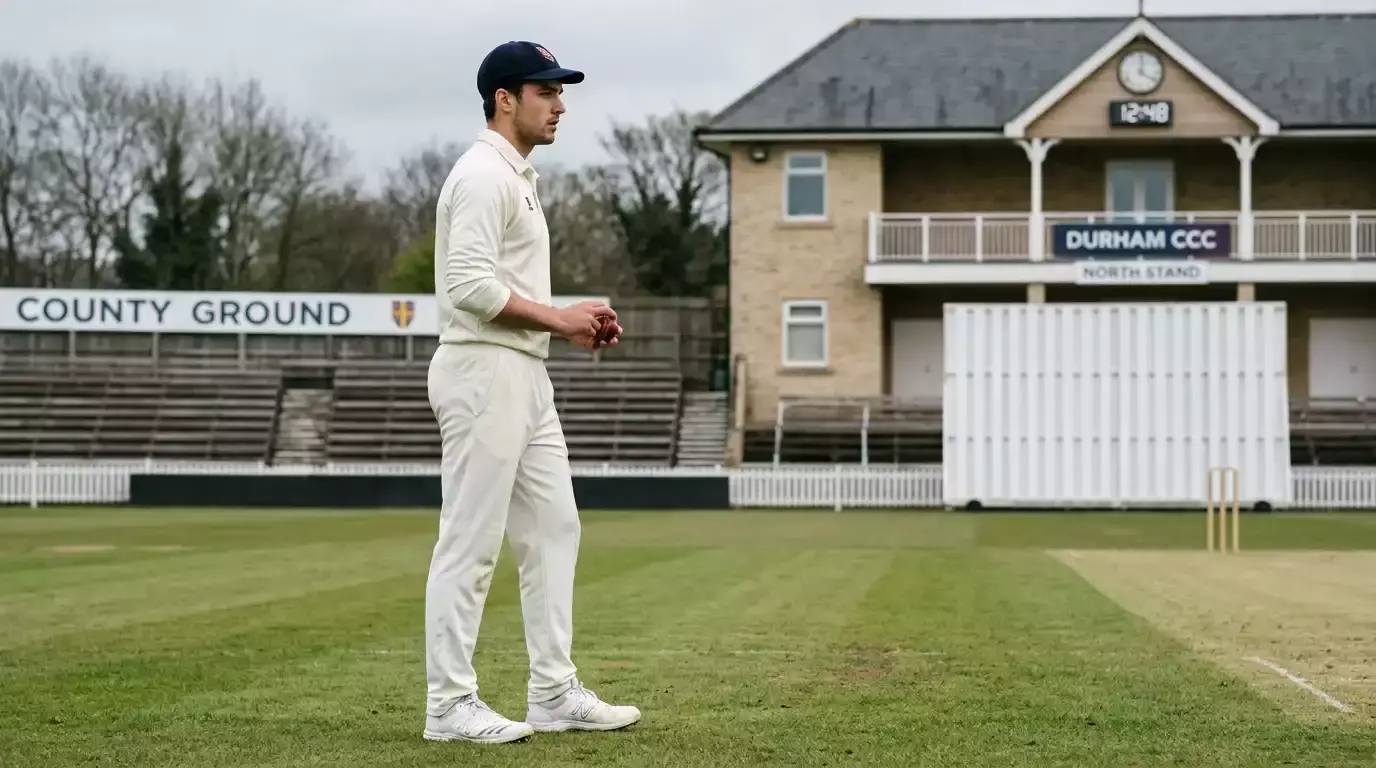
The broader read: the ECB’s Anti-Corruption Code is a strict-liability framework. The fact that a player has bet on cricket is the offence; the absence of any fixing element and the small scale of the bets are factors that affect the sanction, not the determination of guilt. Younger UK cricket fans sometimes assume the Code is concerned only with match-fixing. The Carse case is the cleanest available demonstration that it is not.
The Mugheez Ahmed Sheikh Case: A Five-Year ECB Ban and a Bribery Attempt
The Mugheez Ahmed Sheikh case is the closest thing UK domestic cricket has had to a textbook corruption attempt in recent years. On 26 March 2025, the ECB Cricket Discipline Commission imposed a five-year ban on Sheikh, a former agent who represented Pakistani players, after he was found to have attempted to bribe a professional county coach. The last 30 months of the five-year period were suspended on conditions.
The bribery attempt itself, on the evidence presented to the Discipline Commission, was a corrupt offer made directly to a serving county coach with the apparent intention of influencing decisions during the season. The coach reported the approach in line with the ECB Anti-Corruption Code, which requires any approach by a corruptor to be reported to the Regulator. That reporting is what brought the case forward. Without it, the approach might have remained outside the surveillance perimeter entirely.
What the case underlines for a UK bettor: the corruption infrastructure that targets cricket does try to reach into the English domestic game. The system is not a closed loop where only foreign leagues are at risk. Sheikh’s prior contact with Pakistani cricket explains the network of relationships that brought him into proximity with the county system, but the attempt itself was aimed at the English game.
The five-year ban — with 30 months suspended — is the tier of sanction the Discipline Commission applies when an offence involves an active corrupt approach but does not result in a completed fix. A successful approach or a completed fix would attract a longer ban, often a life ban. The conditions attached to the suspended portion of Sheikh’s ban are not publicly disclosed in detail, but they typically involve undertakings around future engagement with cricket and reporting obligations. The case is a working example of the system functioning as intended — an approach made, an approach reported, an approach investigated, an approach disciplined.
A Short History of the Big Fixes: Cronje 2000, Pakistan 2010, IPL 2013
The names that shaped how cricket thinks about fixing belong to three eras. Hansie Cronje in 2000. The Pakistan spot-fixing trio in 2010. The IPL fixings in 2013. Each scandal taught a different lesson and produced a different institutional response, and the residue of all three lives in the surveillance machinery a UK bettor encounters in 2026.
Hansie Cronje was the South Africa captain in early 2000. He was forty years old, the most respected captain in international cricket, and at the time of his exposure he was already in conversation with Indian fixing syndicates over multiple matches. The case that broke him was a phone intercept by Indian police investigating an unrelated matter. The conversations on the recording were unambiguous. Cronje was banned for life. He died in a plane crash two years later. The institutional response was the establishment of the ICC Anti-Corruption Unit later that same year — the first significant cross-national integrity infrastructure in any sport.
The Pakistan spot-fixing case in 2010 was caught by a News of the World sting operation. Three Pakistan players were filmed agreeing to bowl deliberate no-balls at pre-arranged moments during a Test at Lord’s. The match itself was not fixed. Specific moments inside the match were. The case introduced the concept of spot-fixing to the global cricket audience and clarified that the threat was not only to match outcomes but to individual events within matches — events that could be bet on in their own right.
The 2013 IPL spot-fixing investigation reached into the heart of the world’s wealthiest domestic cricket league. Players, owners, and an alleged organised crime element were implicated. Two franchises were suspended for two years. The Mukul Mudgal Committee and subsequent Supreme Court intervention reshaped the IPL’s governance, and the case stripped away any remaining illusion that the commercial scale of a tournament was protective against fixing. Money and corruption can co-exist easily.
Where Corruptors Are Looking Now: Lower-Tier Franchise Leagues
Twenty-five years after the Cronje case, the corruption frontier in cricket has moved. International cricket — covered by the ICC ACU, watched by global media, played by athletes on professional contracts with large compliance teams behind them — is harder to corrupt than at any previous point in the sport’s history. The path of least resistance now runs through lower-tier franchise leagues.
The structure that attracts corruptors is consistent. Newly-launched T10 or T20 leagues in jurisdictions where regulation is weak. Franchise ownership in opaque vehicles. Player salaries low enough that small bribes are meaningful. Governance staff small enough that surveillance is patchy. Live broadcasts that give bettors something to wager on globally even when the regulatory infrastructure cannot keep up. Sportradar’s 2025 data shows the cluster of cricket integrity alerts concentrated in exactly this category of competition rather than at the international or major-franchise level.

The same structural risks do not apply equally across cricket. The Vitality Blast, the Big Bash, the IPL — these competitions have mature integrity infrastructure, ECB or BCCI or Cricket Australia oversight, well-paid players, and meaningful punishment for breaches. The County Championship operates inside the ECB Cricket Regulator’s perimeter with two centuries of institutional history backing it. The County Championship’s variation across the formats and tournaments that make up the UK season — what each one demands as a betting proposition, who plays where, what the integrity exposure of each looks like — is the subject of our companion piece on UK cricket formats and how each one changes the bet.
The leagues that should worry punters are the ones with names most bettors do not recognise, played in jurisdictions with thin governance, available to bet on through online operators whose modelling cannot really price them. Those are the matches where the suspicious-betting alerts cluster, and they are the matches a sensible UK bettor avoids.
What an Ordinary UK Bettor Can Actually Spot, and Why You Mostly Cannot
The most honest answer to “how can I tell if a match is fixed?” is mostly you cannot, and the things you can spot are usually not actually fixing.
Suspicious-betting detection at the professional level relies on pattern recognition across enormous data volumes. UFDS AI looks at hundreds of variables simultaneously — bet flow, market suspension patterns, line movements, cross-operator divergences, account flagging from KYC and AML monitoring. No individual punter is going to outperform that system on their own data feed. Trying to identify fixed matches as a bettor is a path to over-confidence and bad bets.
What you can reasonably spot are red flags that suggest avoiding a market rather than betting on it. Unusual market suspensions during an innings — particularly if a line is suspended for an extended period without an obvious in-play trigger like a wicket or boundary. Sharp line movements that do not correspond to publicly observable events. Operators offering prices on niche events that diverge widely from the cross-market consensus. None of those is proof of fixing. All of them are reasons to step away from the bet.
The other defensive habit: stick to mature, well-modelled, well-watched competitions. The County Championship, the Vitality Blast, the IPL, major international fixtures — these are the events where the integrity infrastructure is real, the surveillance is intensive, and the institutional response to suspicious behaviour is fast. Lower-tier franchise leagues in unregulated jurisdictions are the events where the risk-to-reward of betting actively gets uncomfortable. You will not see the fix happening. You will see it in your account when your winning bets get voided.
