

Evaluating the Mathematical Cost of Early Cash Outs
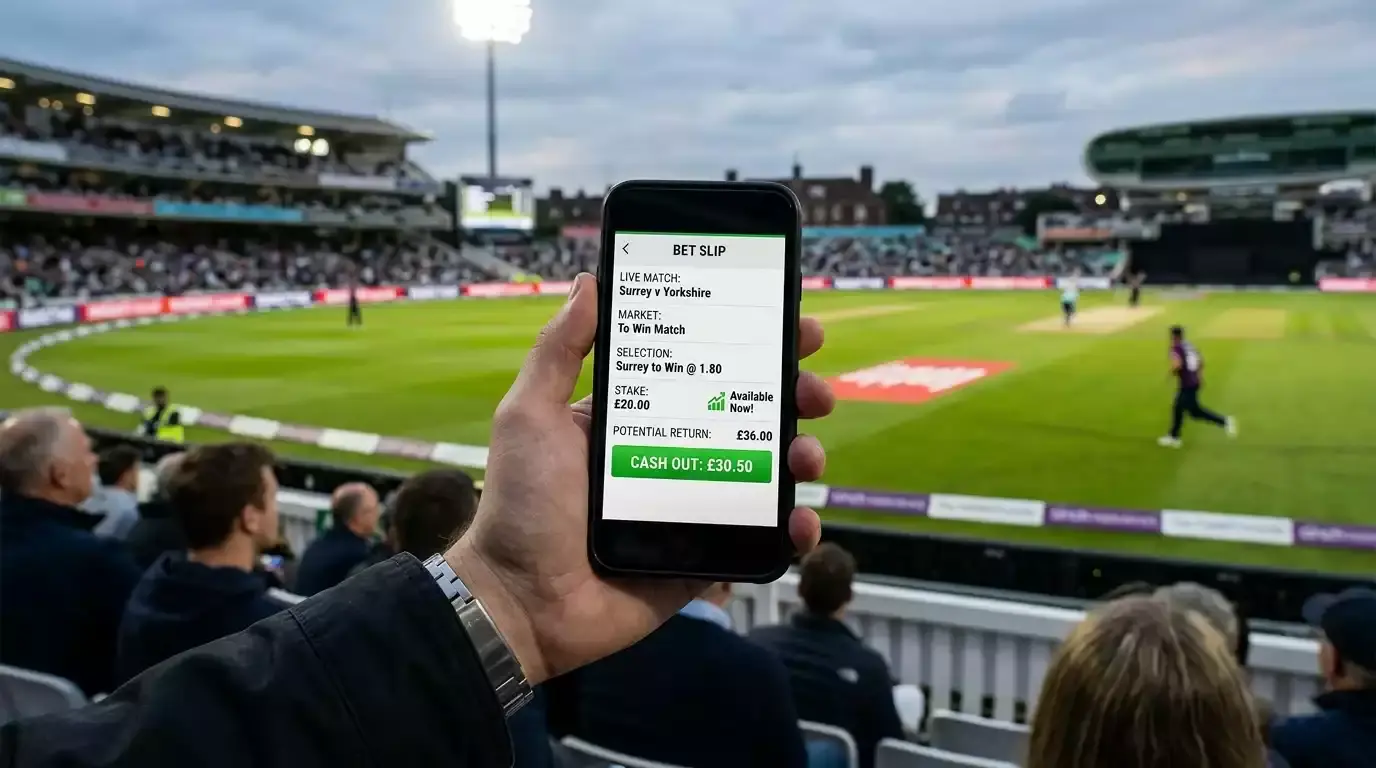
The most expensive press of a button I ever made was on a Saturday afternoon during a Somerset chase in the 2024 Vitality Blast. £40 on Somerset at 3.20, they were 80 for one with seven overs left, the offer popped up at £92 against an actual return of £128. I tapped it. They won, I’d left £36 on the table for the peace of mind of leaving early, and I spent the next hour pretending I didn’t mind.
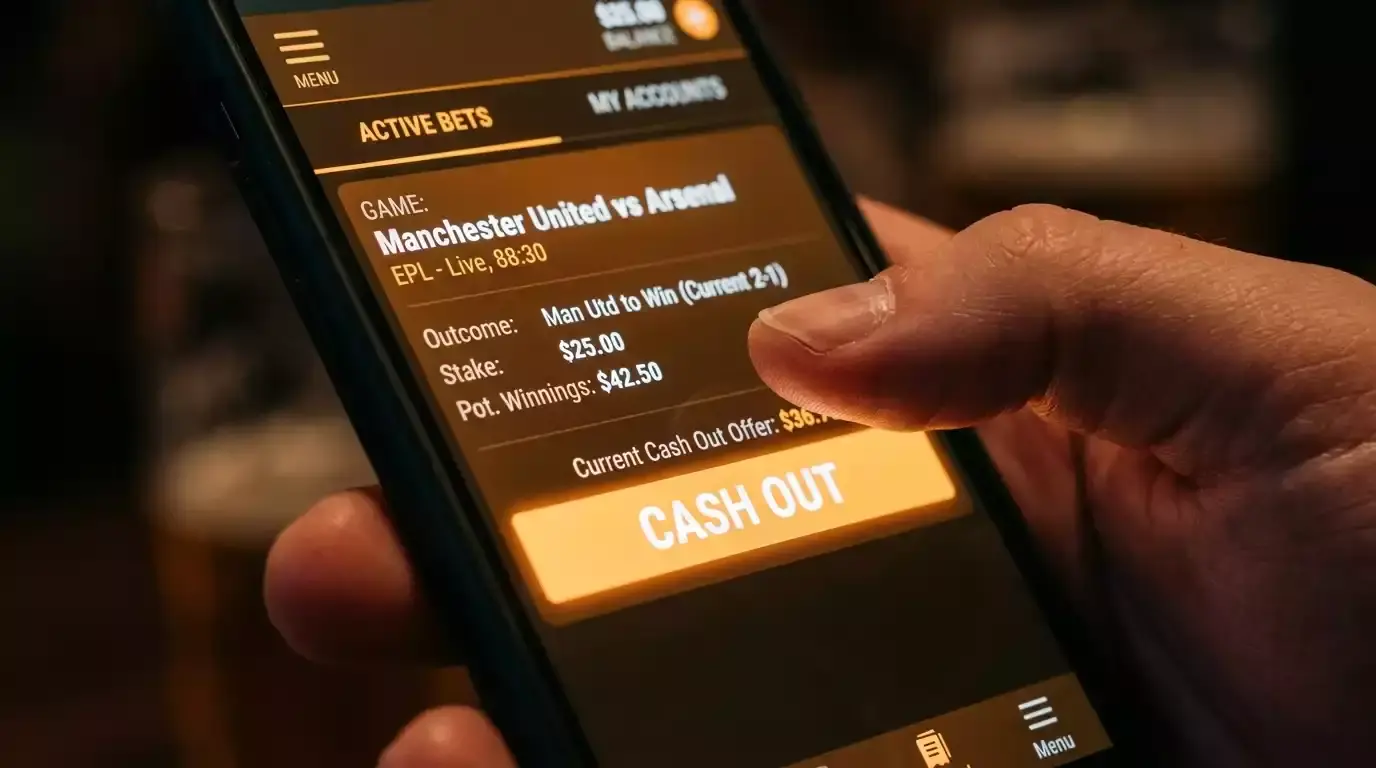
Cash out is the most psychologically loaded button on any cricket card. With UK online betting GGY now at £2.6 billion a year, books have invested heavily in making this feature frictionless, because every cash-out is a near-guaranteed margin lock for the operator. The question for the punter isn’t whether the offer is generous. It’s whether the EV cost is a price worth paying for what you’re actually buying — and what you’re buying is rarely what you think.
How a Cash-Out Offer Is Calculated in Real Time
The book runs a continuous probability model on every active match. For each open bet on its books, it asks: “if the match stopped right now and we hedged the position on the live market at current odds, what would it cost us to settle?”. That hedge cost, minus the book’s cash-out margin, is the number that appears on your slip.
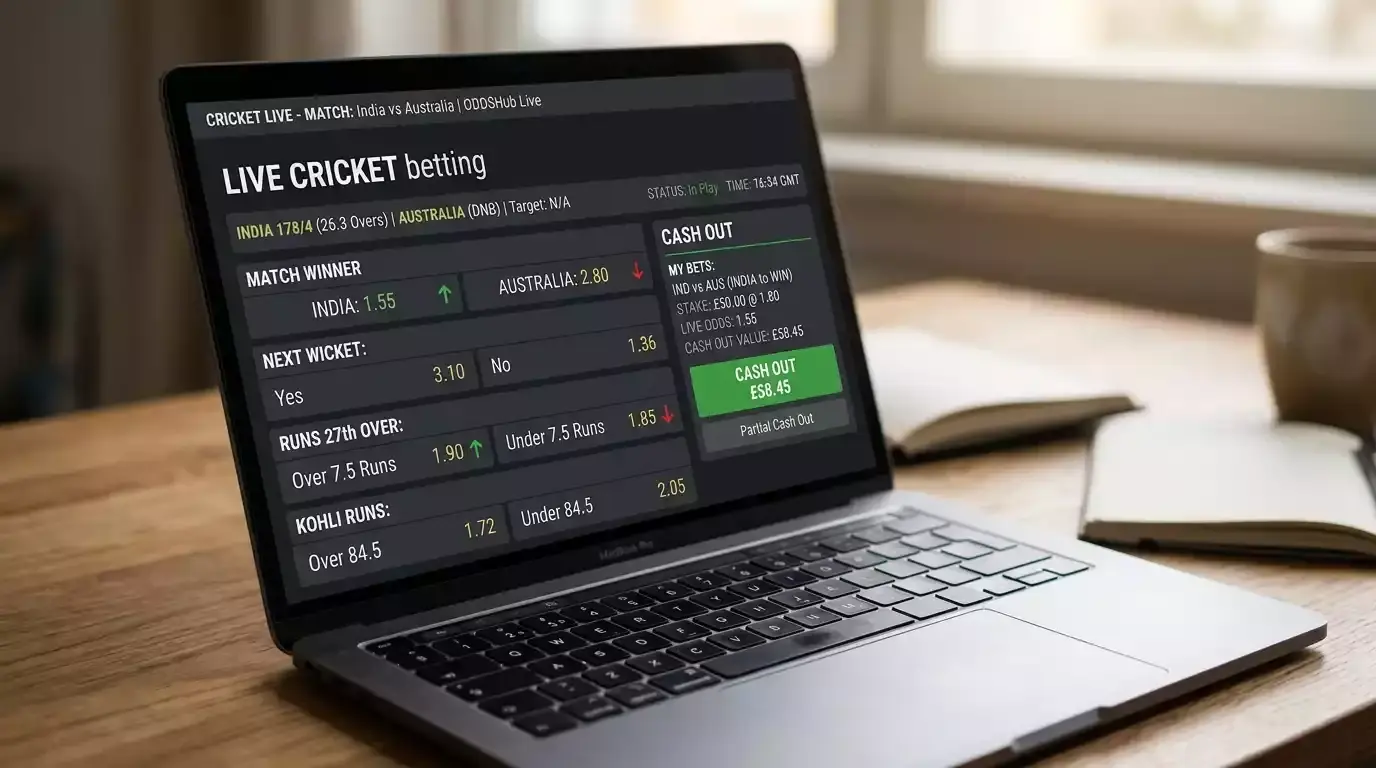
Take a concrete example. You backed team A at decimal 3.00 with a £10 stake. Potential return is £30. Mid-match, team A’s win probability has improved to 70 percent — current live decimal odds are roughly 1.43. The book’s hedge cost to lock in your potential payout is around 30 multiplied by 1 over 1.43, which is about £21. The book then takes its margin — typically 5 to 10 percent — and offers you something like £19. You can take it now and walk away with a £9 profit, or let the bet run and risk the £30 becoming nothing if team A collapses.
The mechanics are different on bet builders, where the book has to value each leg against current state, and on outright markets, where there isn’t a continuous tradable price. Outright cash-outs come from the book’s internal pricing model rather than a hedgeable live market, and the margin baked in is consistently wider as a result.
The EV Cost of Cash Out: Why It Is Roughly Equal to a Second Bookmaker Margin
If you cash out before the event resolves, you’re paying the book’s margin twice. Once when you placed the bet — that’s the overround on the original price — and once again when you exit, because the cash-out offer is below the “fair” hedge value by another margin slice. On cricket markets, where typical overrounds sit at 5 to 7 percent per market, the round-trip cost of placing and cashing out a single bet is therefore in the range of 10 to 14 percent of expected value.

This isn’t a one-off hit on a single bet. It’s a structural drag across a season. Imagine a punter who places £20 on every Vitality Blast Friday-night match and cashes out two-thirds of the time. They’re paying the round-trip margin on the cashed-out fraction of their action. Over the full 133-match Blast schedule, that compounds into a substantial sum being given back to the book purely for the convenience of exiting early. The right comparison isn’t “cash-out value vs full payout”. It’s “cash-out value vs full payout multiplied by current win probability” — and on that comparison, cash-out is almost always worse than letting the bet ride from a pure EV standpoint.
Partial Cash Out and Auto Cash Out Triggers
Partial cash-out lets you take a fraction of the offer and leave the rest running. It’s the operator’s response to punters realising the full cash-out is a structural loss — give them a halfway option and they’ll keep playing. The mechanics are simple: you select a percentage, say 50 percent, and the book pays out half the current offer while keeping the other half active on the original terms.
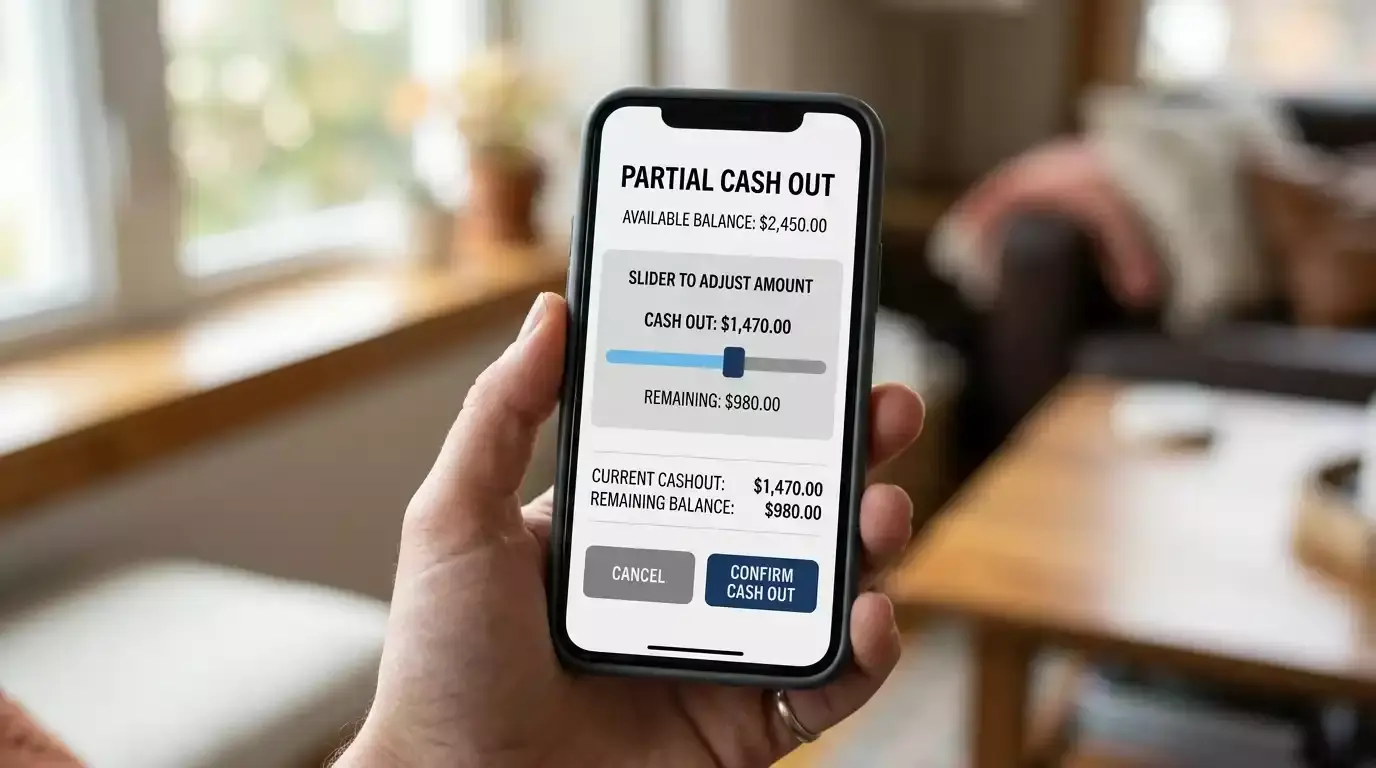
The maths on partial cash-out is identical to the full version, just split. You pay the cash-out margin on the portion you take, and the portion you leave behind has the same expected value it had before. The reason it can be useful isn’t EV — it’s variance management. Locking in half your stake guarantees the bet itself can’t lose money, which matters for bankroll discipline in a way that pure EV reasoning misses.
Auto cash-out triggers a partial or full cash-out automatically when the offer hits a pre-set figure. I’ve never used it for cricket, and I’ll tell you why: cricket’s in-play swings are faster and more news-driven than football’s. A single wicket can push your cash-out figure 20 percent in 30 seconds, and an auto trigger set at the wrong threshold will fire on a brief peak rather than a sustained advantage. Auto cash-out works better in slower-paced sports where the offer evolves gradually.
The Three Situations Where Cash Out Is Actually Rational
I’ll defend cash-out in exactly three scenarios. The first is bankroll preservation when a single bet is disproportionately large relative to your bank. If you stake a sum that genuinely matters and the match has moved heavily in your favour, taking a guaranteed positive return — even at a margin cost — is sound risk management. The 8 percent EV leak buys you the practical benefit of not having a meaningful drawdown if the match swings back.

The second is when you’ve identified a genuine information edge between your read and the book’s. If you’re watching the match and the book’s cash-out figure hasn’t caught up with a significant event — a key player retired hurt, a sudden weather change, a tactical shift the broadcast made obvious — then the offer might be priced off stale probability. Cash-out under those conditions can be neutral or even positive EV. The honest answer is that this scenario is rare, because the book’s pricing engines update in seconds.
The third is closing out a leg of a personal staking strategy. If you’re managing exposure across multiple correlated bets on the same series — say, three matches deep in an Ashes tour — and one of those bets has moved into a position that locks in profit for the entire campaign, taking the cash-out is a portfolio decision rather than a per-bet EV decision. The margin you pay is the cost of removing tail risk from a multi-bet position.
Outside those three, cash-out is the book’s revenue engine. Recognising that is the difference between using the feature and being used by it.
If the goal is to lock value into a position rather than exit it, a different toolset applies — and that toolset lives in the bet builder mechanics rather than in the cash-out engine.
