


Monitoring ICC ACU Domestic and International Enforcements
The first conversation I ever had with someone who had worked at the ICC Anti-Corruption Unit was at a cricket conference in 2022. The thing that stuck with me wasn’t the dramatic stories — there weren’t many — it was the line “we don’t run cricket, we just protect international cricket”. That clean division of remit explains more about how the integrity stack actually works than any organisational chart could.
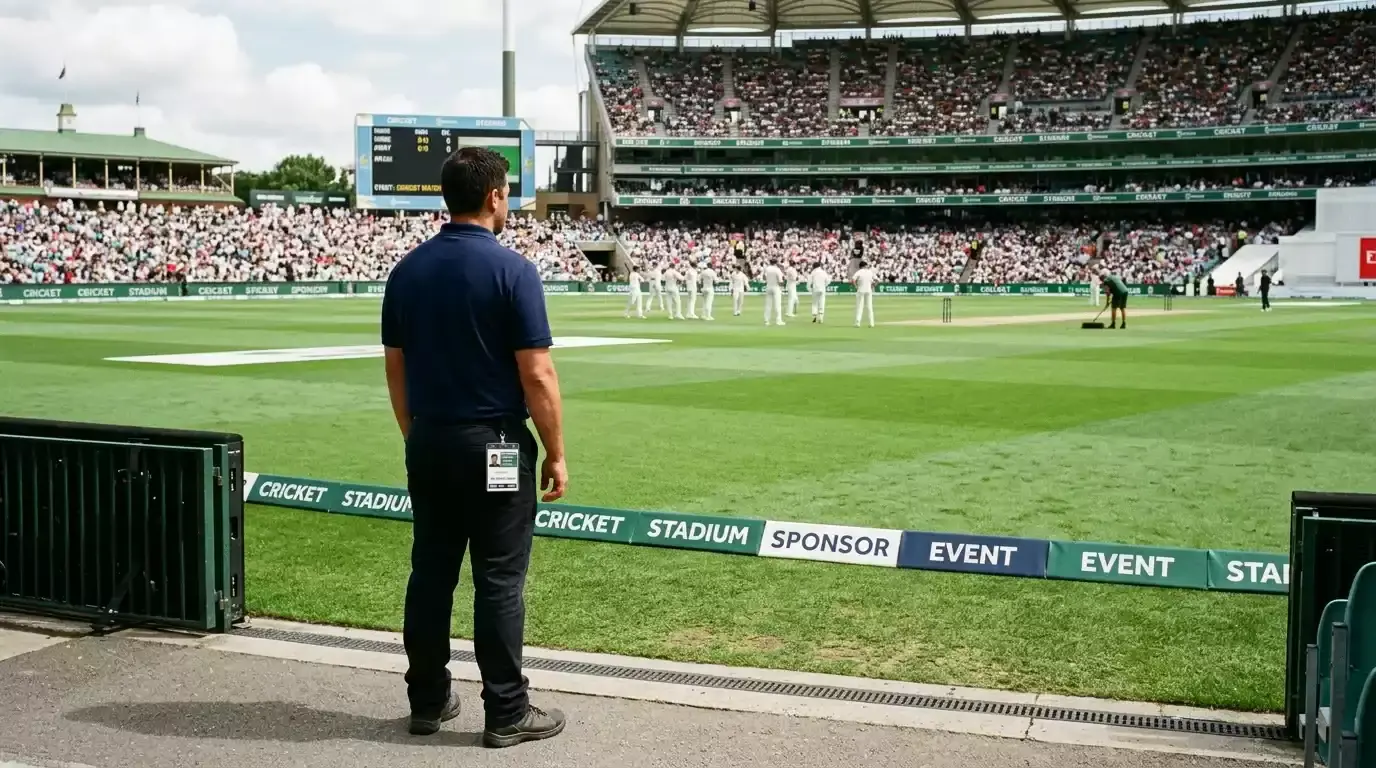
“We are responsible for monitoring international cricket while it’s the job of the respective boards to look after their domestic leagues … Vulnerability comes in leagues where sometimes, there is a lack of care about who the franchise owners are,” Alex Marshall, the ACU’s General Manager, told Gulf News in 2024. That statement is the operating model in two sentences. The ACU has formal jurisdiction over fixtures sanctioned by the ICC — bilateral series, World Cups, qualifiers, official tournaments. Everything else sits with national boards.
Remit and What the ACU Can and Cannot Investigate
The ACU’s remit covers matches under ICC sanction. That includes every men’s and women’s bilateral international series between full-member nations, every ICC global event, every associate-member qualifier on the official pathway, and any tournament where the ICC explicitly extends its anti-corruption code. The unit’s investigators have authority to interview players, request communications data, and apply the ICC Anti-Corruption Code’s sanctions framework to any participant in those events.
What the ACU cannot do is investigate franchise leagues that operate outside ICC sanction. The IPL is run under BCCI authority with its own anti-corruption infrastructure. The Big Bash, the Vitality Blast, the SA20 and similar competitions sit with their respective national boards. Most of the suspected fixing activity that Sportradar identifies in modern cricket happens in mid-tier and lower-tier franchise leagues where national board oversight is patchy. The ACU can coordinate, share intelligence, and offer support — but cannot run the investigation itself.
The jurisdictional gap is the most-discussed weakness of the international integrity stack. The ICC has progressively widened the “sanctioned” perimeter to include more tournaments, particularly women’s cricket competitions and associate-member events, but the franchise league universe has expanded faster than the regulatory perimeter. The ACU response has been to build closer working relationships with national board integrity units rather than to formally expand its own jurisdiction, on the grounds that domestic oversight is structurally better-placed for franchise-specific issues.
Player Education Modules and Mandatory Reporting
The education component of the ACU’s work is the part with the most direct effect on day-to-day match integrity. Every centrally contracted player at an ICC member nation completes mandatory anti-corruption education modules at intervals defined by the ICC code. The modules cover recognition of approach attempts, the obligation to report any approach, the consequences of failing to report, and the protections in place for players who do report.

The reporting obligation is unusual in its strictness. Under the ICC Anti-Corruption Code, a player who is approached by anyone offering money or other consideration in exchange for influencing a match outcome must report the approach to their team’s anti-corruption officer or directly to the ACU. The obligation applies whether the player accepted the approach or refused it. Failure to report is itself a breach of the code, and several historical sanctions have been imposed not for accepting an approach but for failing to report one that was refused.
The annual training cadence varies by board but typically runs at least once per season for centrally contracted players, with shorter refreshers around major events. New players entering international cricket complete the full module before their first international appearance. The materials are updated based on emerging tactics used by corruptors, with the 2024 and 2025 versions reflecting the rise of franchise-league approaches and the use of digital communication channels.
Approach Patterns: How Corruptors Reach Active Cricketers
The ACU publishes occasional pattern updates on how active corruption approaches present themselves. The picture has shifted across the last decade. Direct cash-in-hand approaches from known associates were the predominant pattern in the early 2000s. Modern approaches lean on digital communications, social media direct messages, and intermediaries who present as legitimate business contacts before pivoting to the corrupt request.

Agents and former players are persistent vectors. The 2025 ban of Mugheez Ahmed Sheikh, a former agent for Pakistani players, by the ECB Cricket Discipline Commission illustrates the pattern — Sheikh was banned for five years (with 30 months suspended) for attempting to involve a county coach in a corrupt scheme. The mechanism wasn’t a stranger approaching a player at random. It was a known figure within the cricket ecosystem leveraging existing relationships to make the approach.
Tournament hospitality and “business meeting” framings are another vector the ACU specifically warns about. An approach often opens with what looks like a legitimate sponsorship or endorsement opportunity, with the corrupt element emerging only after the relationship has established. Players are trained to recognise the pivot — the moment when the conversation shifts from legitimate business to something that triggers the reporting obligation.
Enforcement Track Record and Public Sanctions Register
The ACU maintains a publicly accessible sanctions register listing every player or official who has been banned or suspended under the ICC Anti-Corruption Code. The register includes the names, sanctions, and dates of the bans, with summary information about the offence. The publication is deliberate — public sanctions are part of the deterrent stack.

Historical bans range from a few months for low-level reporting failures to lifetime bans for active match-fixing involvement. The most severe sanctions have been imposed on a small number of players from the late 1990s and early 2000s, when the formal anti-corruption infrastructure was less developed. More recent sanctions have tended to fall in the 3-month to 5-year range, with the specific length calibrated to the seriousness of the offence and the player’s degree of cooperation with the investigation.
The enforcement record shows the ACU prefers proportionate, evidence-based sanctions over deterrent maximums. A player who reports an approach late but eventually cooperates fully typically receives a shorter ban than a player who actively misled investigators. The framework is designed to encourage cooperation, even after the fact, because cooperation is the main source of intelligence about the corruptor networks that the ACU is trying to map.
For UK-based punters, the practical relevance of the ACU’s enforcement work is that it underpins the cleanliness of the international fixtures that form the core of UK cricket betting — Ashes Tests, ICC tournaments, bilateral series involving England and the major nations. The 2025 Sportradar integrity report shows that suspicious activity in these top-tier fixtures is essentially zero, which is a direct reflection of the combined effect of detection, education and enforcement working in coordination.
The detection layer that feeds intelligence into the ACU’s enforcement work is the subject of my piece on the 2025 Sportradar integrity report and how 59 cricket matches were flagged.
