

Tracking Offshore Sportsbook Conversion via Illegal Streams
The headline figure from 2025 sounded like a typo on first read. 1.6 billion illegal stream views of UK top-10 sports across just the first half of the year. Across the previous full year — 2024 — the equivalent number was 3.1 billion across the same sports. That isn’t a hobbyist piracy ecosystem. It’s a marketing channel operating at industrial scale, and almost every minute of those viewing hours sits next to an overlay advert, a sidebar banner, or a popover funnel pointing toward an offshore gambling operator.

“There is no good reason for mainstream consumers to use illegal gambling operators, so crime targets only those consumers who have bad reasons for requiring illegal gambling operators: they are under 18 and they are on the GamStop self-exclusion scheme,” Derek Webb, founder of the Campaign for Fairer Gambling, said in a 2025 Racing Post commentary. The framing matters. The illegal stream ecosystem isn’t an accidental adjacency to gambling — it’s the deliberate acquisition funnel that the illegal gambling sector uses to reach precisely the audiences that the regulated sector blocks.
How the Stream-to-Sportsbook Funnel Works
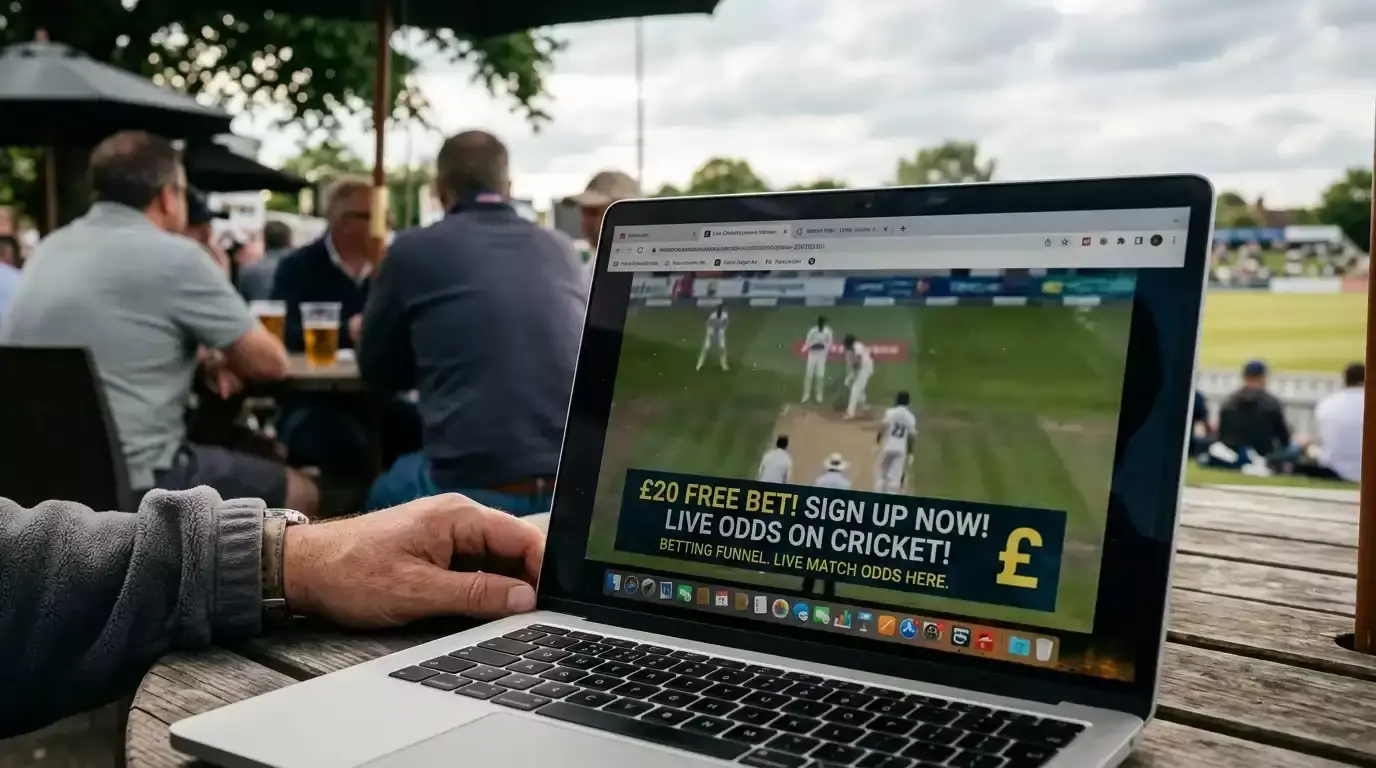
The funnel mechanics are well-mapped at this point. A user searching for a free stream of an England Test, an IPL match or a Premier League fixture finds the illegal stream via search engine results, social media recommendations or direct URL sharing. The stream itself is hosted on infrastructure that’s typically rotated across jurisdictions to defeat takedown action. The page contains the video player and several layers of advertising surface — pre-roll, mid-roll, banner, sidebar, popover.

The advertising slots are bought programmatically through ad networks that specialise in pirate-adjacent inventory. The buyers are predominantly offshore gambling operators that can’t legally advertise through mainstream UK channels. The bidding economics favour gambling advertisers because the audience is engaged with sports content, the dwell time is high (a 90-minute football match or a four-hour Test session means a captive audience), and the conversion intent is well-matched to the gambling product.
The funnel converts at a rate that justifies the spend. Click-through rates from sports stream overlay ads to offshore sportsbook landing pages are several times higher than equivalent display advertising in regulated environments, partly because the audience is already engaged with the relevant sport and partly because the regulatory constraints on the messaging are non-existent. The conversion from landing page to deposit is correspondingly higher, with offshore operators routinely offering bonus incentives that the regulated sector cannot match.
2024 vs H1 2025: 3.1 Billion to 1.6 Billion Views
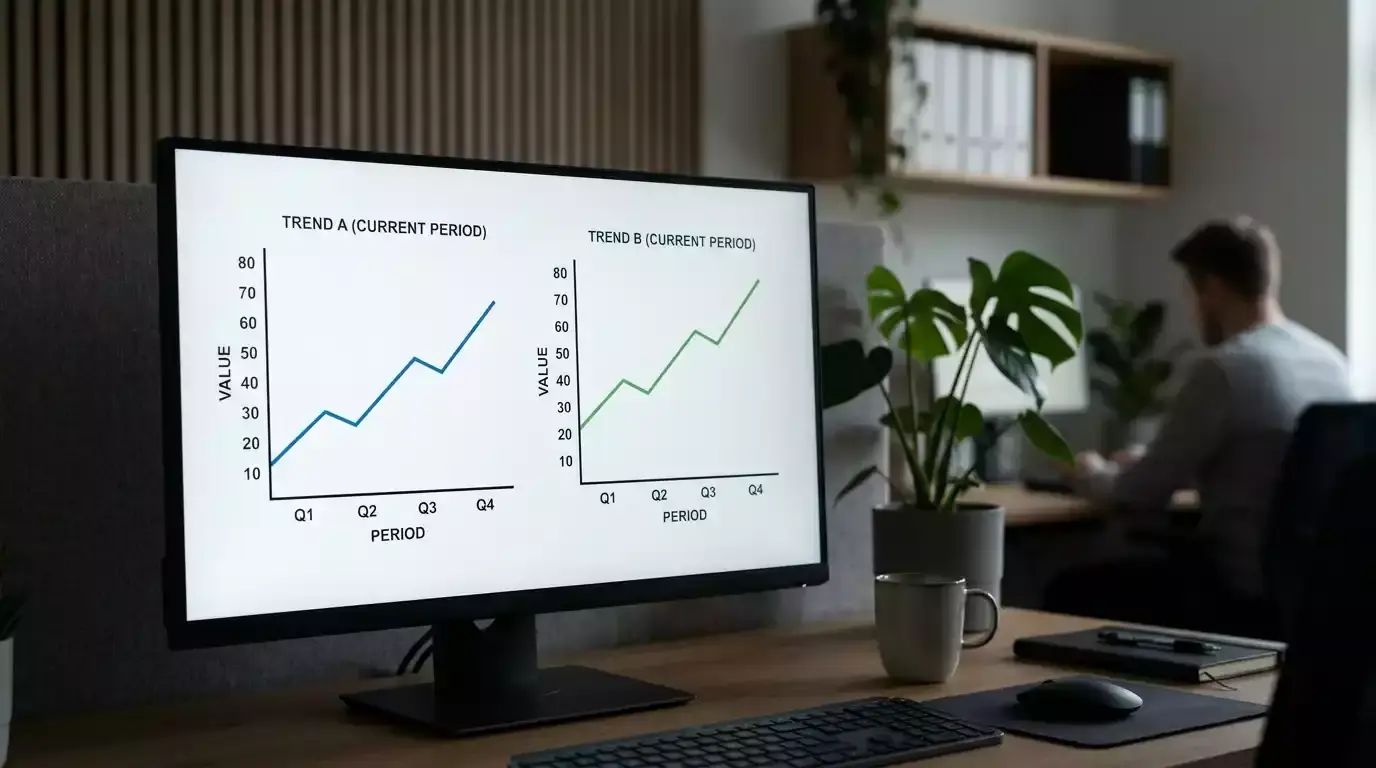
The trend line in stream views is upward. The 3.1 billion full-year figure for 2024 covers the top-10 UK sports including cricket. The 1.6 billion figure for H1 2025 covers six months of the same sports. Annualised — even allowing for seasonality across different sports — H1 2025 is on track to exceed the full 2024 figure by a meaningful margin. The expansion is faster than the broader streaming market overall, suggesting illegal streams are growing as a share of total sports streaming activity rather than just keeping pace with it.
Cricket’s share within that total is hard to isolate precisely, but the international cricket calendar generates substantial illegal streaming activity. IPL matches are among the most heavily streamed sports events through illegal channels in any year, with UK audiences making up a meaningful share of the global viewership. The Ashes, ICC tournaments, and bilateral series involving England all generate their own illegal streaming volumes. The aggregate cricket-driven streaming traffic in the UK alone is in the hundreds of millions of views annually.
The infrastructure supporting this volume has professionalised. Streaming operators run server networks with capacity to handle peak loads matching major sports broadcasters. The video quality has improved from the rough mobile-phone-camera streams of earlier years to near-broadcast quality in many cases, often with multi-language commentary tracks selected to match the streaming audience’s likely demographic. The professionalisation makes the streams more attractive to viewers, which compounds the audience growth and the advertising revenue that funds the whole system.
The £1 Billion Forecast: Black-Market Ad Spend by 2028
The World Advertising Research Center forecast is the most-cited number in this space, and it deserves the attention. WARC projects that black-market gambling operators will spend approximately £1 billion on gambling advertising in the UK by 2028. That figure is higher than the regulated sector’s UK gambling advertising spend, which sits in the £700 million to £900 million range depending on the year and the measurement methodology.

The forecast carries a difficult implication. If offshore operators are spending more on UK gambling advertising than UK-licensed operators, the regulated framework’s restrictions on advertising — designed to protect vulnerable users — are being routed around by the unregulated sector outspending the regulated sector in the same UK market. The advertising visibility that the UKGC framework has constrained in regulated channels is reappearing in unregulated channels, with worse outcomes.
The stream-side advertising channel is the predominant route through which that £1 billion is forecast to flow. The combination of high viewership, programmatic ad-buying that doesn’t filter for licensing status, and minimal effective enforcement against the stream operators themselves makes this the natural distribution channel. Pulling £1 billion of effective gambling advertising out of the UK information environment by 2028 would require shutting down the stream ecosystem itself, which is a policy challenge with no clean solution under current law.
What This Changes for the Regulated UK Market
The regulated UK gambling sector is being asked to compete in an environment where its competitor — the offshore market — is allowed to operate by default and is outspending the regulated side in customer acquisition. The Betting and Gaming Council and individual operators have been vocal about this competitive distortion, and the framing in their public commentary has shifted from defending regulated-sector practices to highlighting the regulatory asymmetry that the offshore market exploits.
For UK punters, the practical implications are visible in several places. Promotional offers from regulated operators have tightened over the last two years, which has pushed acquisition spending toward retention rather than growth. Customer experience friction at regulated operators has increased — affordability checks, account closures, stake factor reductions — which makes the offshore alternative more attractive to anyone willing to leave the regulated perimeter.
The regulator’s response has been threefold. First, expanded enforcement against UK-facing affiliates that promote offshore operators, which has reduced search engine visibility for the worst offenders. Second, work with payment providers to identify and block offshore gambling transactions where possible, which has marginally raised the friction of using offshore operators. Third, public communication about the risks of offshore use, which serves both as deterrent and as legal foundation for future enforcement. None of these has reversed the underlying trend, which continues toward expanded offshore activity in the UK gambling market.
The offshore gambling sector that this advertising funnel feeds is the focus of my piece on the UK cricket black market and its 9 percent share of the regulated total.
