

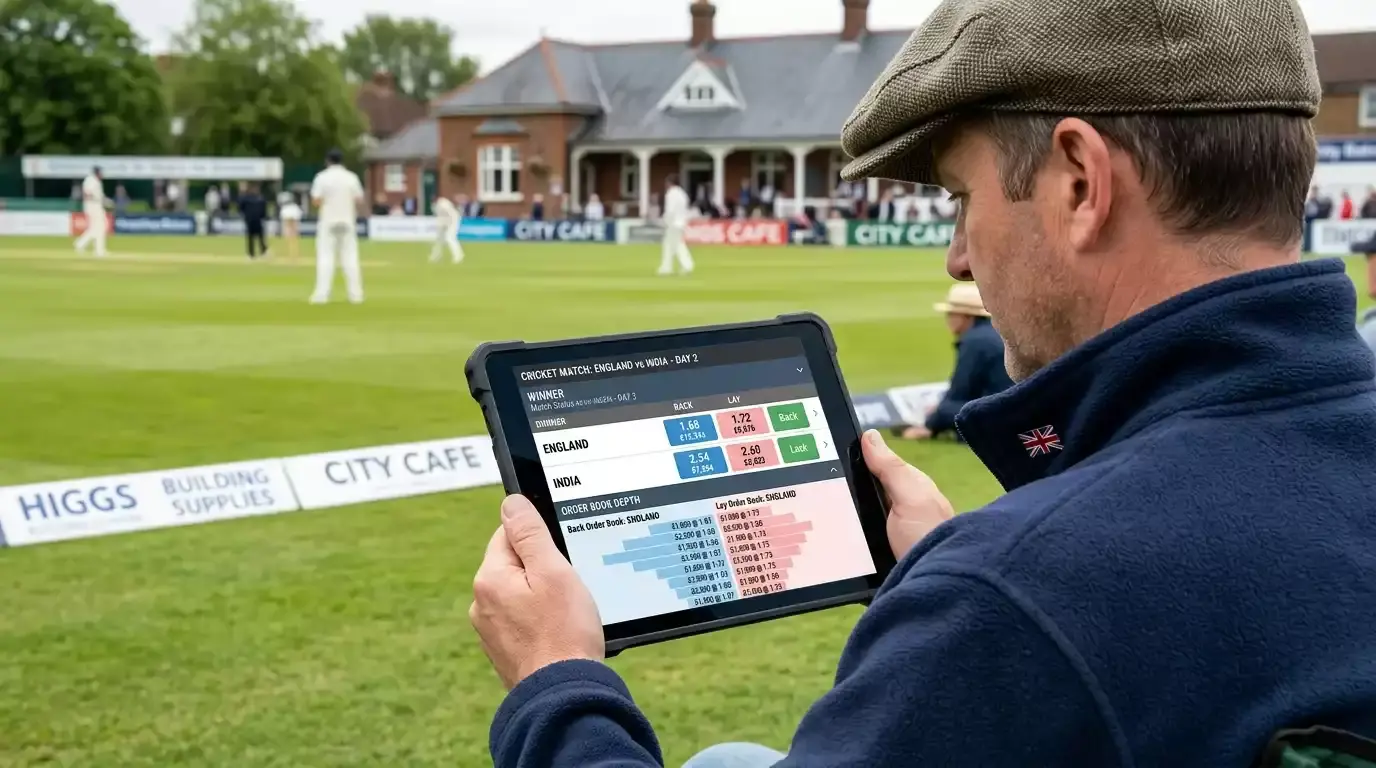
Leveraging Back and Lay Mechanics in Cricket Exchanges
The first time I placed a lay bet on a county match I felt like I’d done something illegal. Six years into betting cricket and I’d never sat on the other side of a price before — agreeing to pay out if a team won, rather than betting on them to win. The mechanics took me about three matches to feel natural and three more before I stopped getting them wrong. On an exchange you can be the bookmaker, which is a much stranger sentence than it sounds.

“The choice for policymakers is clear. If the regulated sector becomes harder to use or less competitive, customers will not stop betting, they will simply go elsewhere,” Grainne Hurst from the Betting and Gaming Council said in a 2026 interview. The relevant context here is that exchanges occupy an unusual position in the UK regulated landscape — fully UKGC-licensed, but structurally different enough from sportsbooks that they often feel like a different product entirely. The cricket markets on UK exchanges are smaller in liquidity than football or horse racing but offer pricing that no sportsbook can match for someone willing to read the order book.
Back Bets, Lay Bets, and What Each Side Risks
A back bet is the bet you already know. You stake to win at the offered odds — back team A for £10 at decimal 2.50, and you stand to win £15 plus your stake back, with £10 at risk. The exchange routes your stake to someone on the other side of the market who has agreed to lay it.
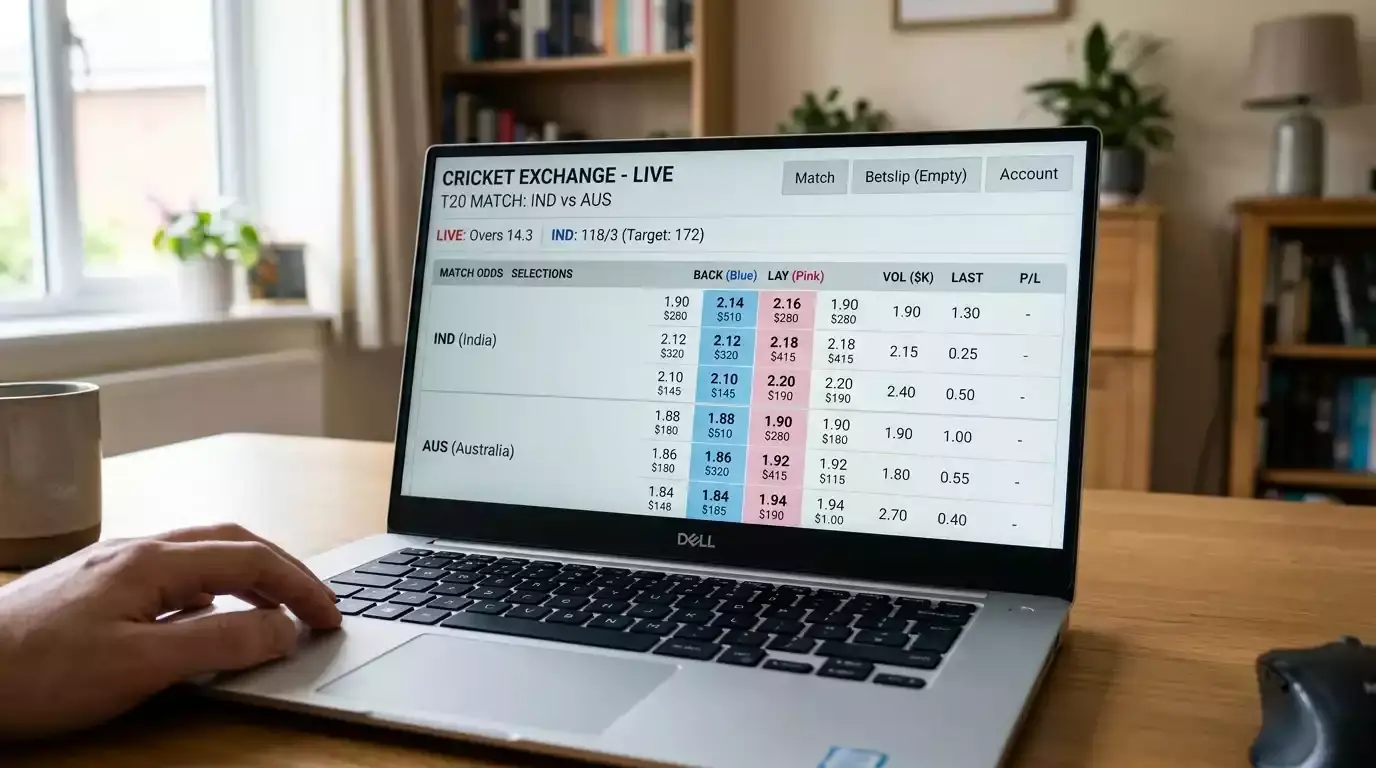
A lay bet is the inverse, and the maths flips in a way that catches new traders out. Lay team A at decimal 2.50 for “stake £10” — what you’ll actually risk is the back stake from the other side, which at 2.50 odds is the back-stake multiplied by 1.5. Lay £10 at 2.50 and you’ll see a liability of £15 on the slip; you’re effectively offering someone £15 if A wins, in exchange for keeping their £10 if A loses. The risk on a lay bet at long odds can dwarf the stake — laying a 10.0 outsider for £10 means accepting a £90 liability.
The mental shift is important. As a backer, you want events to happen. As a layer, you want them not to. Laying the draw in a Test, laying an over-priced top batsman, laying a series outright on an exchange — these are positions a sportsbook simply won’t offer you, and the exchange is the only UK-regulated venue where they exist.
Commission Model vs Sportsbook Margin: A Direct Cost Comparison
Sportsbooks make their money on the overround — the margin baked into the prices on both sides of a market. Exchanges make their money on commission applied to net winnings. The two cost structures look similar from a distance and behave very differently in practice.

A typical UK cricket sportsbook market — say match winner on a Hundred fixture — runs an overround of 5 to 7 percent. The same market on a UK exchange might be available at near-zero overround, with the best back price almost matching the best lay price minus a few ticks. The cost to you is the commission, typically between 2 and 5 percent on net winnings. The crucial word is “net”. You only pay the commission on what you actually win, and only when the market resolves in your favour.
For a casual punter betting modest stakes on a few matches a year, the sportsbook is operationally easier and the cost difference per bet is small. For someone running serious volume on a season of cricket, the exchange cost structure compounds favourably. The Sportradar product page describes cricket as covering over 7,000 pre-match and live matches a year, and an active punter working that calendar at sportsbook overround pays meaningfully more than the same punter at exchange commission. The gap matters most on close-to-fair markets.
Liquidity in Cricket Markets on Exchanges
Liquidity is where the exchange edge breaks down for cricket. Football and horse racing draw enormous matched-bet volumes on UK exchanges. Cricket draws less, and within cricket the variance is severe. An IPL final, an Ashes Test, or an ICC tournament knockout will have order books rich enough that a £500 back is filled instantly at the displayed price. A County Championship Division 2 fixture between two mid-table sides in early May might have £50 total on the match-winner market and almost nothing on side markets.
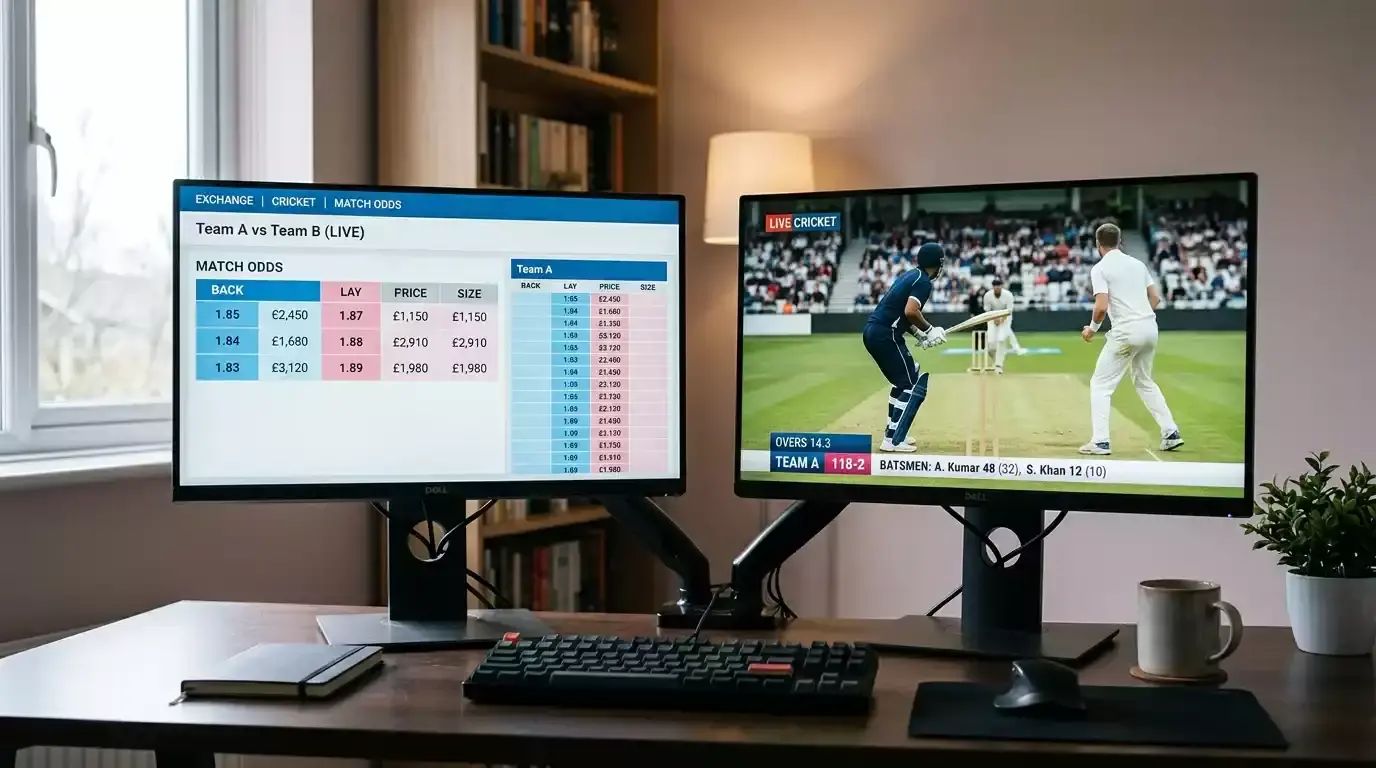
The practical implication is that pricing edge on an exchange evaporates if the market doesn’t have the volume to back your size. You see 2.40 displayed, you submit your back at 2.40 for £200, and the matching algorithm fills £40 at 2.40 and the remaining £160 at 2.55 because that’s what’s actually on the order book. The effective price you got was worse than the headline number. The bigger the stake relative to market depth, the worse the slippage.
The fix is patience. Place limit orders below the back price (or above the lay price) and wait for someone to come to you. On thin cricket markets that often means leaving an order overnight or across a session. For someone trading the Vitality Blast match-winner book at modest stakes, the patient approach can produce pricing that no UK sportsbook will ever match.
Strategy Snapshot: Laying the Draw in Test Cricket
The single trade I keep coming back to on UK exchanges is laying the draw in Test cricket. The logic is simple. Test match-winner markets are three-way: team A, team B, draw. The draw is structurally over-represented at the start of a Test because the book has to allow for weather, dead-rubber strategy and slow first sessions. By the time we reach day three of a match that’s progressing at a normal scoring rate, the draw probability has compressed dramatically — but the exchange-listed draw price often hasn’t moved as far as it should have.
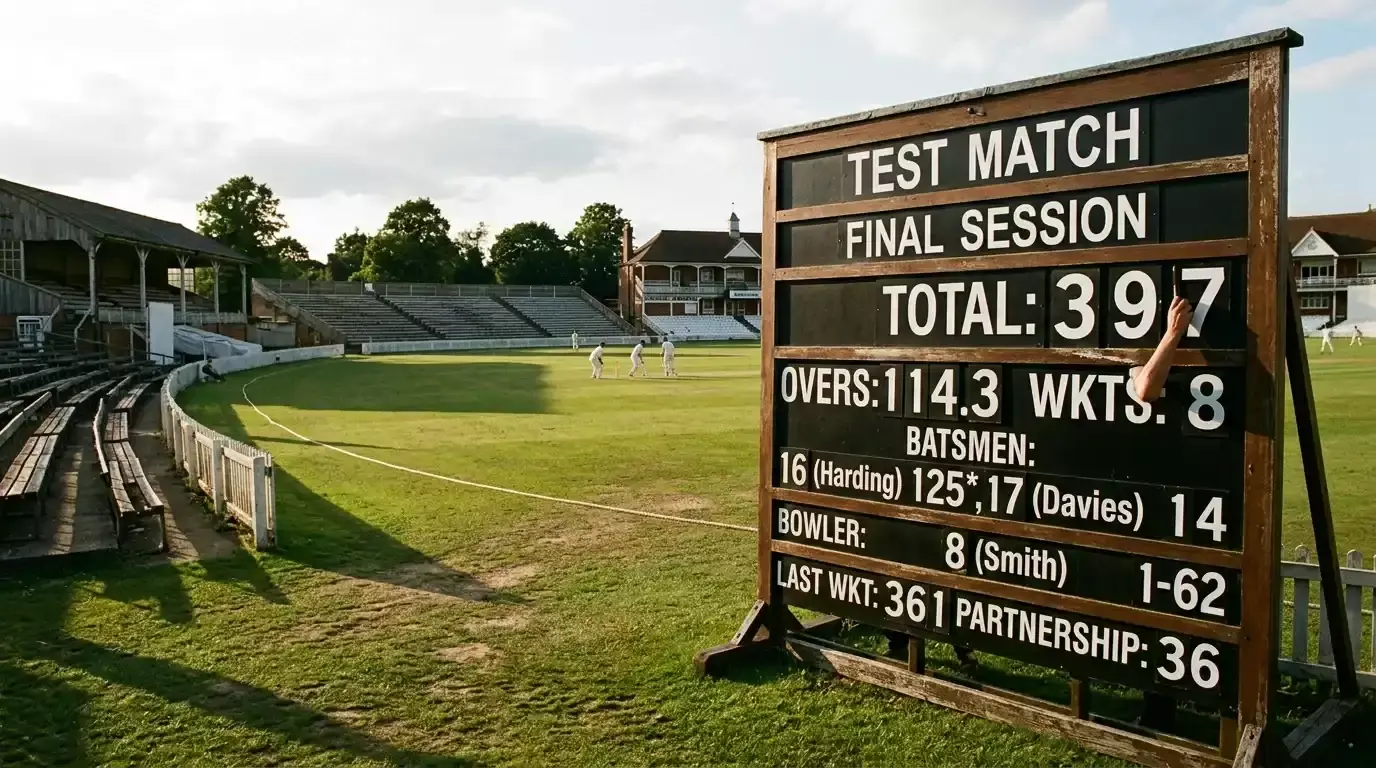
The trade is to lay the draw when the price is in the 5.00 to 8.00 range during the first innings, then exit by laying again at 12.00 or higher on day four if the match has gone through the normal rhythms. You’re effectively shorting the draw probability and watching the price drift upward as the match shape resolves.
Two things kill this trade. The first is rain — a washed-out day three converts an unlikely draw into a probable one and your exposure spikes. The second is a slow scoring rate that gives nothing to the bowlers, where the draw drifts shorter rather than longer. Both are readable from the pitch report and the weather forecast before you commit. Done with discipline, laying the draw is one of the cleanest applications of exchange pricing in cricket markets that I’ve found in eight years.
The flip side of exchange edge is that sharp activity on either backing or laying triggers sportsbook restrictions quickly, which is the subject of my piece on why cricket punters get stake-factored faster than they expect.
