

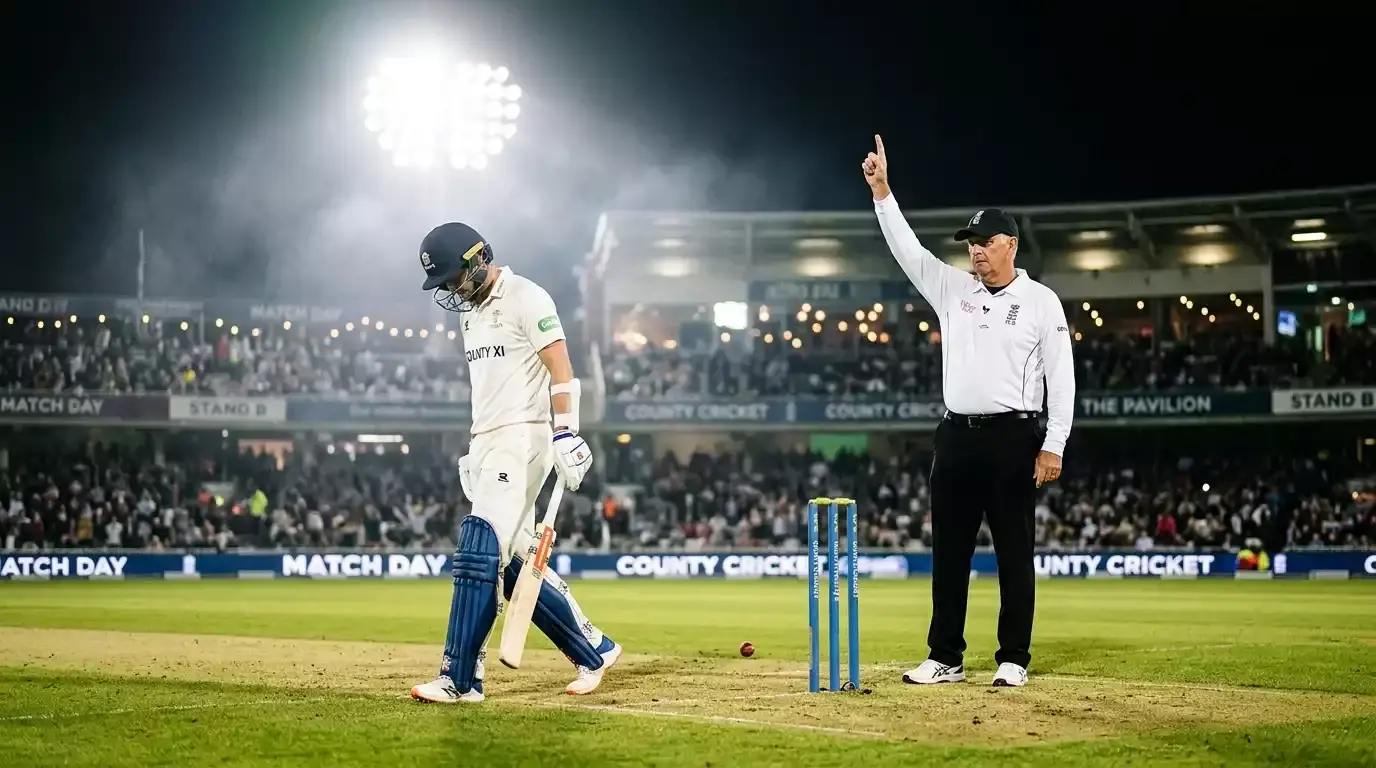
Exploiting Pitch Conditions for Dismissal Bets
I have a pre-match routine for Test cricket that starts with the pitch report and ends with checking the method-of-dismissal market for the first wicket of the match. Most punters who look at that market see a list of categories — caught, bowled, LBW, run out, stumped — and a list of prices, and treat it as a guess. It isn’t a guess. It’s the pitch report converted into a betting price, and the converted version is where the value lives if you’ve already done the homework on the surface.

“We aim to provide the industry’s highest GGR for cricket, with over 7,000 pre-match and live matches a year,” reads Sportradar Odds’ description of its cricket product. Within that volume, method-of-dismissal markets sit at the niche end of the menu and carry overrounds well above the match-winner book — but the structural mispricing on these markets is wider than the margin, because so few punters actually price them off the underlying probabilities. The market is thin enough that books haven’t industrialised it the way they have match-winner.
Base-Rate Frequencies of Each Dismissal Type by Format
The starting point for any method-of-dismissal bet is knowing what the underlying frequencies actually are. The numbers vary by format, but the broad shape is consistent.

In Test cricket, roughly 55 to 60 percent of dismissals are caught — by wicket-keeper or fielder combined. Bowled accounts for around 15 percent. LBW sits at 14 to 16 percent. Run-outs are 3 to 4 percent. Stumpings are below 1 percent. The rest is a handful of edge cases — hit wicket, obstructing the field, handled the ball — that combined make up less than 1 percent.
T20 reshuffles the distribution. Caught remains the dominant category but drifts to around 50 percent because batters take more risks and aerial shots produce different dismissal types. Bowled rises to around 18 to 20 percent because death-overs yorkers go through gates. LBW falls slightly to 10 to 13 percent because the powerplay shot-making style produces fewer LBWs than the more conservative Test approach. Run-outs rise dramatically to 8 to 10 percent because the running between wickets is more aggressive.
The Hundred follows T20 patterns closely but with run-outs even more elevated — the short format compresses time between balls and the aggressive intent produces more direct-hit chances. Stumpings rise marginally because spinners get a bigger share of overs at the death than in T20, and that creates stumping opportunities.
The book’s pricing rarely starts from these base rates cleanly. It starts from a mixed model that overweights recent dismissal types in the format and underweights the underlying frequency. That’s where the structural opportunity lives.
Pitch-Driven Edges: When LBW Is Underpriced
The single most consistent edge I’ve found in method-of-dismissal markets is LBW pricing on dry, low-bounce surfaces. Books price LBW around 5/1 to 6/1 on first-wicket method-of-dismissal in a typical Test innings. The base rate is around 14 to 16 percent, which converts to fair price of roughly 9/2 to 5/1 — not far from the book’s price. But on a low-bounce pitch with a green tinge or worn surface, the LBW probability jumps to 22 to 28 percent, fair price 11/4 to 3/1, and the book often hasn’t shifted from the 5/1 default.

Reading the surface for LBW probability is straightforward. Low bounce favours LBW because balls that hit the pad don’t carry over the stumps. Lateral movement favours LBW because batters miss balls they expected to be in different lines. Turn favours LBW for the same reason. A surface with all three — low bounce, lateral movement, turn — is an LBW market that the book hasn’t priced. I’ve found these markets most often at Old Trafford in late August and on Lord’s surfaces with a tinge of green left for the first day.
Caught markets are the inverse — they’re often overpriced because the book defaults to the high base rate and doesn’t shave enough for surface conditions. A turning, low-bounce pitch reduces caught probability because high catches at slip become less likely when bowlers aren’t generating bounce. The simultaneous read is to back LBW and lay caught on the same wicket, where the exchange allows it.
Settlement Edge Cases: DRS Overturns, Mankad, Obstructing the Field
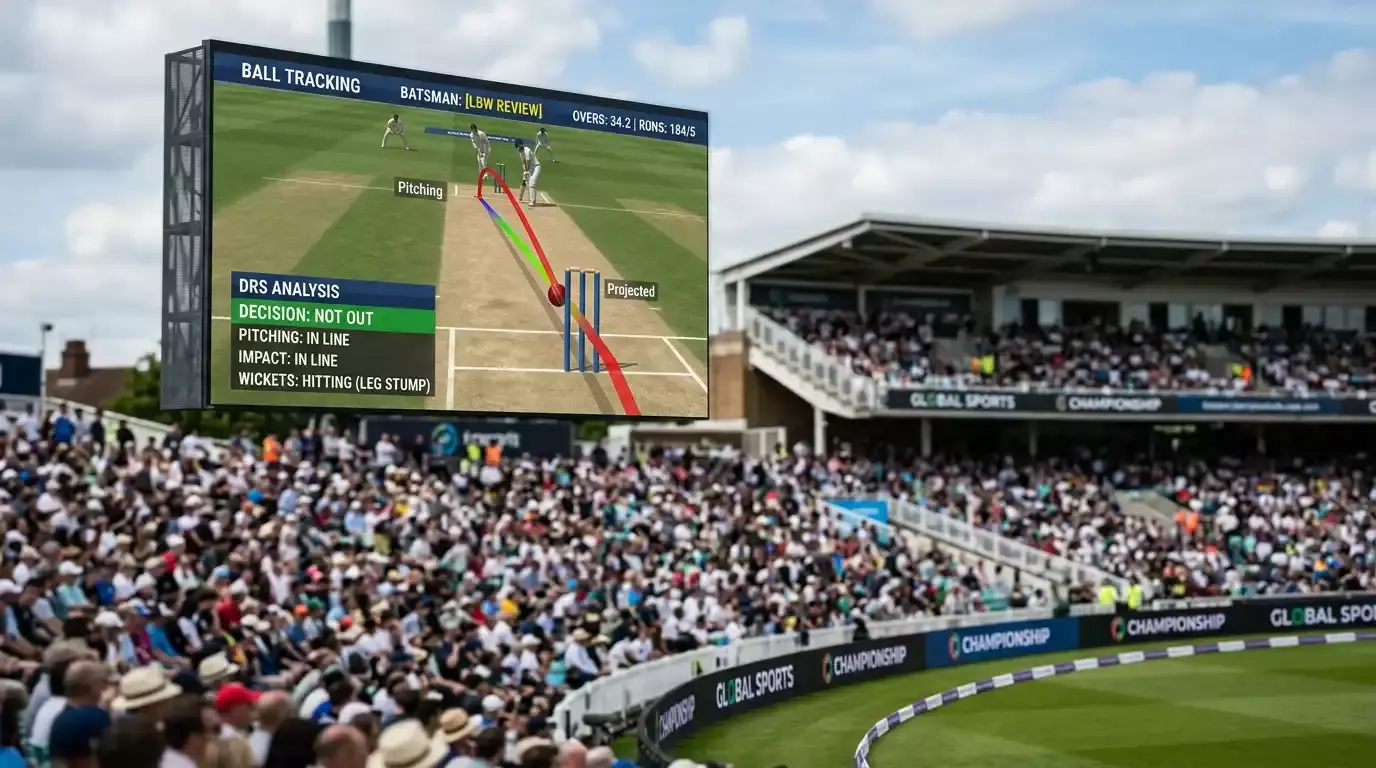
DRS reversals are the most common settlement edge case in method-of-dismissal markets. The standard UKGC rule is that the official scorecard at the end of the innings determines settlement. A batter given out caught who is then overturned via DRS reverts to “not out” in the scorecard, and any subsequent dismissal — say, LBW three overs later — is the settled method. The original caught-decision-and-reversal doesn’t count.
Mankad dismissals — non-striker run-out by the bowler at delivery — settle as run-outs across every UKGC sportsbook I’ve checked. The 2022 MCC rule change that classified mankad as a legitimate run-out rather than a separate sporting outcome is binding for settlement purposes. Books don’t have a separate “mankad” category, and the run-out price covers it.
Obstructing the field is a rare dismissal that settles as “other” on most cards, with stakes typically refunded if the punter has bet on a specific category. Handled the ball, since the 2017 amendment to the laws of cricket, is now classified as “obstructing the field”, so the same rule applies. Hit wicket settles in its own category on books that list it, or as “other” on books that don’t.
The cleanest rule for any settlement uncertainty is to read the operator’s specific cricket rules section before betting. The variation between books on edge cases is wider than on mainstream markets, and the same bet can settle differently across operators.
Combining With Totals Markets in a Bet Builder
Method-of-dismissal is a useful leg in a two-leg bet builder because it correlates loosely with totals and match-winner outcomes but not so strongly that the book heavily discounts the combination. The classic build is LBW first wicket plus first-innings total under — both legs benefit from a surface that’s giving the bowlers something, and the combination price typically pays meaningfully better than naïve multiplication after the book’s correlation adjustment.
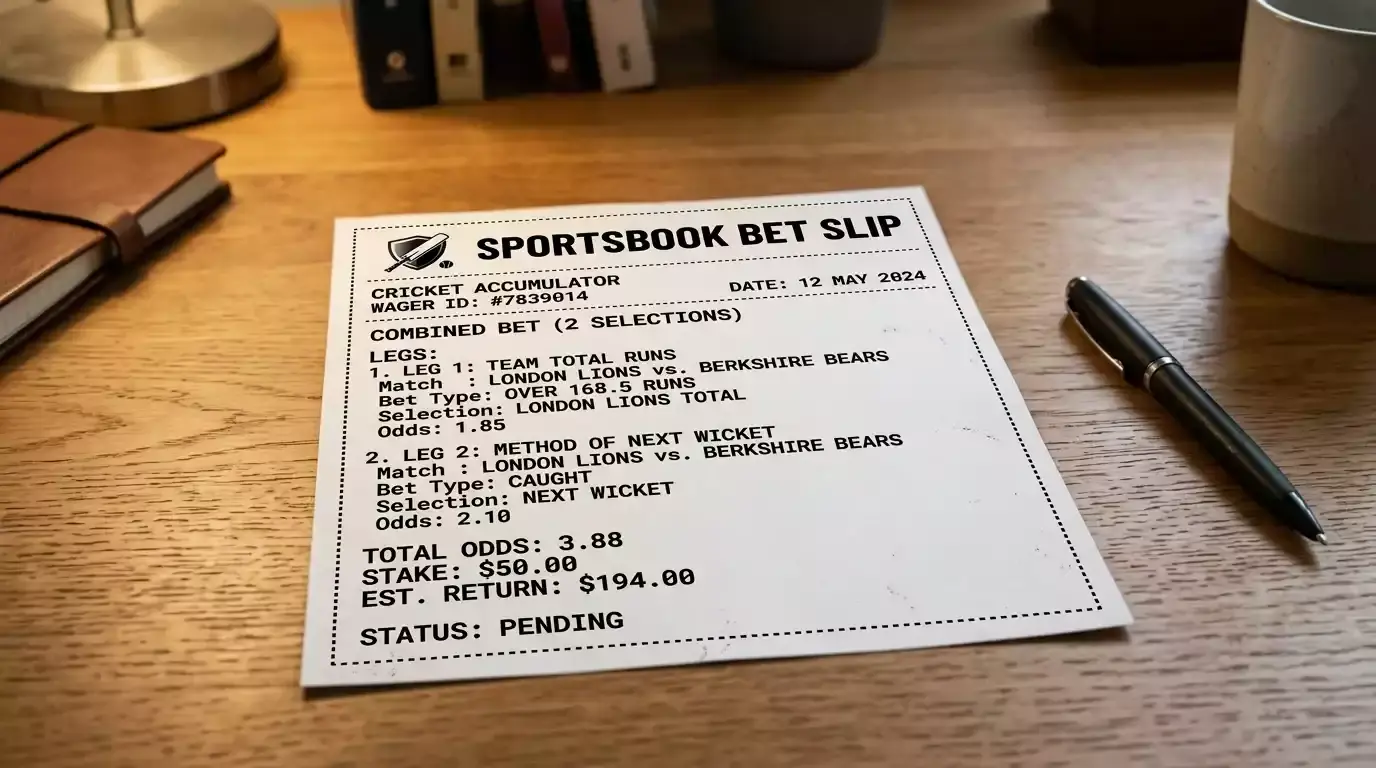
A T20 build I’ve run several times: “first wicket method = bowled” plus “match total over 320”. The reasoning is that bowled is a death-overs-heavy dismissal type that often comes from yorker bowling in matches that go long — the first wicket being bowled often signals an attacking opener departing at speed, which sets up the rest of the innings for an above-average total. The correlation is real but loose, and the book typically prices this combination at around 11/2 versus a fair price closer to 4/1.
The combination that books usually block is “first wicket method = X” plus “top batsman = opener from the side bowling”. The implied correlation — first wicket falling early to a specific method, and an opener from the bowling side accumulating runs because the opposing side is bowled out cheaply — is strong enough to trigger the book’s stack-blocker. Read the specific rules before submitting a slip with that pairing; some books quietly accept it at a heavily discounted price rather than blocking outright.
The wider context for niche markets like this lives in the same pricing model that powers top bowler markets and overs allocation across the bowling side of the innings.
