

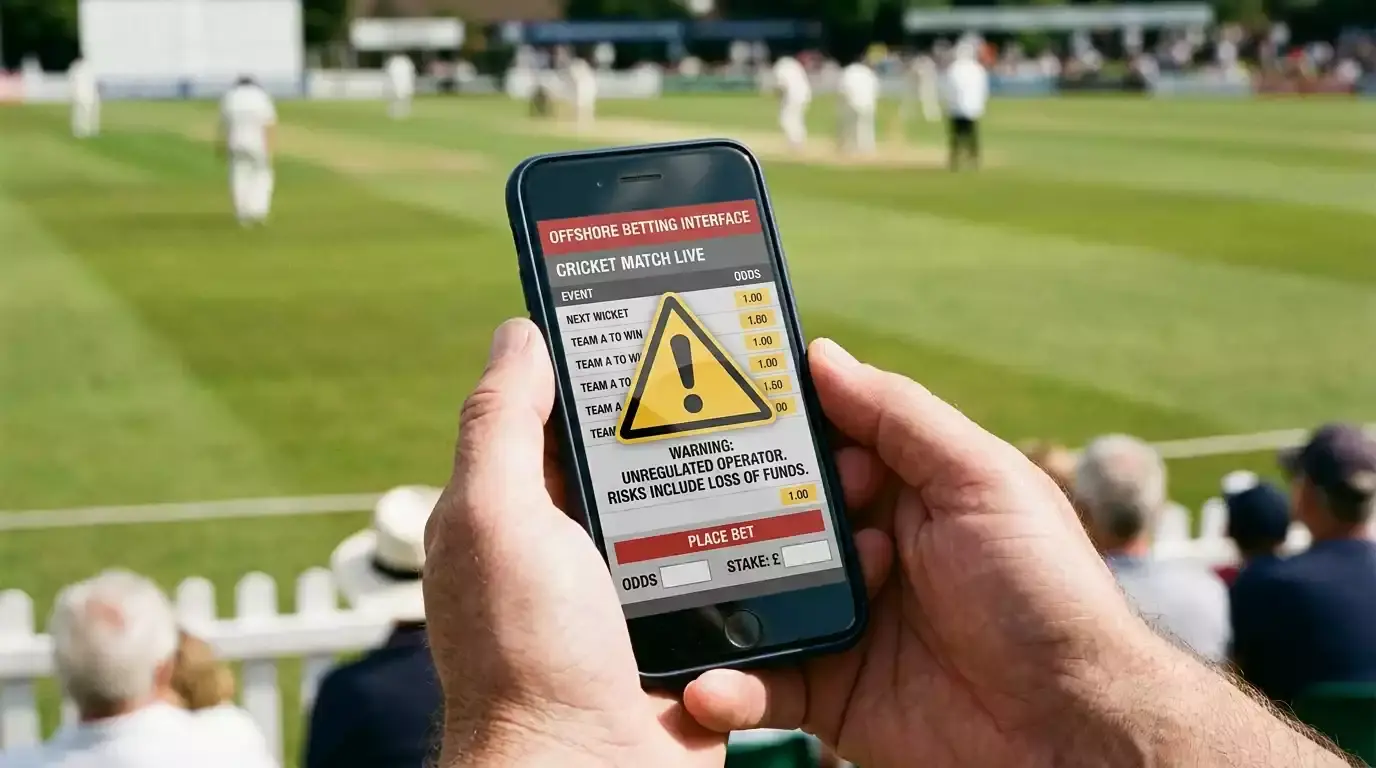
Analyzing the Shift Towards Unlicensed Offshore Sportsbooks
The numbers on offshore UK gambling have moved so fast in the last five years that anyone using 2020 reference points is looking at the wrong map. In 2020, illegal operators accounted for around 0.43 percent of UK online gambling activity. By the first half of 2025, that figure had reached approximately 9 percent. The 20-fold expansion isn’t an accounting artefact. It’s a structural shift in where UK consumer betting volume is going, and cricket sits squarely inside the segment that’s growing fastest.

Yield Sec’s reporting puts the H1 2025 offshore GGY figure at £379 million in the UK alone — over six months, against a regulated online sector that pulled in £3.9 billion across the same period. The offshore share isn’t yet dominant, but its growth trajectory is fast enough that the gap is narrowing year on year. Anyone betting cricket from the UK in 2026 is operating in an environment where 9 percent of the surrounding market is unregulated, and the trajectory points upward.
Yield Sec H1 2025: £379 Million, 531 Operators, 1,600 Affiliates
The structural picture of the UK offshore market in H1 2025 has been mapped most precisely by Yield Sec. Their reporting identifies 531 black-market sports betting and casino operators actively targeting UK audiences in the period. Around 700 illegal operators were promoted across the H1 window when affiliate-only sites are included, with over 1,600 affiliate resources directing traffic to those operators.

“The illegal sector comprises around 700 unlicensed operators promoted by more than 1,600 affiliates, operating alongside the legal market of over 2,000 licensed operators generating £3.9bn in revenue and promoted by nearly 7,000 affiliates,” Ismail Vali, CEO of Yield Sec, said in a briefing to Peers for Gambling Reform in 2025. The juxtaposition is the key insight: the legal market is still larger in operator count and affiliate density, but the offshore segment’s growth rate is faster, and its targeting of UK audiences is increasingly sophisticated.
The £379 million H1 figure breaks down across sports and casino product, with sports betting accounting for a meaningful share. Cricket sits within sports betting alongside football and other major sports. The cricket-specific share isn’t broken out cleanly in public reporting, but the geographic distribution of offshore operator marketing — heavy in regions with large cricket-following populations — suggests cricket is one of the most heavily targeted sports for offshore acquisition.
H2 Gambling Capital: £16.6 Billion in UK Consumer Stakes Offshore
The GGY figure tells one part of the story. The total consumer-stake figure is the harder number to look at squarely. H2 Gambling Capital estimates UK consumer stakes on black-market platforms reached approximately £16.6 billion in 2025, compared to around £5 billion in 2019. The threefold expansion over six years tracks closely with the GGY rise, which moved from around £200 million in 2019 to approximately £685 million in 2025.
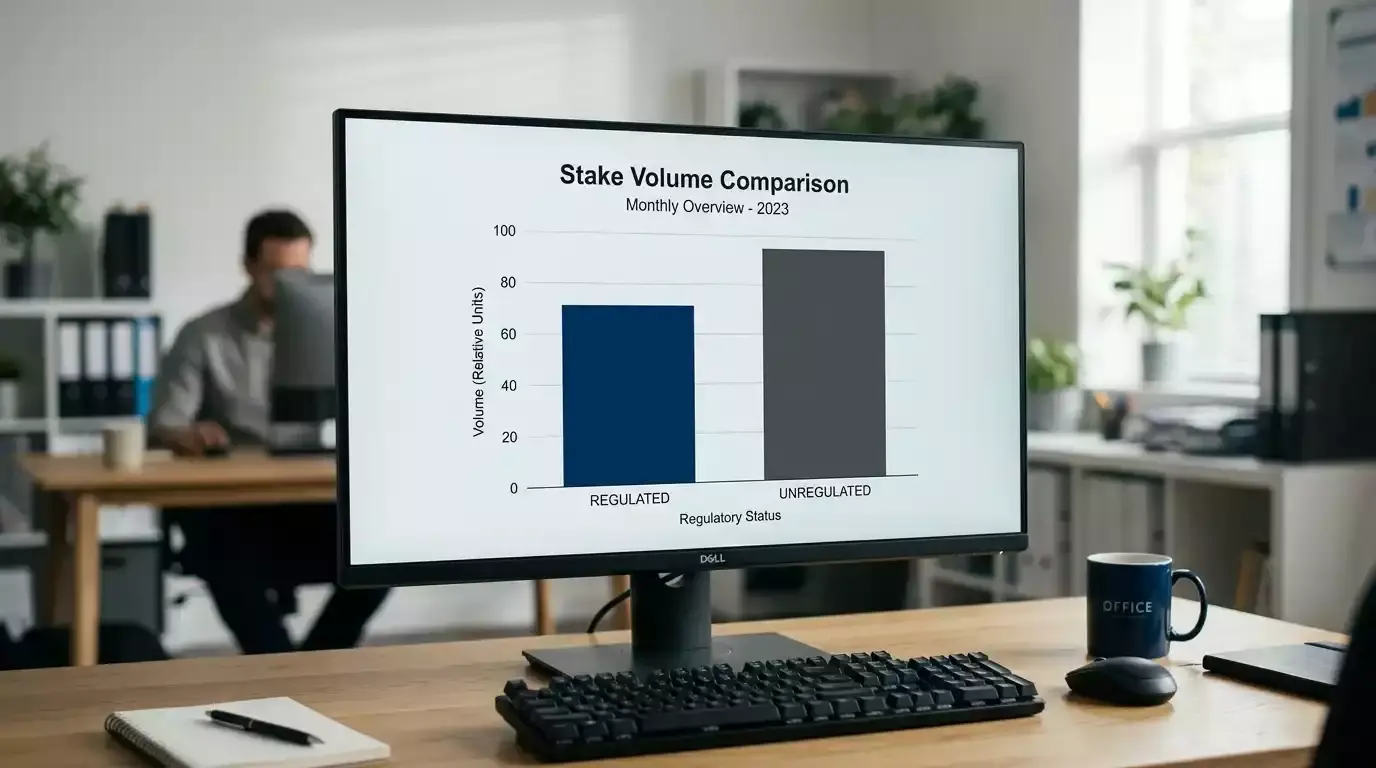
The legal market’s share of UK gambling activity has correspondingly fallen, from 97 percent in 2019 to 92 percent in 2025. The five-percentage-point shift sounds modest until you map it onto absolute money flows: it represents tens of billions of stake migration from the regulated to the unregulated sector across a single half-decade. The compound effect, if the trajectory continues, takes the offshore share into double digits within the next few years.
The drivers of the shift split between push and pull factors. Push factors are the friction increases on the regulated side — affordability checks, stake limits on slots, account closures, sharper margin requirements. Pull factors are the offshore market’s offerings — higher stake limits, faster withdrawals via crypto rails, no affordability checks, and aggressive promotional offers that the UKGC framework doesn’t permit. The combination has produced sustained migration that the regulatory framework has yet to address effectively.
Why UK Punters Cross to Unlicensed Sites
I’ll be direct about the appeals because most regulatory commentary skips over them. Offshore sites offer higher maximum stakes than UK-regulated operators. Most UKGC sportsbooks now apply stake factor reductions aggressively, particularly on sharper customers — offshore operators don’t have that infrastructure or that incentive. A punter who has been stake-factored on every UK book they hold accounts with can migrate to offshore for the simple practical reason that they can place the stakes they want to place.

Affordability checks are the second draw. The £150-per-30-day threshold under SRCP 3.4.4(6) applies only to UKGC licensees. Offshore operators have no equivalent obligation. A customer who has experienced an escalated affordability check at a UK operator — bank statements, source-of-funds documentation, weeks of account lockout — has a strong practical incentive to migrate to an environment without that friction.
Crypto-rail deposits and withdrawals matter for a specific segment of users. Offshore operators that accept cryptocurrency offer transaction speeds that compare favourably to traditional banking rails, and they sit outside the visibility of UK retail banks’ gambling-block infrastructure. The combination of speed and privacy is appealing to users who want either operational efficiency or distance from the traditional banking footprint of their gambling activity.
Promotional generosity is the fourth driver. UKGC rules have tightened on bonus offers, free-bet promotions and similar marketing tools over the last few years. Offshore operators offer more generous welcome bonuses, regular reload offers, and VIP programmes that the regulated framework no longer permits at the same scale.
Risk Profile: No GamStop, No Dispute Path, No Recourse
The cost of all the “advantages” above is that offshore users sit outside every consumer protection mechanism that UK regulation provides. GamStop doesn’t cover offshore operators — the national self-exclusion scheme is bound to UKGC licensees. A user who has self-excluded but accesses an offshore site to bet is outside the regulatory perimeter that would otherwise block them.

The dispute resolution gap is more practical. UKGC licensees are subject to a complaint-handling regime, must use approved independent ADR providers, and ultimately are accountable to the Gambling Commission for systemic conduct. Offshore operators have no equivalent accountability route for UK customers. Withdrawals that don’t arrive, account closures with retained balances, disputes about bet settlement — none of these have a clear escalation path when the operator is offshore. The user’s effective recourse is to write to the offshore licensing jurisdiction, which often has neither the capacity nor the practical interest to act on individual UK complaints.
Anti-money-laundering controls are weaker, sometimes substantially so, on offshore operators. The UKGC’s AML enforcement on licensees is rigorous and well-funded. The offshore equivalent varies dramatically — some jurisdictions impose meaningful AML obligations, others impose minimal ones. A UK customer using an offshore site has limited visibility into the operator’s actual AML practice, which means they’re trusting a regulatory framework whose strictness they cannot easily verify.
The Enforcement Gap and What 2026 Might Bring
The UK regulatory response to the offshore market has been the area of weakest action across the 2025 reform package. The Gambling Commission has powers to take action against operators advertising to UK customers without a UK licence, but enforcement is technically and politically difficult. The offshore operators are typically domiciled in jurisdictions where the UK has no extraterritorial reach, and the operators themselves often operate under structures designed to defeat enforcement attempts.

Action against affiliates — the 1,600 promotional resources directing UK traffic to offshore sites — has been more practical. Several affiliate sites have been the target of UKGC action, and search engine and platform-level interventions have removed some affiliate visibility from UK audiences. The whack-a-mole quality of the work means new affiliates appear faster than action against existing ones, but the affiliate visibility in the UK information environment has tightened compared to 2023.
The World Advertising Research Center forecast that black-market operators will spend approximately £1 billion on gambling advertising in the UK by 2028 — more than the regulated sector itself. If that forecast holds, the offshore market will be advertising harder in the UK than the regulated market it competes with, and the enforcement gap that currently allows offshore visibility will become the central regulatory problem of the late 2020s. The 2026 policy work emerging from DCMS is starting to address this, but no clean enforcement solution has been articulated as of writing.
The advertising channel that does the most work directing UK punters toward offshore operators is the subject of my piece on illegal cricket streams as a betting funnel and the 2025 viewership data.
