

Navigating the £150 Escalated Affordability Threshold
Six months ago a reader of mine got locked out of his cricket sportsbook account 20 minutes before the toss of an India Test. He hadn’t done anything different to the previous month — same stake sizes, same fixtures, same deposit cadence. What had happened was that his cumulative net deposits crossed £150 within a 30-day rolling window, and the operator’s affordability system silently flagged him for a frictionless check that didn’t produce a satisfactory result. The account stayed locked for three days while he provided documents.

The £150 threshold is the single most important number in UK gambling regulation that most punters don’t know exists. It comes from Social Responsibility Code Provision 3.4.4(6), part of the UKGC operating licence conditions. Operators are required to perform financial vulnerability checks when a customer’s net deposits exceed the threshold across a 30-day rolling window. The check itself is supposed to be invisible to the user — frictionless, in the regulator’s language — but the consequences when it doesn’t return a clean signal are anything but.
The £150 / 30-Day Threshold in Plain Language
The threshold is straightforward in principle. Across any rolling 30-day window, if your net deposits with a single UKGC-licensed operator exceed £150, that operator is required to run a financial vulnerability check. “Net deposits” means deposits minus withdrawals in the same period. Deposit £300, withdraw £200, and your net deposit figure is £100 — below the threshold and no check triggers. Deposit £200, withdraw nothing, and you’re £50 over the threshold and the check fires.
The rolling window is the part that catches most people. It’s not “calendar month”. It’s “any 30 consecutive days”. A deposit pattern of £80 on the 1st, £40 on the 15th and £40 on the 28th of one month puts you over £150 even though no single calendar month touched the limit. The system runs continuously, and any 30-day stretch crossing £150 triggers.
The threshold is per-operator, not cumulative across the UKGC sector. Deposit £100 each at two different licensed sportsbooks and neither triggers, even though you’ve deposited £200 across the regulated sector. This is one of the structural quirks of the rule — it monitors the operator’s exposure, not the customer’s total exposure. Industry-wide cumulative tracking would require data-sharing infrastructure that doesn’t currently exist among UK operators.
Frictionless Checks: How Operators Verify Without Asking
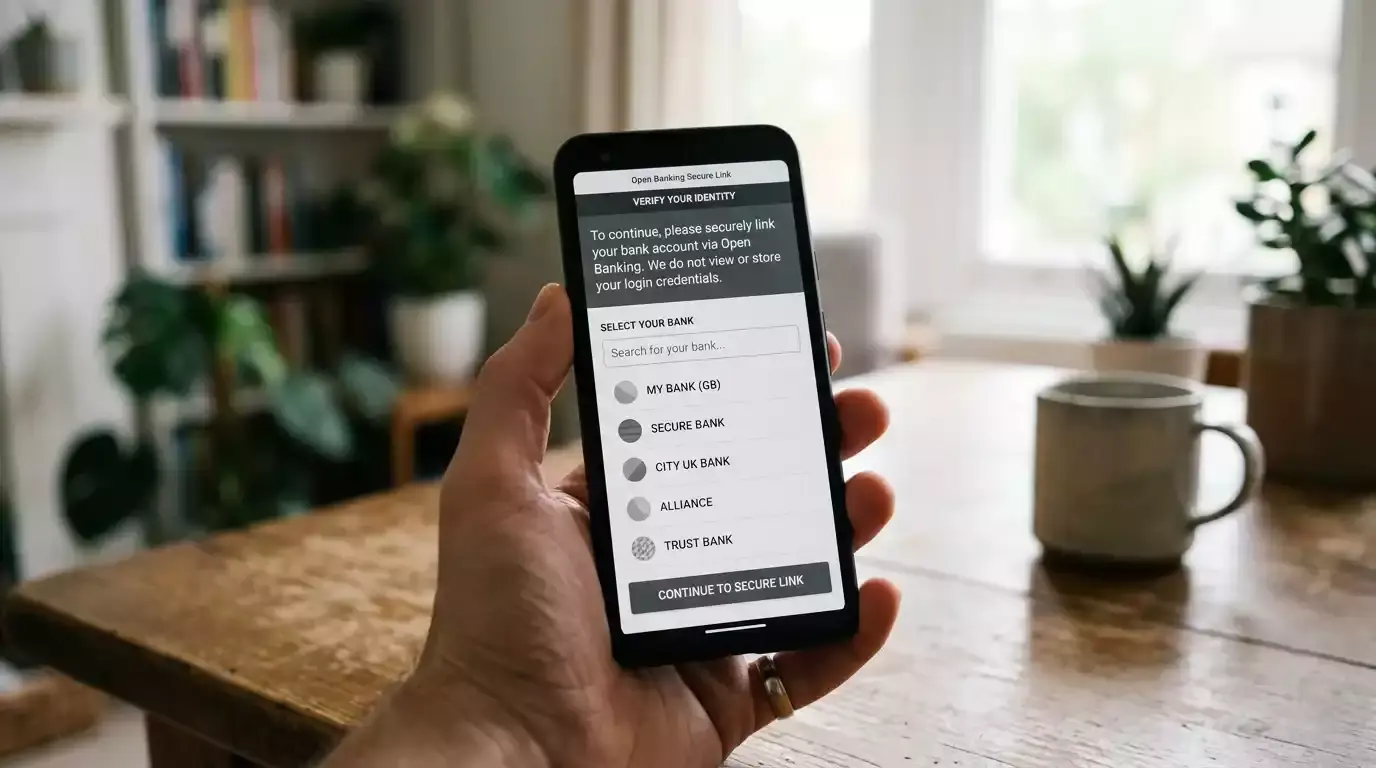
Most affordability checks settle quietly without the user noticing. The “frictionless” process uses external data sources — credit reference agencies, open banking signals where the user has previously consented, and basic demographic information — to assess whether the deposit level is consistent with reasonable financial means. The operator queries a data partner, receives a signal of “consistent” or “inconsistent”, and either lets the activity continue or escalates to a more intrusive check.
Credit reference data is the workhorse. The operator queries a partner like Experian or Equifax for a customer’s credit file, which includes employment status, income range proxies, recent borrowing patterns, and adverse markers like CCJs or defaults. The data returned is summarised — operators don’t get the full credit file, just a signal that translates roughly to “this person’s financial position is plausibly consistent with this gambling level” or the opposite.
The pass rate on frictionless checks across the UKGC operator base sits around 90 to 95 percent based on industry reporting from late 2025. That leaves 5 to 10 percent of triggered checks escalating to manual review. For a bettor with a clean credit file, stable employment, and modest gambling history, a £150-trigger check is almost certainly going to clear without your knowledge. For someone with adverse markers, the same trigger can produce a hard stop.
Escalated Checks: Bank Statements, Payslips, Source-of-Funds
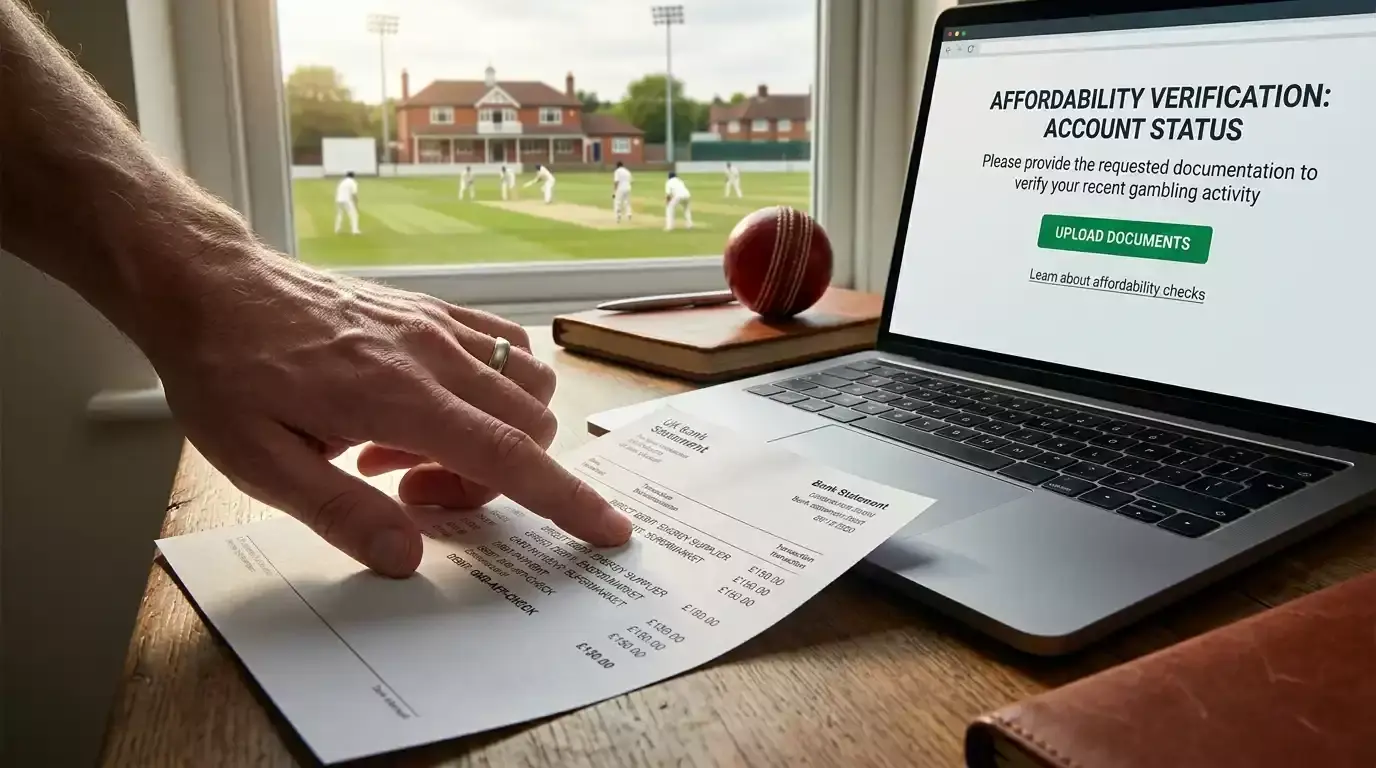
When frictionless doesn’t return a clean signal, the operator escalates. The user gets a message — usually in-app, often blocking further play until resolved — asking for documentation. The standard request set is three months of bank statements, two recent payslips or proof of income, and sometimes a self-declaration form describing the source of gambling funds.

The reason for the request is that the operator is now required, under SRCP 3.4.4(6), to verify that the gambling activity is consistent with the customer’s overall financial situation. Bank statements show actual income and outgoings, providing a much sharper signal than the credit reference summary. Payslips confirm employment and income, which the credit file may report imperfectly. Source-of-funds questions cover the case where a recent influx of money — an inheritance, a property sale, a large bonus — is funding the gambling activity, and the operator needs to be satisfied the source is legitimate.
The user experience varies. Some operators run the escalated check via a uploaded-document portal that resolves within 24 hours. Others use third-party verification services that take a few days. During the verification window, the account is typically locked for new deposits and sometimes for any betting at all, including stakes already on the slip. The lockout duration is the single biggest source of frustration in the affordability system, because it’s often misaligned with the user’s expectations of when they want to bet.
The 2025 statutory levy that introduced a 1.1 percent charge on online operator GGY has produced a related shift: operators that previously cut corners on affordability are now formally accountable for funding the harm-reduction infrastructure that affordability checks support. The compliance bar across the regulated sector has measurably risen, and escalated checks are now more rigorous on average than they were before April 2025.
Appeal and Dispute: Options When a Check Locks Your Account
If an affordability check returns an outcome that locks your account, you have three practical routes. The first is to provide the requested documentation promptly and clearly. Operators reopen accounts within 48 hours of receiving complete documentation in most cases, and incomplete submissions are the most common reason for extended lockouts.

The second route is internal complaint to the operator. UKGC-licensed sportsbooks are required to have a complaints process. The complaint won’t necessarily reverse the affordability conclusion, but it forces a documented review, and the review sometimes finds errors in the initial assessment. The escalation timeline is typically 8 weeks from formal complaint to final response.
The third route — used only after the internal complaint has failed — is to escalate to an independent ADR provider such as IBAS or eCOGRA. The ADR review is genuinely independent, takes a few weeks to a few months, and can produce binding determinations on operator behaviour. ADR escalations don’t always succeed, but the threat of escalation often produces a more careful internal review at the operator level. The Gambling Commission itself doesn’t intervene in individual customer disputes — its remit is licensing and systemic enforcement, not case-by-case adjudication.
The wider regulatory framework that introduced affordability checks also introduced the new funding model for harm reduction, which I explore in my piece on the UK statutory gambling levy and how it changed the regulated sector.
