


Reviewing Independent ECB Regulatory Commission Actions
The most consequential structural change in English cricket governance in the last decade isn’t a new format or a new tournament. It’s the decision the ECB took in 2023 to create an independent Cricket Regulator and externalise the disciplinary functions that had previously sat inside the parent body. The change was driven by a recognition that internal self-regulation had reached the limits of credibility — the same organisation could not credibly investigate itself, sanction its own member clubs, and run a competitive professional sport at the same time.

The Cricket Regulator launched with Dane Lewis as its head, a former police chief with over 30 years of service. The hiring choice signalled the seriousness of the institutional intent. Dane Lewis described the remit in formal terms: “The Cricket Regulator will cover a wide range of matters on which the game has set clear standards, including anti-discrimination. The team and I are clear about the importance of meeting high standards in ensuring people across the game know what is expected of them, and having the best procedures in place, to protect and promote the good of the game.” That brief sentence covers four substantive areas of remit that were previously fragmented across multiple ECB committees.
Formation: Why the ECB Externalised Regulation in 2023
The path to the 2023 creation runs through several preceding events. The most visible was the Independent Commission for Equity in Cricket, which reported in 2023 with findings that English cricket had systemic issues around discrimination at multiple levels. The findings made internal self-regulation politically untenable — the ECB needed a structurally independent body with clear authority to handle disciplinary matters without conflict-of-interest concerns.
The financial scandals and integrity cases of the preceding decade contributed. Several player betting offences had been handled inconsistently across cases, with sanctions varying in ways that suggested the underlying framework needed harmonisation. The 2023 separation of the Cricket Regulator from the parent ECB clarified the chain of authority — the Regulator investigates, the Cricket Discipline Commission adjudicates, and sanctions are imposed based on a framework that’s independent of the ECB’s commercial and competitive functions.
The organisational design borrowed from comparable bodies in other sports and from professional regulatory frameworks more generally. The Football Association’s regulatory and disciplinary structure was studied. The independent regulator model in financial services provided some of the institutional design principles. The result is an English cricket regulatory framework that looks more like a professional regulator than a sports federation, which is both its strength and the source of its institutional friction with parts of the cricket establishment.
Remit: Anti-Corruption, Anti-Discrimination, Anti-Doping, Misconduct
The Cricket Regulator’s remit covers four distinct domains. Anti-corruption covers betting offences by players, match-fixing investigations within English cricket, and sanctions for breaches of player betting prohibitions. The 2024 case of Brydon Carse, the England and Durham fast bowler banned for three months for betting offences committed several years earlier, sits squarely in this domain.
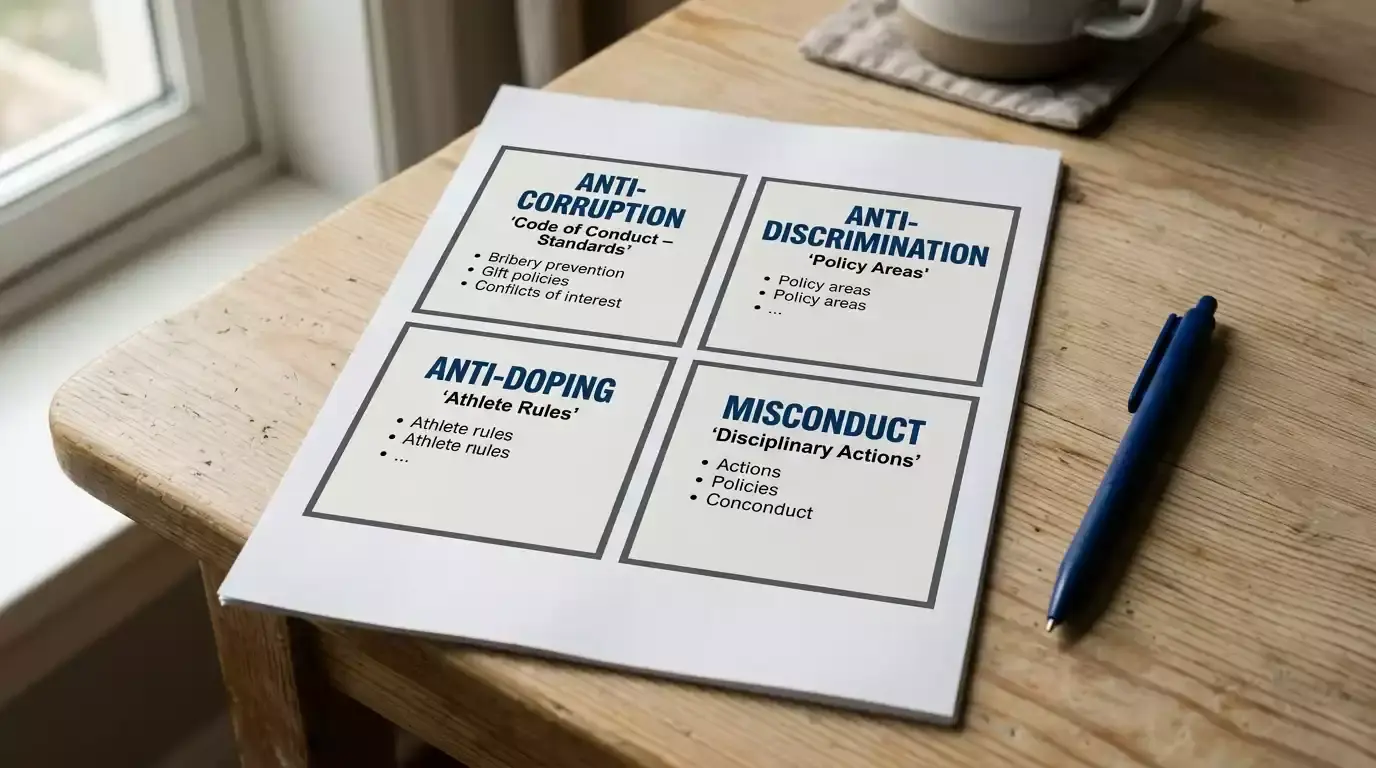
Anti-discrimination covers complaints arising from the Independent Commission for Equity in Cricket recommendations. The Regulator investigates allegations of racism, sexism, classism and other forms of discrimination across English cricket at all levels — professional, amateur, recreational and administrative. The framework defines the standards, the investigation process, and the available sanctions, which can include lifetime bans from the sport for serious offences.
Anti-doping operates in coordination with UK Anti-Doping (UKAD), which retains primary jurisdiction for the underlying drug-testing programme. The Cricket Regulator’s role is to handle the disciplinary follow-through when UKAD identifies a positive test or other anti-doping rule violation involving an English cricketer. The dual-jurisdictional structure means a doping case typically involves both bodies working together — UKAD on the technical side, the Cricket Regulator on the sport-specific disciplinary side.
Misconduct is the catch-all category for behaviour that doesn’t fit the other three. This includes bringing the game into disrepute, breaches of the player code of conduct, social media misconduct, and other forms of behaviour that fall below the standards set by the ECB and its constituent bodies. The misconduct caseload is the largest by volume but the lowest in average severity — many cases are resolved with warnings or short suspensions rather than the more severe sanctions seen in the corruption category.
The Cricket Discipline Commission and Its Working Relationship
The Cricket Discipline Commission — CDC — is the adjudicating body that hears the cases the Regulator brings. The two organisations are structurally separate to maintain the investigator-adjudicator distinction. The Regulator’s role is to investigate and present cases. The CDC’s role is to hear the evidence, apply the relevant standards, and impose sanctions where appropriate.
The split mirrors the prosecutor-court structure familiar from professional regulation in other sectors. The Regulator decides whether there’s a case to answer based on its investigation, then puts the case before the CDC, which conducts a formal hearing with both sides represented. The accused has the right to legal representation, to call witnesses, and to cross-examine the Regulator’s evidence.
The CDC’s decisions are subject to appeal through an independent appeals panel, which provides a second layer of independent review for any party that disputes the original outcome. The appeal process has been used in several high-profile cases, with outcomes ranging from confirmation of the original sanction to reduction or quashing where the appeals panel finds the original decision was unsupported by the evidence.
Recent Rulings: Sheikh Five-Year Ban, Carse Three-Month Ban
Two cases from the recent caseload illustrate the range of the Regulator and the CDC’s work. The Brydon Carse case in 2024 produced a three-month ban for betting offences. The offences were several years old at the time of the disciplinary action, but the framework treats reporting and disclosure as continuing obligations. Carse himself addressed the matter publicly: “Whilst these bets were several years ago, that is no excuse and I take full responsibility for my actions. I would like to thank the ECB, Durham Cricket and the PCA for their support during this difficult time for me.” The three-month sanction reflects both the historic nature of the bets and Carse’s cooperation with the investigation.

The Mugheez Ahmed Sheikh case in 2025 produced a five-year ban with the final 30 months suspended for attempted bribery of a county coach. The case demonstrates how the Regulator’s remit reaches beyond players themselves to others operating within the professional cricket ecosystem. The sanction structure — five years with 30 months suspended — reflects the seriousness of the underlying conduct combined with the absence of an actual completed offence (the coach refused the approach and reported it).
Both cases show the Regulator and CDC operating to a standard of proportionate enforcement. The sanctions are calibrated to the offence rather than to a deterrent maximum, and the framework allows credit for cooperation, admission and the time elapsed since the underlying conduct. The structural separation between investigation and adjudication has held across both cases, with no successful appeal undermining the original outcomes.
The companion piece of the regulatory framework — the rules governing how gambling brands can engage with English cricket — sits alongside the disciplinary work and is the focus of my piece on the ECB gambling sponsorship code and its four principles.
