

Reviewing the Mugheez Ahmed Sheikh ECB Suspension
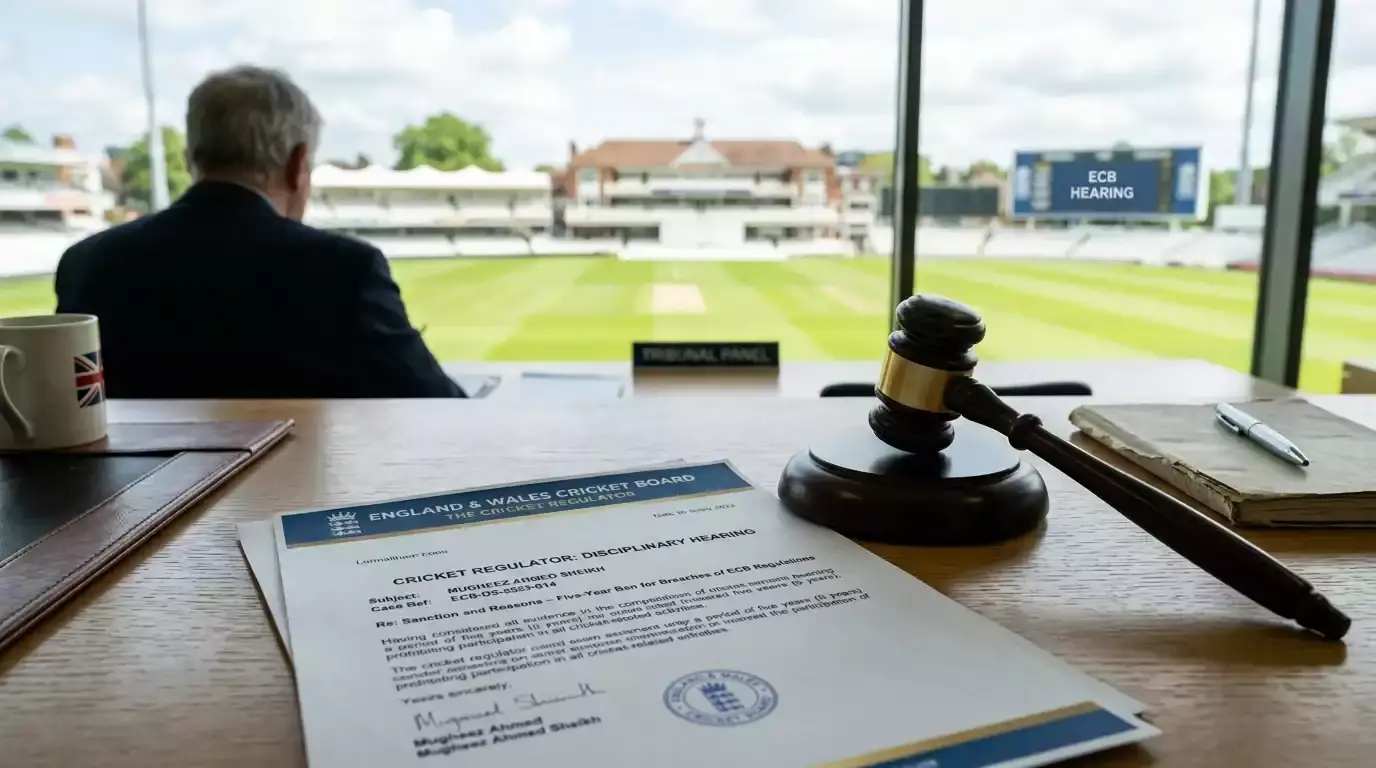
The first major disciplinary outcome of the 2025 cricket season in England arrived in late March, before the County Championship had even started. The ECB Cricket Discipline Commission imposed a five-year ban — with the final 30 months suspended — on Mugheez Ahmed Sheikh, a former agent for Pakistani players, for attempting to corrupt a county coach. The case had taken months to investigate, the disciplinary process had been thorough, and the resulting sanction structure reflected the seriousness of attempted corruption combined with the fact that no actual corruption occurred. The coach refused. He reported the approach. The system worked.

“Mugheez Ahmed attempted to involve a professional county coach in a corrupt scheme, which could have serious implications for the integrity of cricket in England, Wales, and beyond,” Chris Howard, Director of the ECB Cricket Regulator, said in the formal statement on the case. The framing — extended consequences, attempted involvement of a coach, scope beyond English cricket alone — established the case as a teaching moment for the integrity infrastructure rather than just a procedural disciplinary outcome.
The Facts: Bribery Attempt, Reporting Chain, Disciplinary Outcome
The case facts as established by the disciplinary process were that Sheikh approached a county coach with what was effectively a bribery proposition. The details of exactly what the corrupt scheme involved — which matches, what outcomes were to be influenced, what compensation was offered — have not been publicly disclosed in full, but the framework of the offence was clear from the disciplinary outcome. The approach was made, the coach refused, and the coach reported the approach to the relevant integrity infrastructure.

The reporting chain that followed is the part that demonstrates the system functioning. The coach reported to county-level integrity contacts, who escalated to the ECB Cricket Regulator. The Regulator’s investigation team gathered evidence, established the facts, and assessed the appropriate disciplinary action. The case was referred to the Cricket Discipline Commission, which conducted the formal hearing and imposed the sanction. The timeline from initial approach to final ruling spanned several months, which is consistent with the typical disciplinary process for cases of this complexity.
The disciplinary outcome — five years with 30 months suspended — sits in the higher tier of sanctions imposed by the ECB framework in recent years. The five-year length reflects the serious nature of attempted corruption involving a professional coach. The 30-month suspension component accounts for the fact that the corruption attempt did not succeed and that the coach’s prompt reporting prevented any actual harm to the integrity of cricket.
Sanction Structure: Five Years With 30 Months Suspended
The split-sanction structure — part active, part suspended — is a feature of the ECB framework that allows the Commission to communicate the seriousness of the offence while calibrating the active component to the actual harm caused. The 30-month suspended element acts as a conditional sanction: if Sheikh commits another disciplinary offence within the suspension period, the suspended portion converts to active and is added to whatever new sanction the further offence attracts.

The active portion — 30 months from 26 March 2025 — bans Sheikh from any involvement with ECB-sanctioned cricket activity. The scope of “involvement” under the framework is broad. It covers attending fixtures in any official capacity, working with professional players or coaches under ECB jurisdiction, representing or advising players in negotiations with ECB-sanctioned entities, and any other engagement with the formal cricket structure within the ECB’s perimeter. The ban does not prevent informal personal activity — attending matches as a spectator, for instance — but does prevent any role that would put Sheikh in a position of influence within the professional cricket ecosystem.
The structural rationale for the split sanction is that the framework wants to deter attempted corruption strongly while preserving the proportionality principle. A flat five-year active ban for an unsuccessful attempt at corruption would be hard to defend on proportionality grounds when compared to the sanctions imposed for other serious offences. A three-year active ban would understate the seriousness of attempting to corrupt a professional coach. The split sanction allows the framework to communicate both the seriousness of the offence and the proportionality of the response.
Corruptor Typology: Why Agents Are a Persistent Vector
The Sheikh case illustrates a pattern that the ICC Anti-Corruption Unit and ECB have flagged repeatedly: agents and former agents are a persistent vector for corruption approaches in cricket. The structural reason is straightforward. Agents have existing relationships with players, coaches and administrators. They have legitimate reasons to be in contact. They understand the commercial and professional pressures that the targets of corruption approaches face. The combination produces a vector that’s harder to defend against than approaches from complete strangers.

The ICC ACU has publicly discussed this typology in several recent statements. The unit’s general manager has described “vulnerability” as arising where “there is a lack of care about who the franchise owners are”, and the underlying logic extends to agents — vulnerability arises where the integrity vetting of intermediaries is patchy or non-existent. The cricket ecosystem’s network structure, with agents bridging players to commercial opportunities, creates the relationships that corruptors can leverage.
The defensive measures against this vector are mixed in effectiveness. Player and coach education modules cover the specific patterns of agent-mediated approaches. Mandatory reporting obligations require that any approach be disclosed, regardless of the messenger. Vetting of agents and intermediaries has improved across the last decade but remains incomplete. The Sheikh case shows that the defensive infrastructure can work — the coach reported, the system processed the report, and the disciplinary outcome was imposed — but the underlying vulnerability that allowed the approach to be attempted in the first place has not been structurally eliminated.
Prevention Takeaway for Coaches and Players
The Sheikh outcome carries practical lessons for coaches and players. The first is that the reporting obligation works as intended. The coach who refused the approach and reported it experienced no negative professional consequences. The disciplinary process treated him as a witness, not as a suspect. His career continues unaffected by the case. The pathway of “refuse and report” produced the cleanest possible outcome for everyone involved except Sheikh.
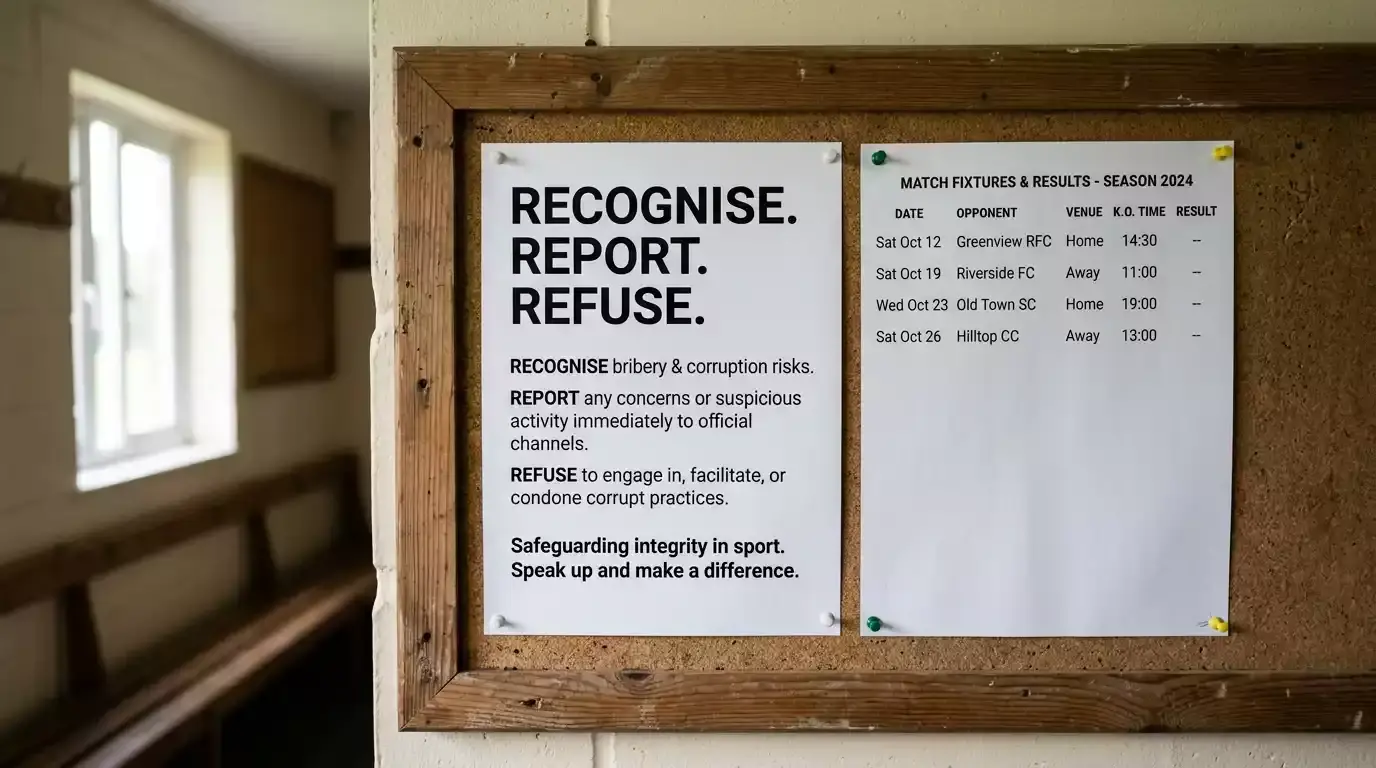
The second lesson is that the time lag between approach and consequence isn’t measured in weeks. A coach or player who is approached today may not see the disciplinary outcome for many months. The reporting decision is made under uncertainty about how the process will unfold, but the documented outcomes — Sheikh’s case, the various player cases handled over the last decade — provide a track record that supports the “refuse and report” choice. The framework is consistent, the outcomes are predictable in shape if not in specific detail, and the structural protection for reporters is real.
The third lesson is that approaches via established figures — agents, former players, others within the cricket ecosystem — are not safer to engage with than approaches from strangers. The structural risk is identical: an approach is an approach, regardless of who makes it. The mandatory reporting obligation applies to all approaches without distinction. A player who reports an approach from a complete stranger and a player who reports an approach from a longstanding professional contact are treated identically by the framework — both are protected, both are credited with cooperation, neither faces consequences for the reporting itself.
The international integrity infrastructure that coordinates with the ECB on cases like this is the focus of my piece on the ICC Anti-Corruption Unit and international cricket’s frontline.
