

Structuring Wagers Around Domestic and International Calendars
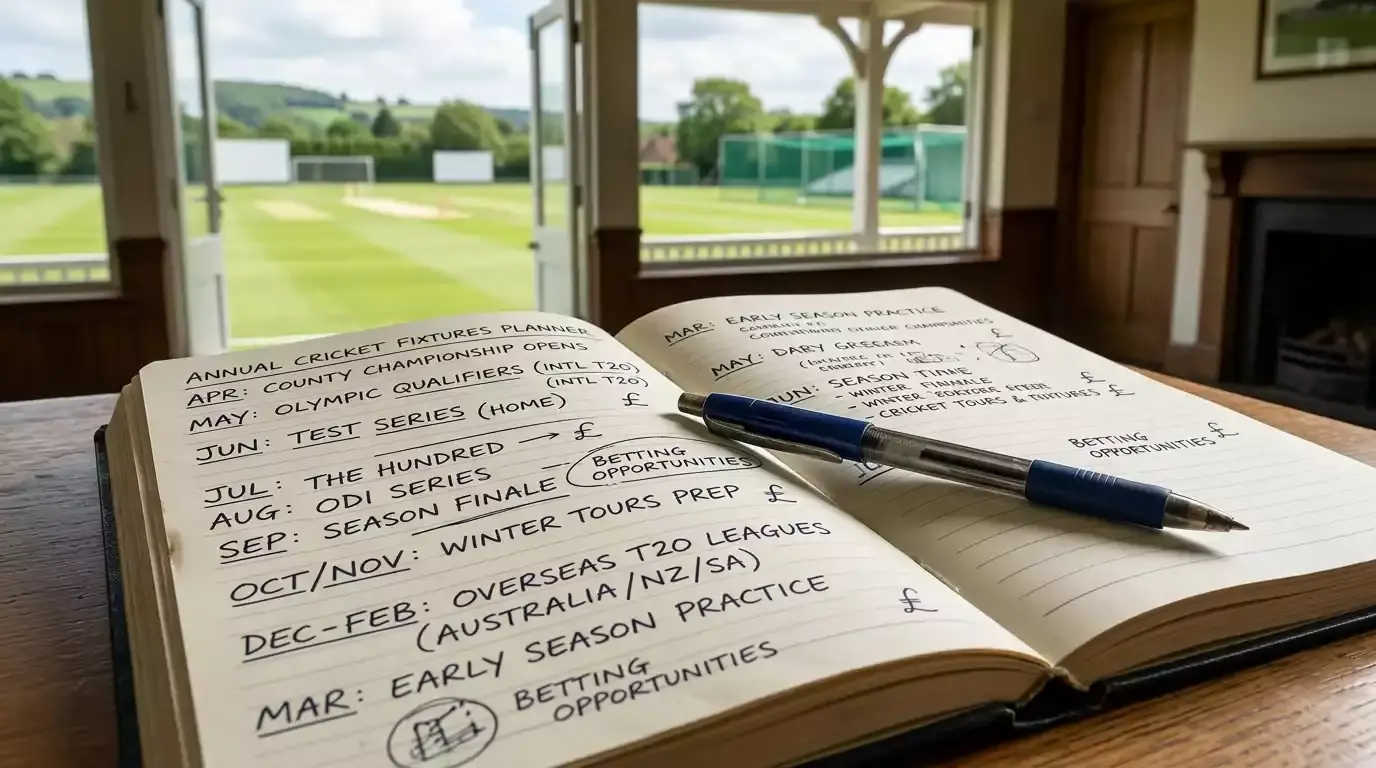
I keep a calendar on the wall in my office that maps every meaningful cricket competition across the year by colour. Test cricket in red. ODIs in blue. T20s in green. The Hundred in yellow. Franchise leagues in grey. Looking at the wall, there is never a fortnight where at least three colours aren’t active. The “off-season” concept that exists for football fans simply doesn’t apply to UK cricket betting. The international calendar rotates around the globe in a way that keeps fixtures live somewhere on the planet for almost every week of the year, and the UK regulated sportsbooks price the bulk of them.

The structural drivers behind year-round demand sit partly in the international calendar’s natural rotation and partly in the UK’s multicultural audience composition. South Asian and Caribbean communities follow their home cricket calendars closely, which means international fixtures from India, Pakistan, Sri Lanka, Bangladesh and the West Indies pull serious UK viewing audiences regardless of the time of year. The betting books respond to this demand by maintaining full coverage of those calendars on UK-licensed platforms.
Domestic Season, April to September
The English domestic season runs from early April through mid-September and is the period when UK cricket betting volume is at its highest. The County Championship opens the season in early April with first-class red-ball cricket across both divisions. The 2026 Championship is scheduled to start on 3 April, with Surrey opening as Division 1 favourites at 7/4 in fractional pricing and Durham as Division 2 favourites at 5/7. The early-season outright markets are open before the first ball, with most major UKGC books offering full pricing on title, wooden spoon, promotion and relegation across both divisions.
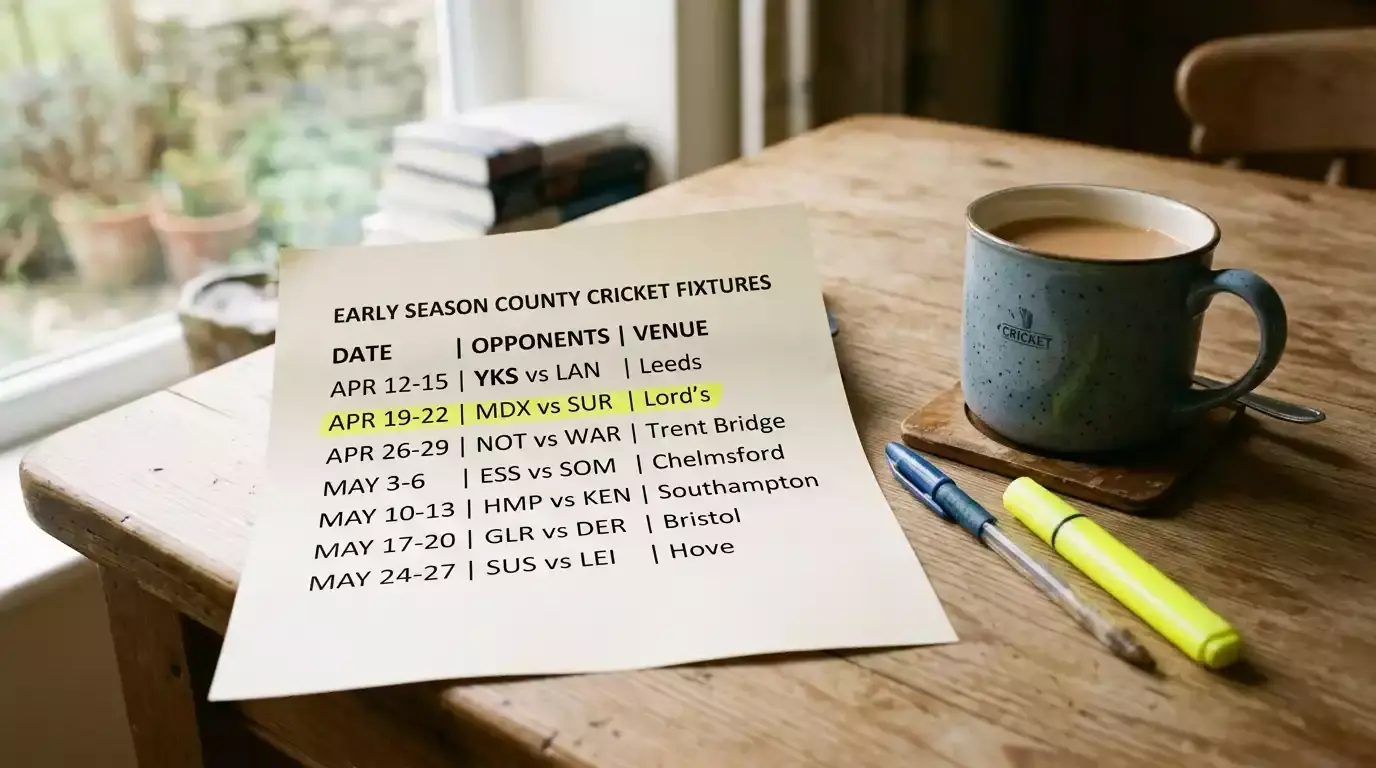
One-day domestic cricket — the One-Day Cup — slots in across the early part of the summer, providing a 50-over format alongside the longer red-ball matches. The competition runs primarily through May and June, with knockout rounds and a final in July. The betting markets are thinner than the higher-profile competitions but the fixtures appear on UK sportsbook cards consistently.
The Vitality Blast — domestic T20 — runs from late May through mid-September, with 133 matches across the 2025 season packed into the window. The Blast is the highest-volume domestic competition for UK cricket betting by a significant margin, with daily match cards through much of the summer and substantial in-play activity. The 2025 edition produced Somerset as champions for their third title, with Toby Albert leading the run-scoring tournament and Riley Meredith the wicket-taking. Outright markets, individual match books, top run-scorer and top wicket-taker awards all carry full coverage on UK books.
The Hundred occupies the August window — a four-week, eight-team competition with the 100-ball format. Despite being the youngest of the domestic competitions, it generates substantial betting volume through its short, intense schedule and the franchise-style team branding that supports broader marketing reach. International cricket — Tests, ODIs and T20Is involving England — overlays across the domestic season, with marquee fixtures including the Ashes, ICC tournaments and bilateral series against major nations.
International Window, October to March
Once the English domestic season ends in September, the UK cricket betting market doesn’t pause — it migrates. The international fixtures move into the southern hemisphere and the subcontinent, with England tours often touching down in Australia, India, Sri Lanka, South Africa, New Zealand or the West Indies during the October-to-March window. The 2025-26 Ashes touring schedule sits in this window, with the marquee fixtures concentrating substantial UK betting volume across the autumn and winter.
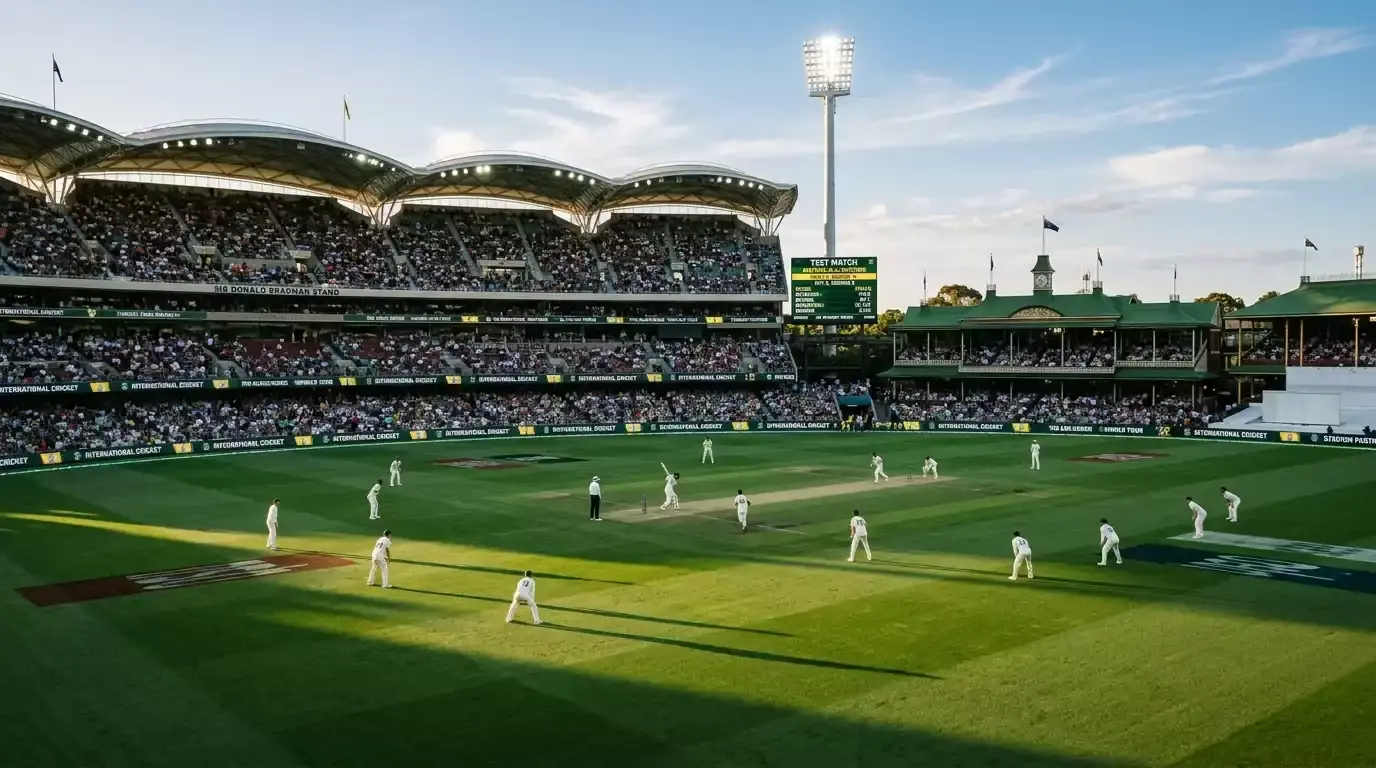
Beyond England’s own tours, the bilateral schedule across the other major cricket nations runs continuously. Australia hosts India, India tours Australia, Pakistan plays Sri Lanka, the West Indies plays New Zealand — the permutations are extensive and the UK-licensed sportsbooks price most of them at full depth. The competitive markets for these series may be modest by Ashes standards but they’re substantial enough to sustain a year-round betting operation.
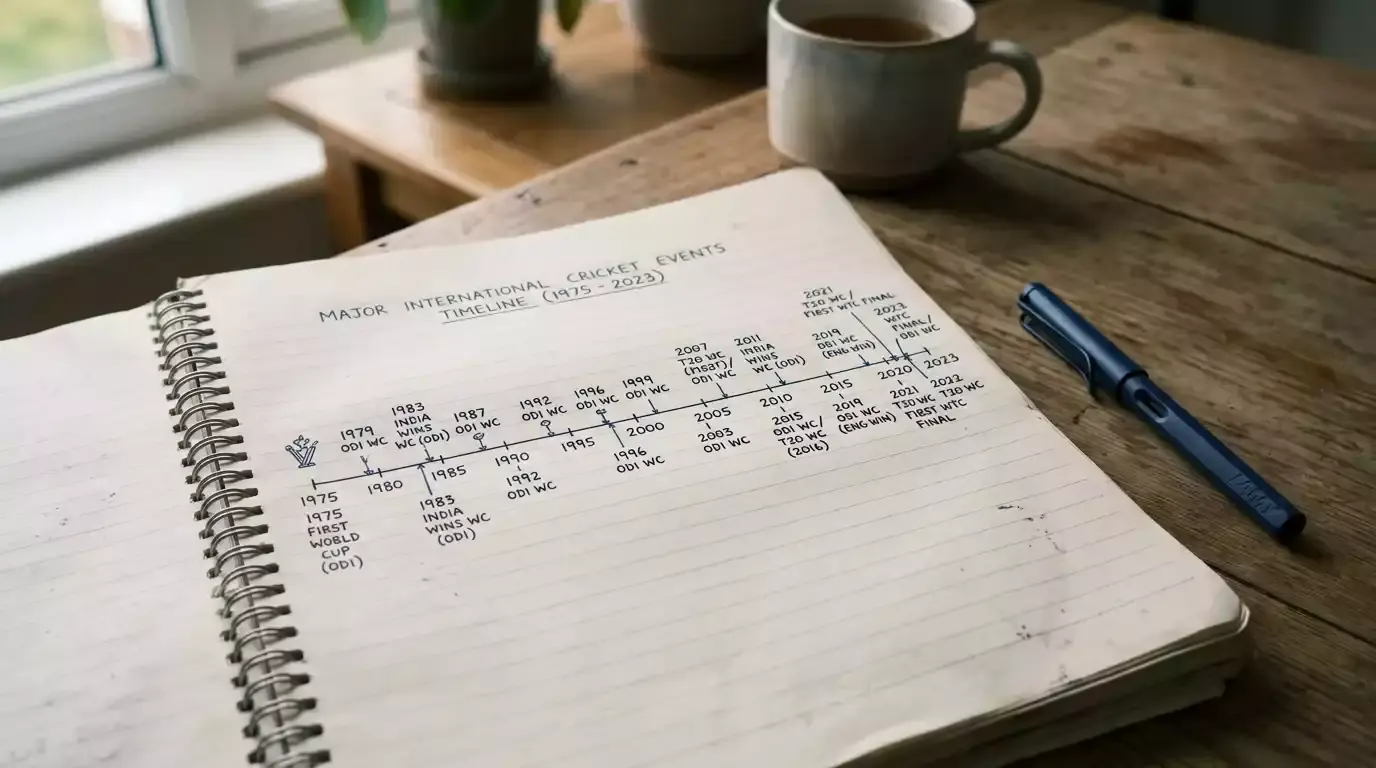
ICC tournaments anchor the international window across multi-year cycles. World Test Championships, ODI World Cups, T20 World Cups and the Champions Trophy all rotate through the schedule, each producing 6-to-8 week periods of concentrated cricket betting activity. The four-year cycle of ICC events provides the backbone of the international cricket calendar’s commercial structure, and the outright markets for these tournaments are some of the longest-running products on UK sportsbooks — markets opening 12 months or more before tournament start dates.
The Four-Year ICC Cycle and the Outright Markets It Builds
The ICC’s four-year tournament cycle is the planning horizon that frames a serious cricket betting operation. Across each four-year window, the calendar includes a Men’s ODI World Cup, a Men’s T20 World Cup, a World Test Championship Final, a Women’s ODI World Cup, a Women’s T20 World Cup, and the Champions Trophy. The Men’s ODI World Cup is typically the highest-grossing single event for UK cricket betting, with outright markets opening more than two years before the tournament start.
The outright market structure for these tournaments is rich. Tournament winner is the headline product, but the surrounding markets include group winner, finalist, top run-scorer of the tournament, top wicket-taker of the tournament, player of the tournament, and various exotic combinations. The pricing on these markets is at its widest in the earliest months after the market opens — when uncertainty about squad composition, form and injury is highest — and tightens as the tournament approaches.
The strategic value of long-dated outrights is that they capture meaningful repricing across the build-up window. A bet placed 18 months before an ODI World Cup at one price can be evaluated, hedged or laid off on an exchange months later at a very different price, depending on how the underlying probability has shifted. This is one of the more interesting product structures in cricket betting and rewards patient, position-based thinking over match-day reactive betting.
Filler Leagues, BBL, SA20, ILT20 and the Multicultural Audience
The competition that fills the gaps in the international calendar is the franchise T20 schedule. The Big Bash League in Australia runs across the Australian summer, December to February, providing a primary product for UK punters during the deepest part of the English off-season. The SA20 in South Africa overlaps with the BBL, adding a second high-quality franchise option for the winter window. The ILT20 in the UAE adds a third.
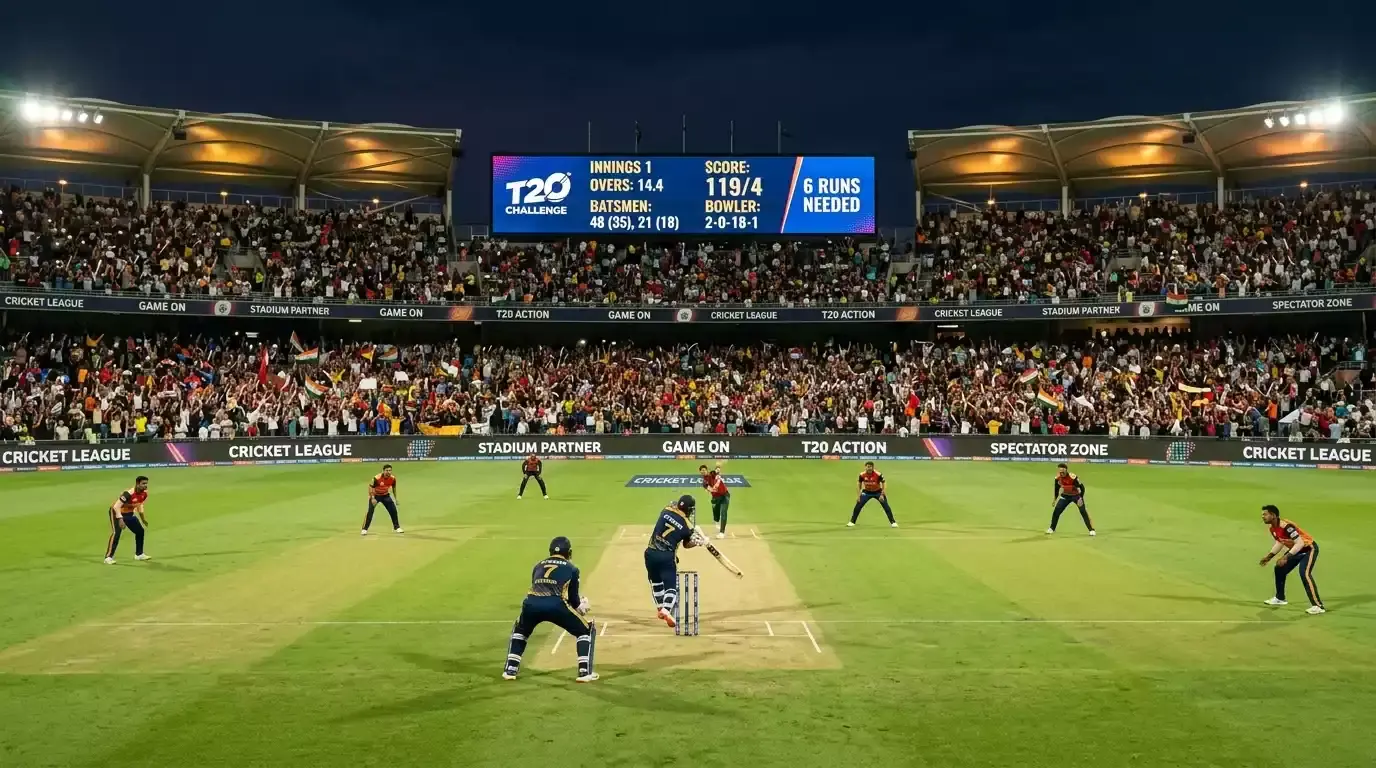
The IPL — Indian Premier League — sits in the late-spring window, March to May, and generates the highest UK betting volume of any franchise T20 competition by a wide margin. The IPL’s audience profile in the UK is heavily multicultural, with South Asian community engagement supporting daily betting activity across the two-month tournament. UK-licensed sportsbooks treat the IPL as a tier-one product equivalent to the Ashes or domestic English cricket for pricing depth and market range.
The multicultural composition of the UK cricket-following audience is what supports these franchise league markets at the volume that the regulated sector can sustain pricing on. South Asian, Caribbean and broader cricket-following communities make the UK one of the highest-liquidity markets for international franchise cricket outside of the host countries themselves. The book’s investment in pricing these competitions reflects that audience — markets are open at depth, in-play coverage is comprehensive, and the betting workflow for following the international franchise schedule from a UK base is well-supported.
The first major domestic outright opportunity each year sits with the County Championship, and the structure of those markets is the subject of my piece on County Championship outright betting and the title, wooden spoon and promotion races.
