

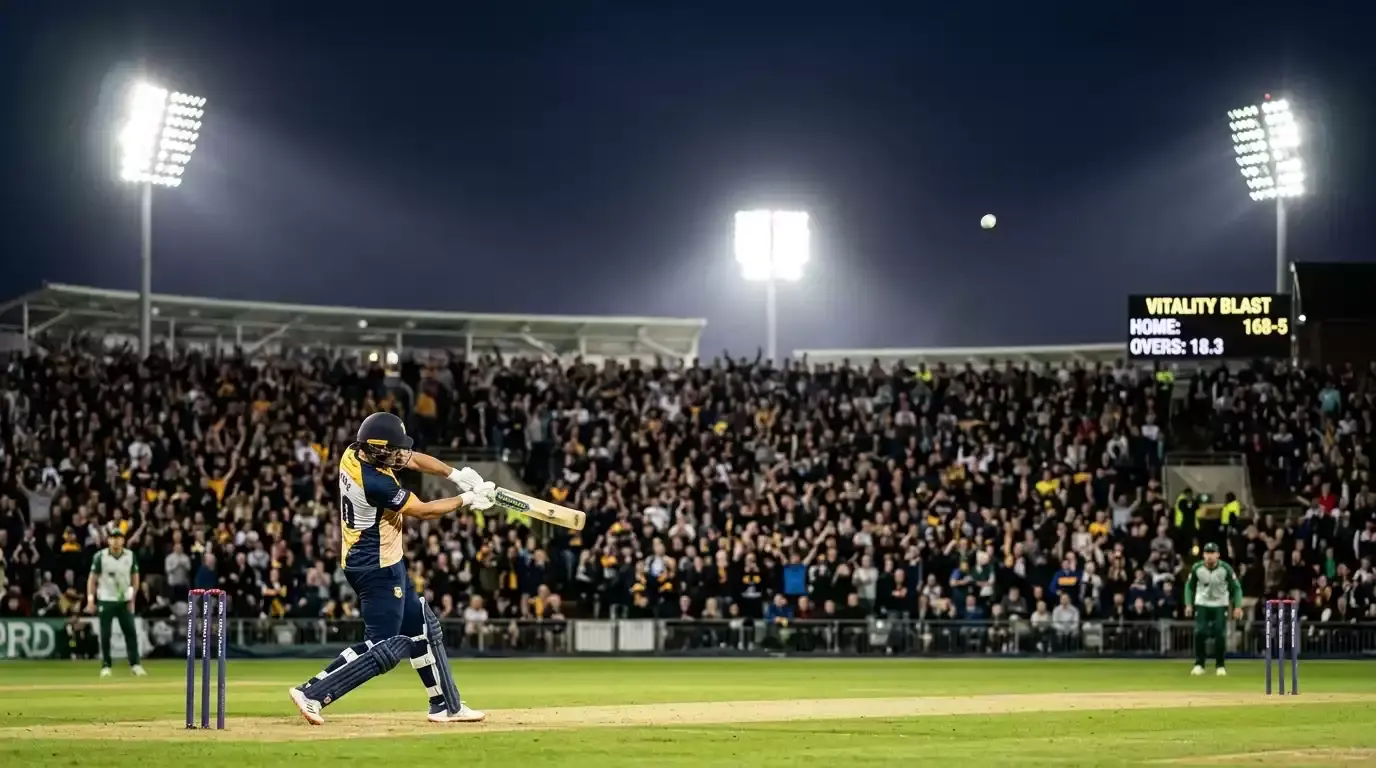
Evaluating Outright Value Across 133 Vitality Blast Matches
If you offered me one cricket competition to bet for an entire year and nothing else, I’d pick the Vitality Blast. Not because the markets are the deepest — they aren’t — but because the structural patterns across 133 matches in 15 weeks are clean enough that a disciplined approach actually moves the dial. The 2025 season ran 18 teams across the window from 29 May to 13 September, producing those 133 matches with Somerset taking their third title, Toby Albert at Hampshire leading the run-scoring with 633 runs, and Riley Meredith at Somerset top of the wicket-taking with 28.
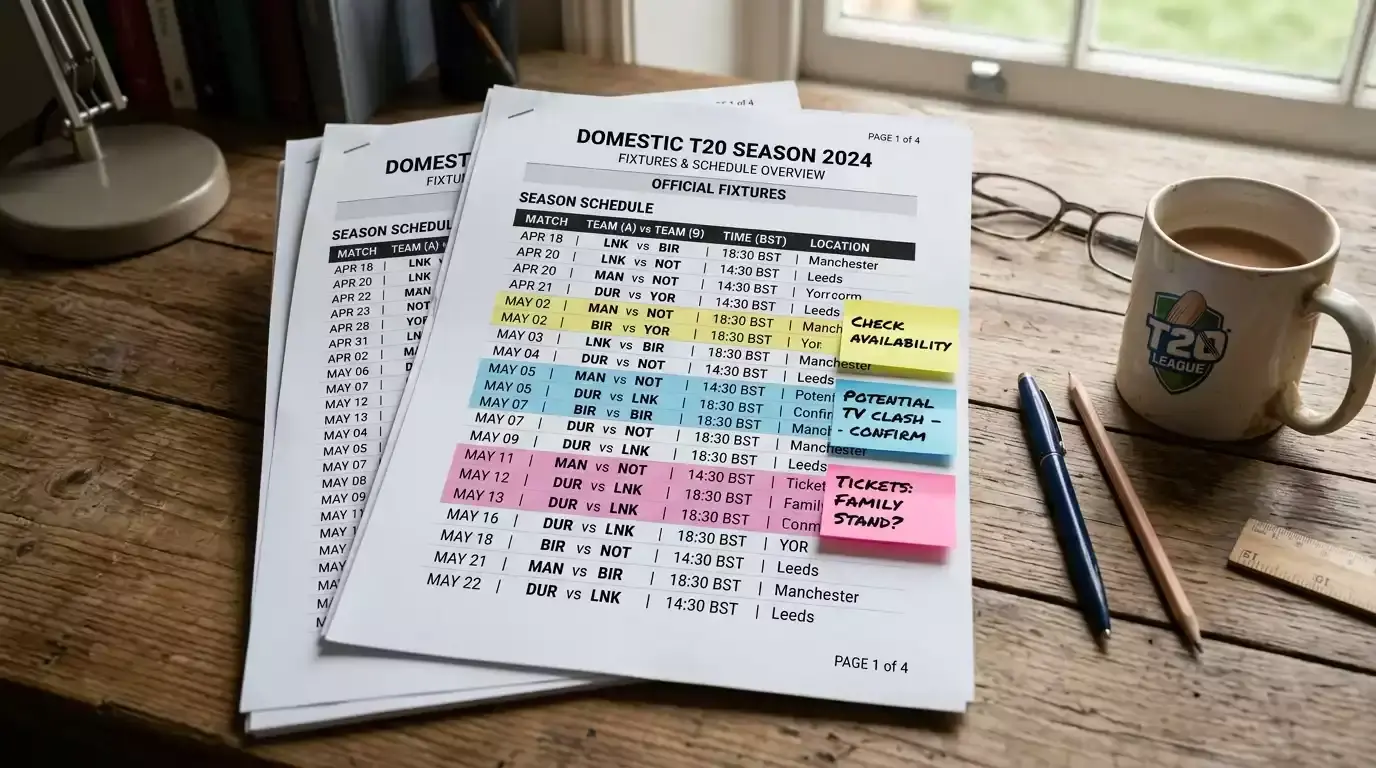
Most punters bet the Blast as a series of individual T20s, each treated in isolation. That’s a mistake. The Blast is a single connected market, and the early-season fixtures reveal information that prices the later-season fixtures. Reading the season as a unit, rather than fixture-by-fixture, is the structural advantage that separates patient Blast punters from impulse Blast punters.
2025 Recap Data: Somerset Champions, Albert Leading Run-Scorer, Meredith Top Wickets
The 2025 numbers tell a useful story about how the Blast behaved as a betting market. Somerset’s title was their third, confirming a consistent pattern of high-performance T20 cricket from the same county across multiple seasons. The repeat-winner structure is itself betting-relevant — counties that have built T20-specific squad capabilities tend to compound the advantage across seasons, which makes outright markets that don’t fully respect the historical record one of the standing structural opportunities.

Toby Albert’s 633 runs as top scorer is a number to think about carefully. The figure is high enough to indicate a meaningful gap between Albert and the next-best season — which is what wins the top run-scorer of the tournament market — but not so high that it required exceptional fortune. Albert played the bulk of Hampshire’s matches and converted opportunities at a rate that compounds across a 14-match group stage. The pattern of “top scorer is an opener at a high-volume county who plays every match” is the structural template, and it’s the one to apply to next-season top run-scorer markets.
Riley Meredith’s 28 wickets follows a different logic. Top wicket-takers are typically death-overs specialists at sides that progress deep into the tournament. Meredith fits the pattern — death-overs specialist at a title-winning side. The “top wicket-taker comes from the championship side” pattern is consistent enough that betting outright top wicket-takers from the pre-tournament favourites is one of the more reliable lines of inquiry.
Outright Markets: Winner, Group Stage, North-South Format
The Blast’s outright market structure follows the North-South group stage that the competition has used in recent years. Outright winner is the headline market, with pre-season favourites typically priced in the 5/1 to 8/1 range and the rest of the field spread between 10/1 and 33/1. The 18-team field is wide enough that the implied probabilities of the top three or four favourites combined still leave meaningful upside in the field.
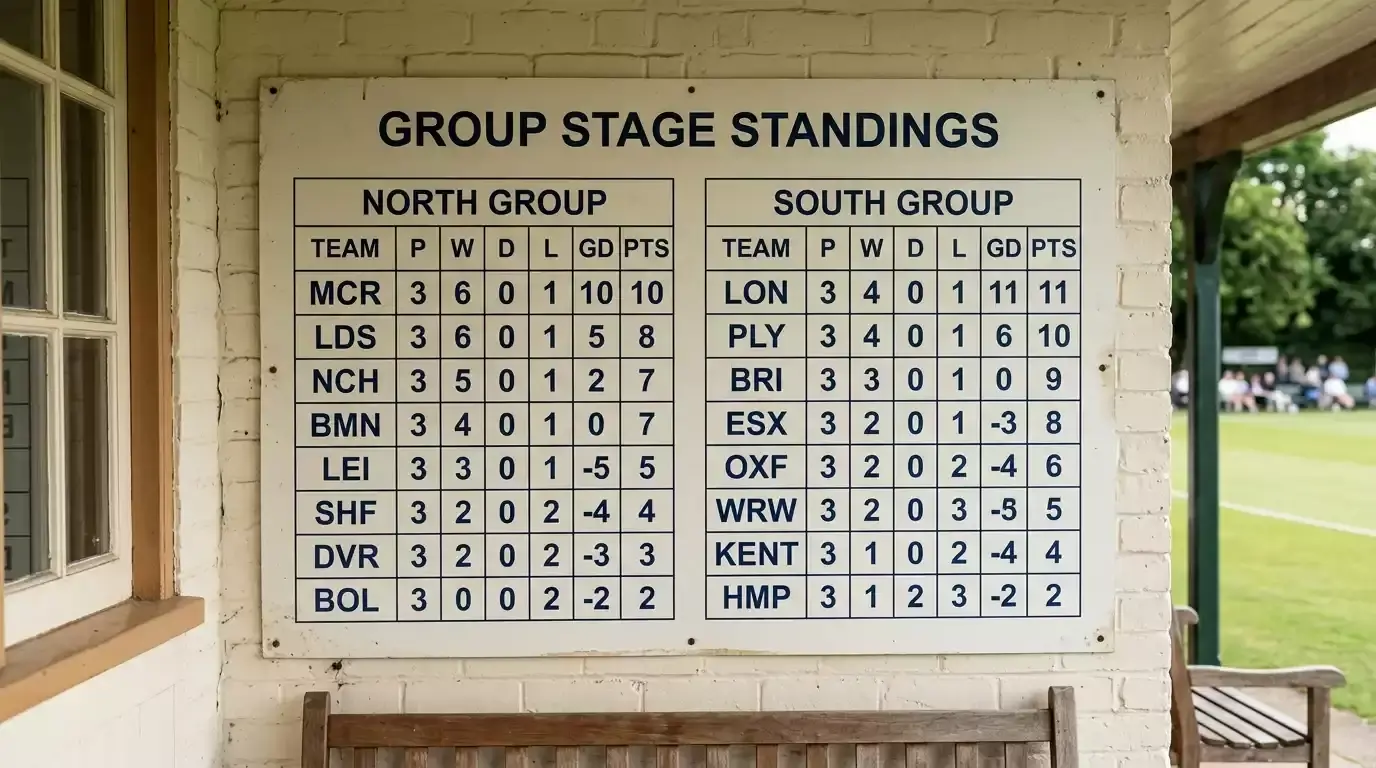
Group-winner markets — top of the North group, top of the South group — open separately and price independently. The structural quirk is that group winners get the easiest knockout draw, which means the value of “to win the group” is partly the implicit probability of an easier semi-final and final route. The book often underprices this connected value, pricing group winner as if it were purely a group-stage outcome rather than a knockout-implication market.
The “to reach Finals Day” market is the third structural option. Finals Day brings the top four teams to a single venue for two semi-finals and a final on a Saturday in mid-September. The “to reach Finals Day” market resolves on the quarter-final outcomes and pays out on every team that wins their quarter-final. The pricing on these markets is typically wider than the equivalent group-winner markets, with second-tier sides priced at 4/1 or 5/1 for Finals Day qualification where their underlying probability might be closer to 7/2.
Top Run-Scorer of the Tournament: The Most-Overpriced Outright
The top run-scorer of the tournament market is the single most consistently overpriced outright on the Blast card, and the reason is structural rather than analytical. Books anchor on form going into the season — the previous year’s leading scorers, the international players signed for the new season, the high-profile names that punter attention will gravitate toward. The actual top scorer often emerges from outside that group, because the leading-scorer outcome correlates more strongly with availability across the full group stage than with any individual match-level performance ceiling.
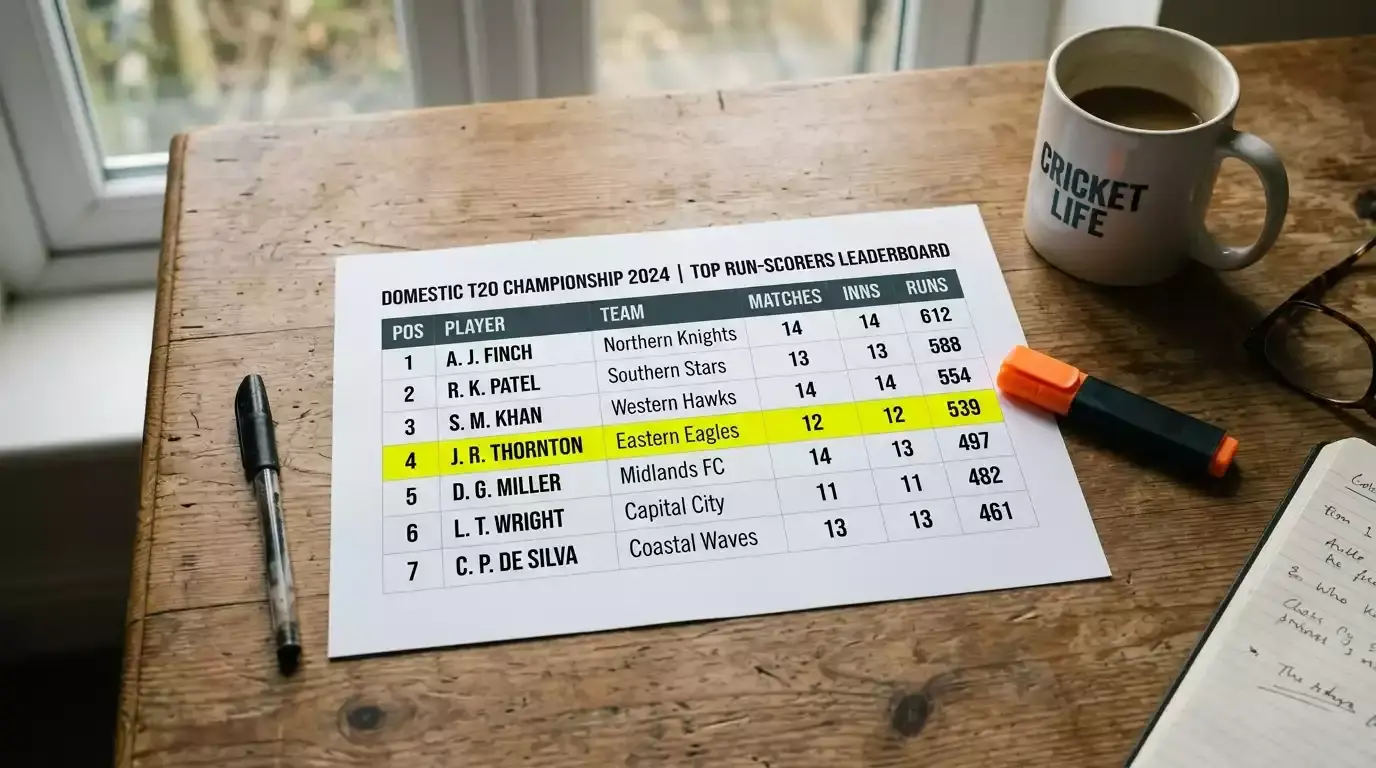
Toby Albert’s 2025 win is illustrative. He wasn’t priced as the headline favourite at the start of the competition — that honour typically goes to overseas signings with bigger reputations or established England internationals on county duty. The structural drivers of a top-scorer outcome — playing every match at the top of the order for a side with consistent qualification — favour squad regulars over marquee signings, and the price gap between the two is wider than the underlying probability gap.
The trading approach I run on this market is to identify three or four candidates who fit the “opener at a high-volume county” profile, none of whom is the headline market favourite, and back each at 14/1 to 25/1 for the small stakes that the absolute prices justify. Across multiple seasons this approach has produced positive expected value, with the occasional hit covering several seasons of misses comfortably. The honest caveat is that variance on long-shot outrights is high, and the strategy requires patience over a multi-season horizon to evaluate properly.
Top Wicket-Taker of the Tournament: Death-Over Specialists
Top wicket-taker markets reward different reading. The structural profile of a top wicket-taker is a death-overs specialist at a side that plays deep into the knockout stages. Death-overs bowlers get the highest-pressure overs and the highest-variance wicket outcomes — slower balls, yorkers and short bouncers all produce different dismissal rates depending on batter response. A specialist who consistently bowls the 17th, 18th, 19th and 20th overs across a 14-match group stage plus knockouts can accumulate wicket counts that powerplay bowlers simply can’t match.
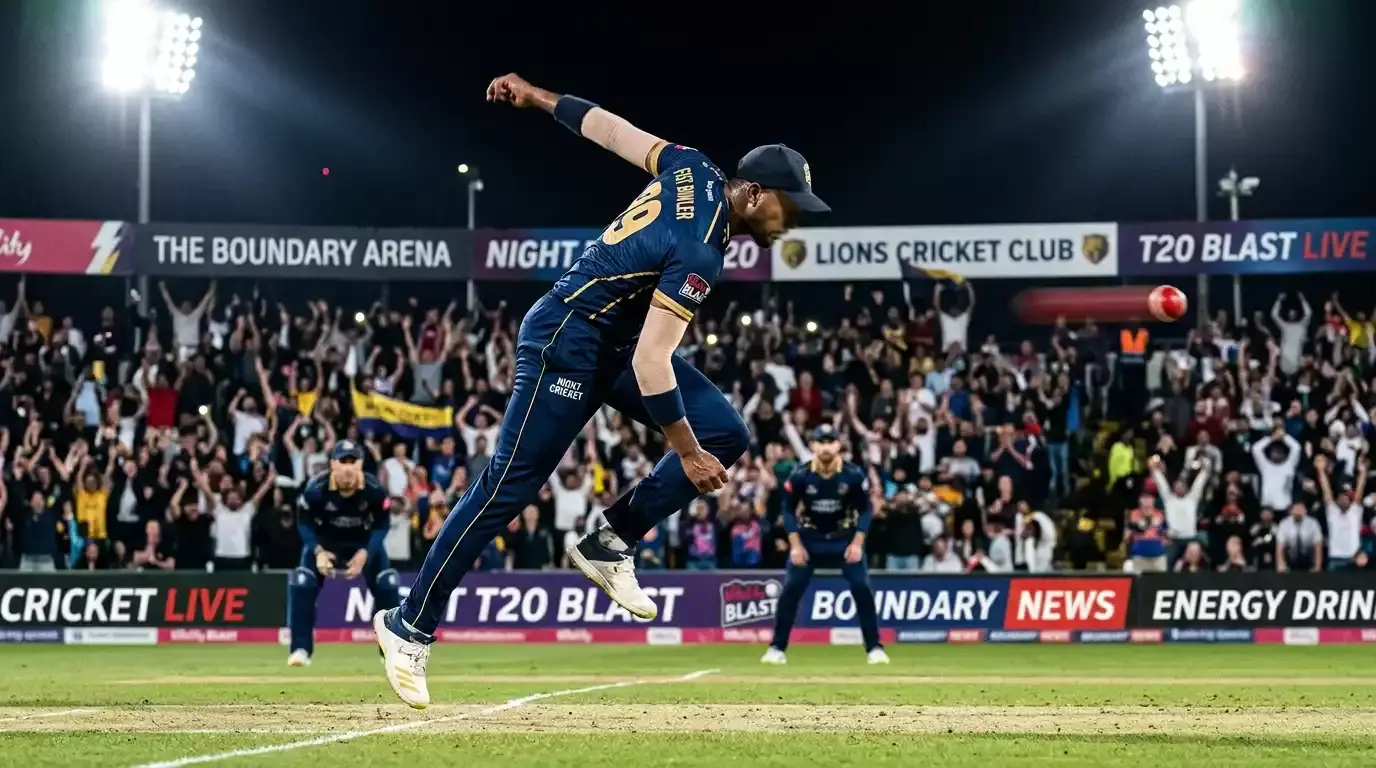
The book’s pricing on this market often overweights overseas signings with established international T20 credentials and underweights domestic specialists who have built their entire skill set for the death-overs role. A Blast-only specialist who has spent a season refining slower-ball variations at the end of an innings is often priced at 16/1 or 20/1 where their underlying probability is closer to 10/1 — the closing line value sits with the patient bettor who’s done the work on bowling roles rather than reputation.
Meredith’s 2025 win followed this pattern. Death-overs role at a side that won the tournament. The exact identity of the winner shifts year to year, but the structural profile — death-overs role plus deep tournament run — is the read that matters more than the specific name.
Match-Day Player Props in Domestic T20
Match-day player props are the high-frequency complement to the season-long outright markets. UK regulated sportsbooks offer extensive prop markets on every Blast match — runs scored by named batters, wickets taken by named bowlers, boundaries hit, dot balls bowled. The pricing on these markets is thinner than match-winner pricing and the overrounds are wider, which makes them more vulnerable to mispricing in both directions.
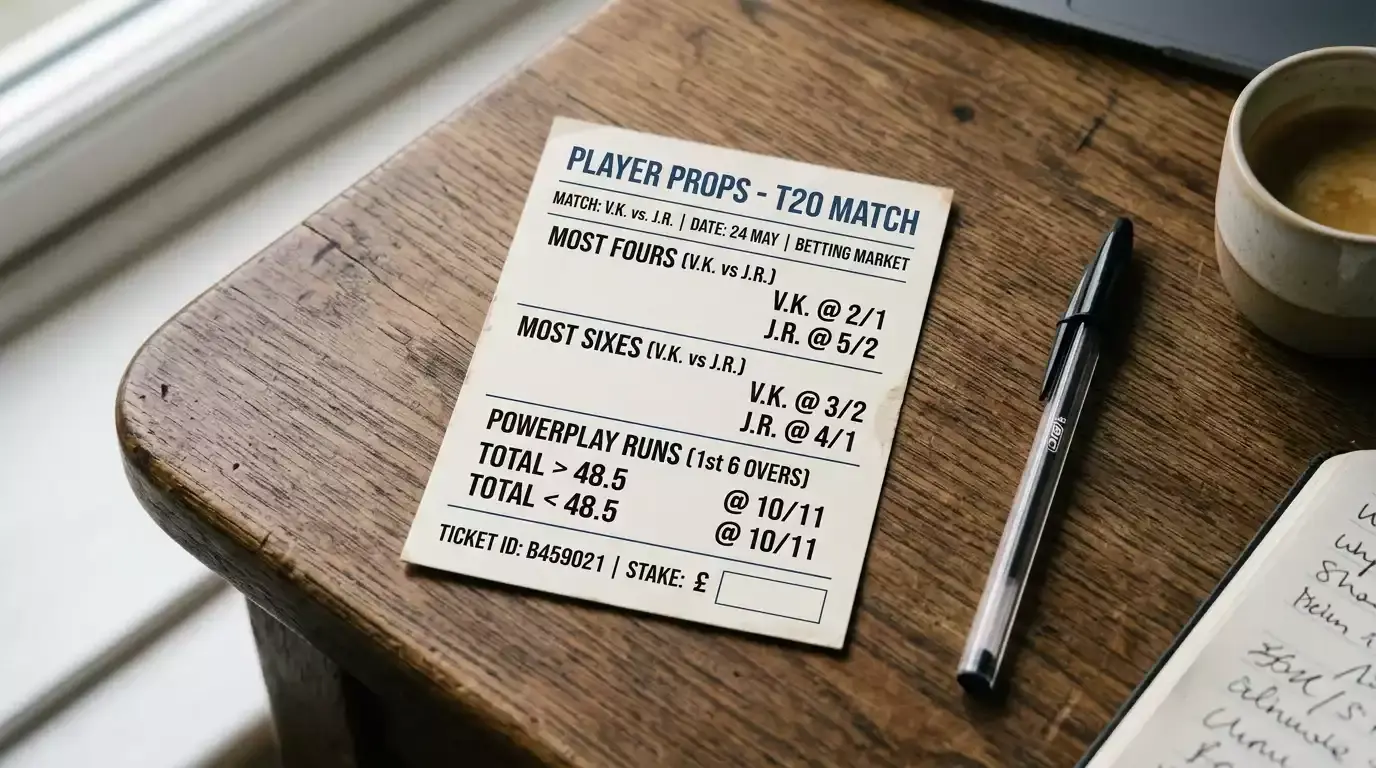
The cleanest props are “over/under runs by named batter” at lines that the book has set conservatively. Books default to slightly low lines on player run totals because the variance on individual T20 innings is high — a batter who averages 28 across the season produces a wide distribution of single-innings scores, with no-result innings and short innings pulling the average down. The “over” line at the book’s headline number is often the better side of the market for in-form batters, because the conservative line accounts for low-scoring outcomes that occur but with lower probability than the price implies.
Wicket props are more variable. A bowler who averages 1.7 wickets per match across the season can still produce a four-wicket haul in any single innings. Books price these markets with wider variance allowances on the higher-end outcomes, which makes the “over 1.5 wickets” line frequently shorter than its fair value while the “over 2.5 wickets” line is often longer. The trading approach is to identify the line where the book has overstated tail-end probability and back the under, rather than chasing the heavy-hitting four-wicket-plus outcomes that the long-shot market pays for but rarely delivers.
The other domestic competition that fills the August window with similar betting structure but a different format is the subject of my piece on The Hundred and how a 100-ball format reorders cricket betting markets.
