


Capitalizing on High-Volume Cricket Betting Markets
The first time I tried to print a full T20 card off a UK sportsbook, my browser crashed. I had been counting markets out of curiosity, and by the time I scrolled past method-of-dismissal for the seventh batter I was already over two hundred lines. That is one fixture. Sportradar’s own cricket product carries over 7,000 pre-match and live matches a year, and on each of them the depth a UK book offers sits closer to a horse-racing meeting than to a Premier League match. When exploring different options, many punters find that top batsman betting markets offer excellent value if you understand opening-position biases.
Football pricing is built around three core selections and a tower of derivatives. Cricket pricing is built on different physics — every ball produces a discrete event, every event has settlement value, and a five-day Test gives roughly 2,700 deliveries to slice. The bookmaker who covers cricket properly does not just add markets. They redesign the model.
That is why a cricket card looks intimidating, and also why the market is genuinely tradeable. Eight years of pricing UK cards has taught me that variety is not noise — it is the surface where soft lines surface. This guide walks every category a UK punter will meet, in the order they typically appear on the slip.
Match Result, Tied Match, Draw No Bet, Super Over
A friend rang me during the 2019 World Cup final asking why his “tied match” bet at Lord’s had not paid out. The match was tied. The Super Over was tied. England won on boundary count. He had bet on the wrong market — and that one phone call sums up the whole match-result family.
The headline market is match winner. Two-way in white-ball cricket, three-way in any format where a draw is on the table. In Test cricket the draw is not a technicality — it is a real outcome, and on a flat pitch with rain forecast you will see it priced shorter than either side. I have seen Old Trafford Tests against a touring South Africa land draw prices of 11/4 by lunch on day four with the favourites still trading at 8/11. That is not an inefficient market. It is the bookmaker reading the same Manchester weather radar you can read.
Tied match is its own listing. It pays only when the run totals end identically and no Super Over is played, or — in some operator rule books — when scores are equal and the result is shared. The price is always huge, 100/1 and longer, because ties are rare. Some books void the winner market and pay tied; others pay both depending on competition rules. Read the rules.
Draw no bet collapses the three-way into two-way. You stake on Team A, and if the match is drawn you get your money back. The trade-off is price: a 6/4 outright becomes 5/6 with the draw stripped out. It is the cleanest hedge against weather in a Test, and I use it on county four-day fixtures where the forecast is genuinely 50/50 on rain.
Super Over has crept onto T20 cards as a standalone market in the last two seasons. Two-way pricing on who scores more in the tie-breaker, void if no Super Over is required. Useful only because the variance on a single over is wide enough to make even-money look generous on the right team.
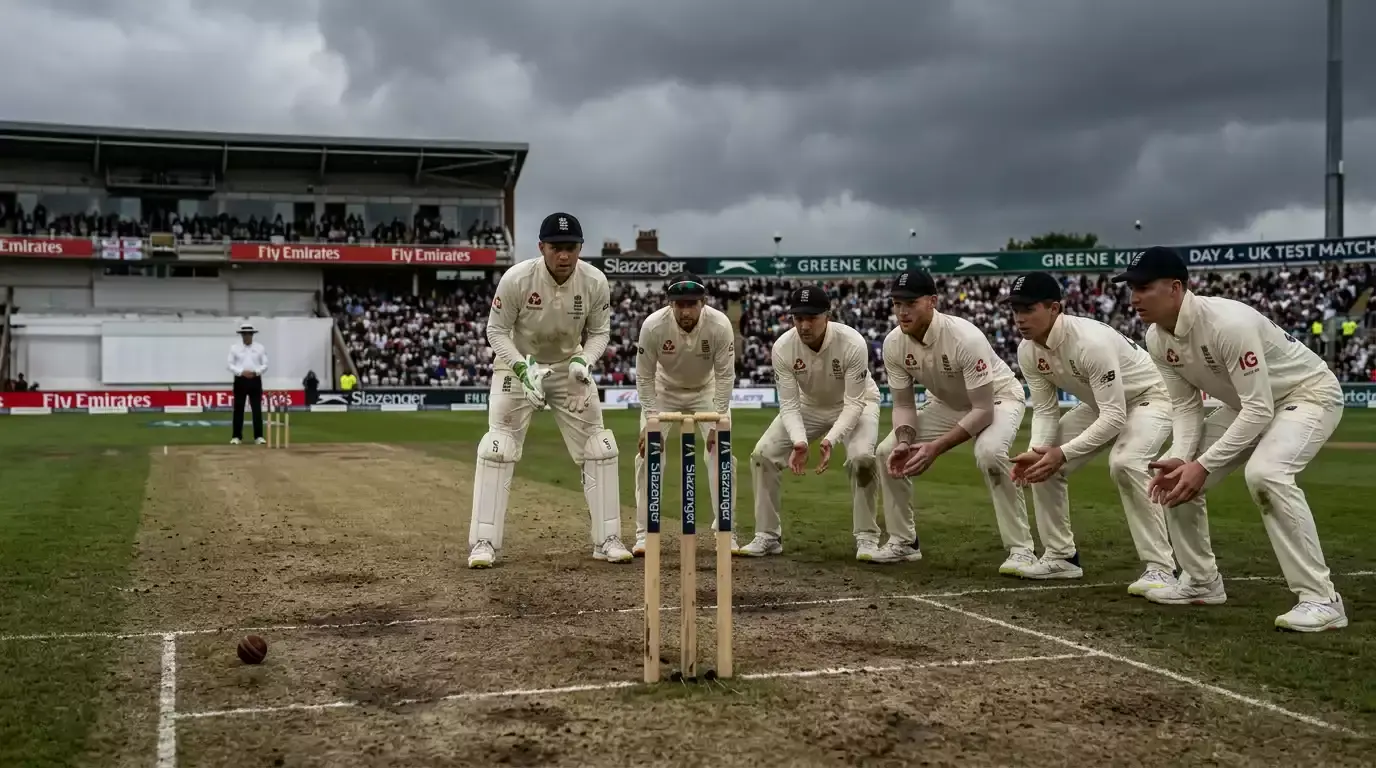
Top Batsman, Top Bowler, Top Team Batsman: How These Markets Price Up
Here is a question I get every Vitality Blast season: why does the top batsman market settle on raw runs, not on strike rate, not on impact, not on anything that resembles cricket merit? The honest answer is that bookmakers price what they can defend in front of a complaints panel, and runs are the only stat that cannot be argued with.
Top batsman pays out on the player who scores the most runs in a defined innings. In a T20 that means one innings of twenty overs. In a Test it usually means the first innings of the match, though some books offer “top batsman across the match” as a separate line. The pricing engine starts from a base rate that combines recent strike rate, expected balls faced based on batting position, and matchup against the bowling attack. Then the market gets shaped by money flow.
That last bit matters more than people realise. Top batsman is a market where price moves are public and aggressive. The headline name shortens from 7/2 to 9/4 within an hour of a team announcement and stays there. Two seasons ago I watched a Hampshire opener move from 5/1 morning price to 11/4 by toss after the captain mentioned in a press conference that the pitch looked good for batting first. The information was meaningful. The reaction was outsized. That kind of momentum is one of the few places a UK punter can occasionally find soft pricing — if you have a view earlier than the public.
Top bowler runs on a different mechanic: most wickets in the match, with a clear tie-break rule. Some operators use economy as the tiebreaker, some use bowling average across the innings, some pay dead heat. Always check. The market favours specialists who bowl their full quota — in T20 that is four overs — and penalises part-time spinners who only get one over and a death over. Pricing is tighter than top batsman because the field of plausible winners is smaller. You will rarely see a 100/1 shot win top bowler. You will see 80/1 shots win top batsman every fortnight.
Top team batsman is the half-market: most runs within one side, not across both. Liquidity is thinner, prices are sharper relative to outcome, and bet limits are typically lower. It is the version of the market where a strong opinion on batting order pays best — you are pricing against ten teammates rather than twenty-two opposition.
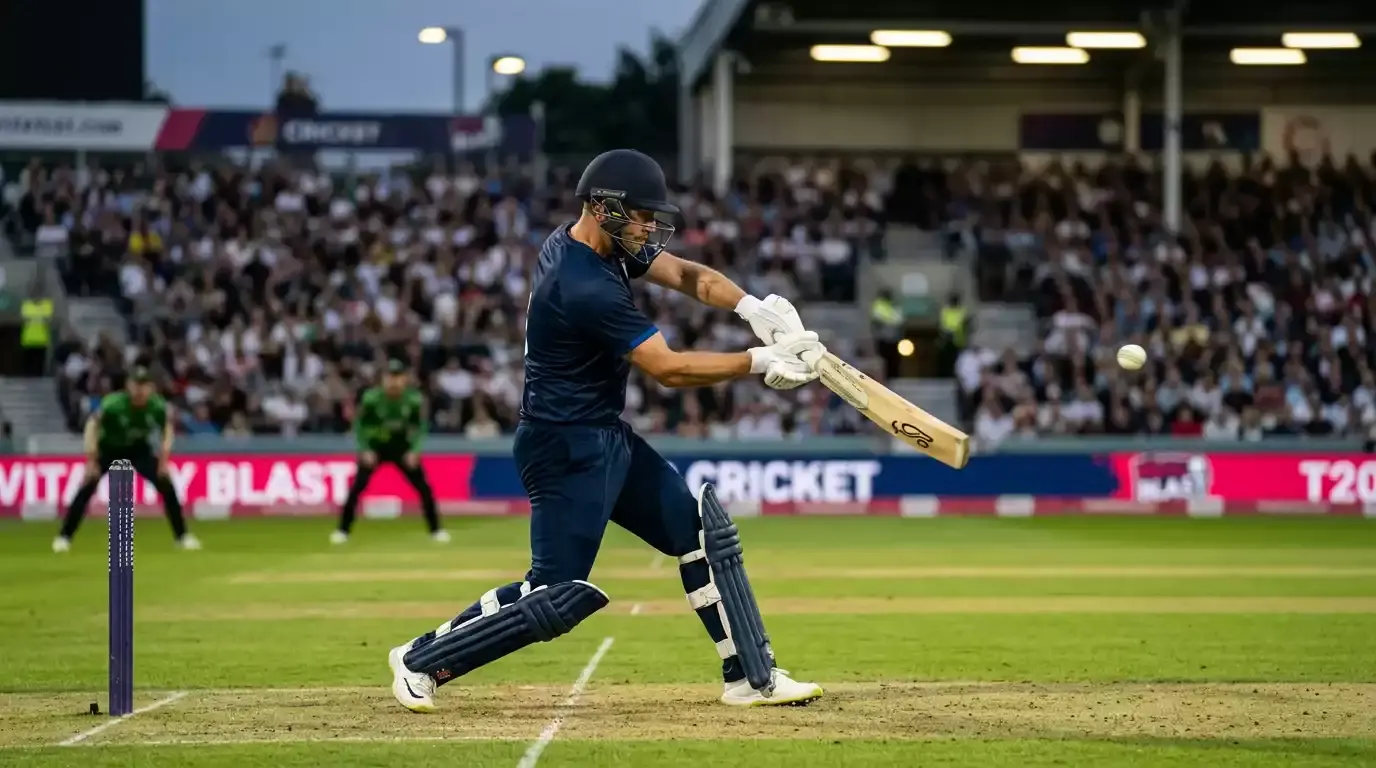
Innings Runs, Total Match Runs, Over/Under, Session Lines
Innings totals are the most-traded line on a T20 card after the match winner. They are also where I have made — and lost — the most money over eight years. The market looks simple: book sets a number, you go over or under. The danger is that “simple” hides a pricing engine doing twelve things at once.
An innings runs line for a Vitality Blast match at Edgbaston might land at 184.5 with the over priced at 5/6 and the under at 5/6. Implied probabilities of 54.5 percent each — a combined 109 percent, so the operator margin is roughly nine percent. Knock that overround off and the no-vig fair line sits closer to 50/50. That is information. Compare it against your own model, against ground average for the season, against the toss, and you have a comparison worth acting on.
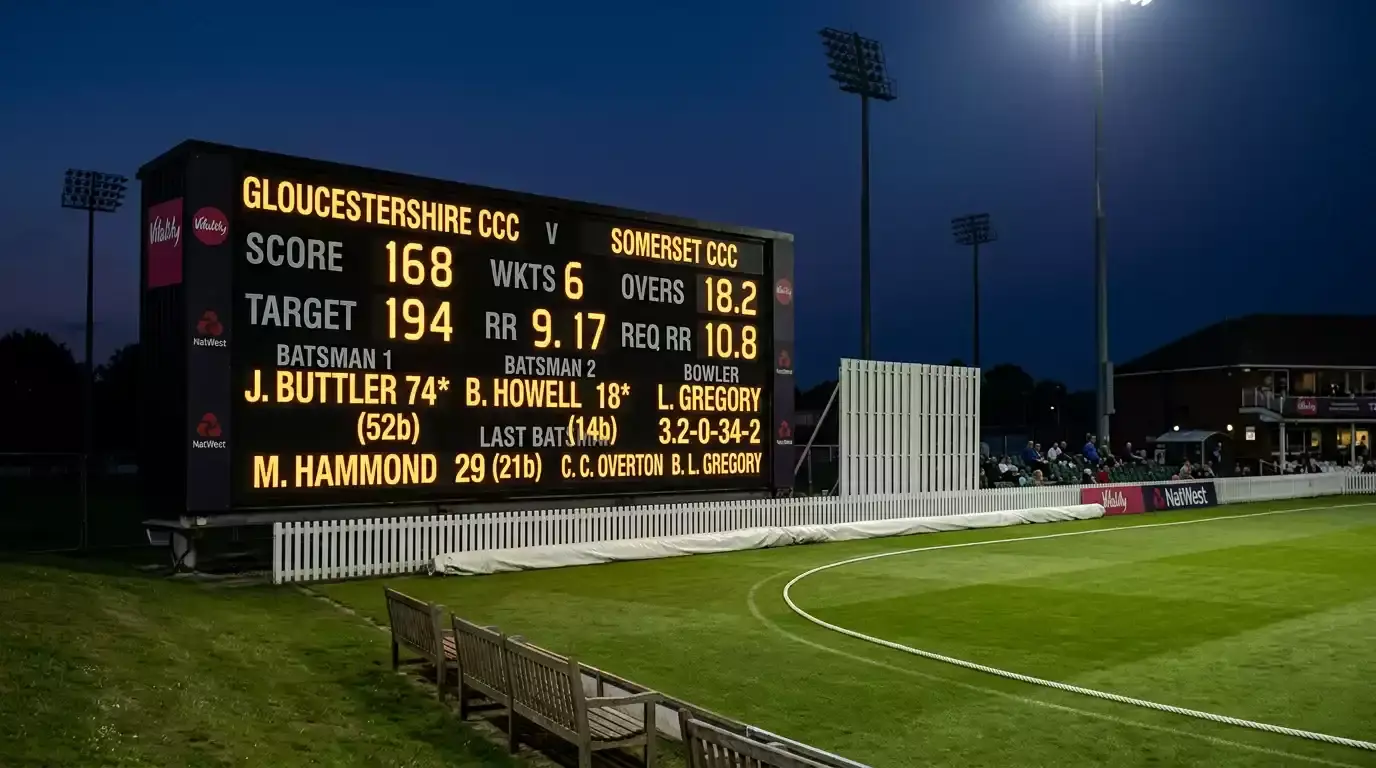
Total match runs aggregates both innings. In a T20 it can land anywhere from 280 to 380 depending on ground, pitch, dew, and team makeup. In an ODI you are looking at 600 to 700 in normal conditions. In a Test the number is usually broken into per-innings markets because day-three pitches behave differently from day-one pitches, and bundling 1,400 runs into one line would be a liquidity disaster.
Over/under variants extend deep. You will see lines on runs in the powerplay, runs in the death overs, runs in any defined block of overs the operator chooses to list. The Hundred has its own version: runs in the first 25 balls, runs in sets of five. Once the format starts cutting the innings into smaller units, the line count multiplies.
Session lines deserve a mention of their own. These are pre-match prices on the runs scored in a defined session of a Test day. They settle on what actually happens between scheduled breaks, not on a fixed number of overs. Rain delays distort settlement, and most books spell out a minimum-overs threshold below which the market is void. Read that threshold. I have watched whole afternoons of session bets disappear because the day was cut to 47 overs and the threshold was 50.
Partnership Runs, Fall of Next Wicket, Method of Dismissal
The cleverest cricket bet I ever placed was a partnership over on a Test opening stand at Trent Bridge. The bookmaker listed 35.5 runs. I had the conditions, the matchup, and an opener with a quiet half-century the previous innings. The partnership reached 87 before the first wicket fell. The line was wrong by a factor of two. That is the appeal of partnership markets — they collapse to genuinely two-outcome events while operators still set them with rough heuristics.
Partnership runs prices the runs scored between two batters before they are separated. The next wicket — bowled, caught, run out, anything — ends the partnership and settles the bet. Lines are listed at intervals: 25.5, 35.5, 50.5 on a Test stand, tighter in T20 where partnerships rarely exceed 60. Pricing is a function of both batters’ recent runs, the bowling unit they face, the match situation, and how long the partnership has already lasted in-play. The longer it runs, the steeper the over moves — books are reactive here, sometimes more reactive than they need to be.
Fall of next wicket is a two-way line on whether the next dismissal arrives before a runs threshold or after it. If the line sits at 24.5, you are betting on the partnership ending below 25 runs or surviving past 24. The cleanest market in cricket from a punter’s perspective — short settlement window, clear outcome, no ambiguity. It is also one of the most aggressively shaped by in-play money, because every ball changes the live probability.
Method of dismissal is the one I want every new cricket bettor to study before they touch it. The market lists ways a batter can be out — caught, bowled, lbw, run out, stumped, hit wicket, others — with prices that ought to map to long-run base rates. They do not always. In T20, caught dismissals account for roughly 55 percent of all wickets. Bowled is around 18 percent. LBW sits closer to 12 percent. Run outs around 8 percent. Books that price caught much shorter than 4/5 or bowled much shorter than 4/1 are pricing the matchup, not the base rate — and that is where you can disagree if you have a reason.
The Toss Market: Why It Is Never Pure 50/50
You would think the toss is the one market in cricket that should price at exactly 1.95 each side after margin. Two captains, one coin, ninety-second event. But the toss market is almost never even — and the reason is that books are not pricing the coin. They are pricing what the coin signals.

Look at a typical UK T20 toss line. Side A 10/11, Side B 10/11. Both implied at 52.4 percent. Combined book of 104.8 percent. The overround is roughly five percent — tighter than most other cricket lines because the underlying event is genuinely binary and the operator does not need much padding. That four to five percent margin is the only thing you are fighting on a true 50/50 event, and it makes the toss one of the worst pure-EV markets on the card.
So why does it move? Three reasons. Captain choice — at some grounds, the toss winner almost always bats first or bowls first, and that secondary preference can shift pricing if a book offers “toss winner and bats first” as a combined market. Captain handedness or rotation — some operators factor in who is captaining, particularly in T20 where captains rotate. And money flow from one side’s supporters, especially in international fixtures.
I rarely bet straight toss. I will use it as a leg in a bet builder if it correlates with something else — for example, “Team A wins toss, Team A bats first, Team A wins” priced as a triple. Correlation pricing tends to discount the conditional probabilities more aggressively than they should be, and you can occasionally find genuine value in the combined leg. On its own, the toss is a 50/50 you have to beat by five percent. Not where I would spend my edge-hunting hours.
Player Props: Sixes, Fours, Strike Rate, Bowling Figures
Player props are where cricket pricing diverges most aggressively from the global model. Football has player shots, cards, passes. Cricket has player sixes, fours, balls faced, strike rate, bowling figures, dot balls bowled, wides bowled — and operators add new lines every season because the granular data exists and the demand is there.
Take player sixes. The line might sit at 1.5 for a top-order T20 batter facing a spin-heavy attack at a short-boundary ground. The pricing engine starts from the player’s sixes-per-innings rate across the last calendar year, adjusts for the matchup against specific bowlers, then adjusts again for the venue. If the over at 1.5 is priced at 5/6, the implied probability of “two or more sixes” is around 54 percent — and the punter’s job is to ask whether the player’s recent baseline supports that.
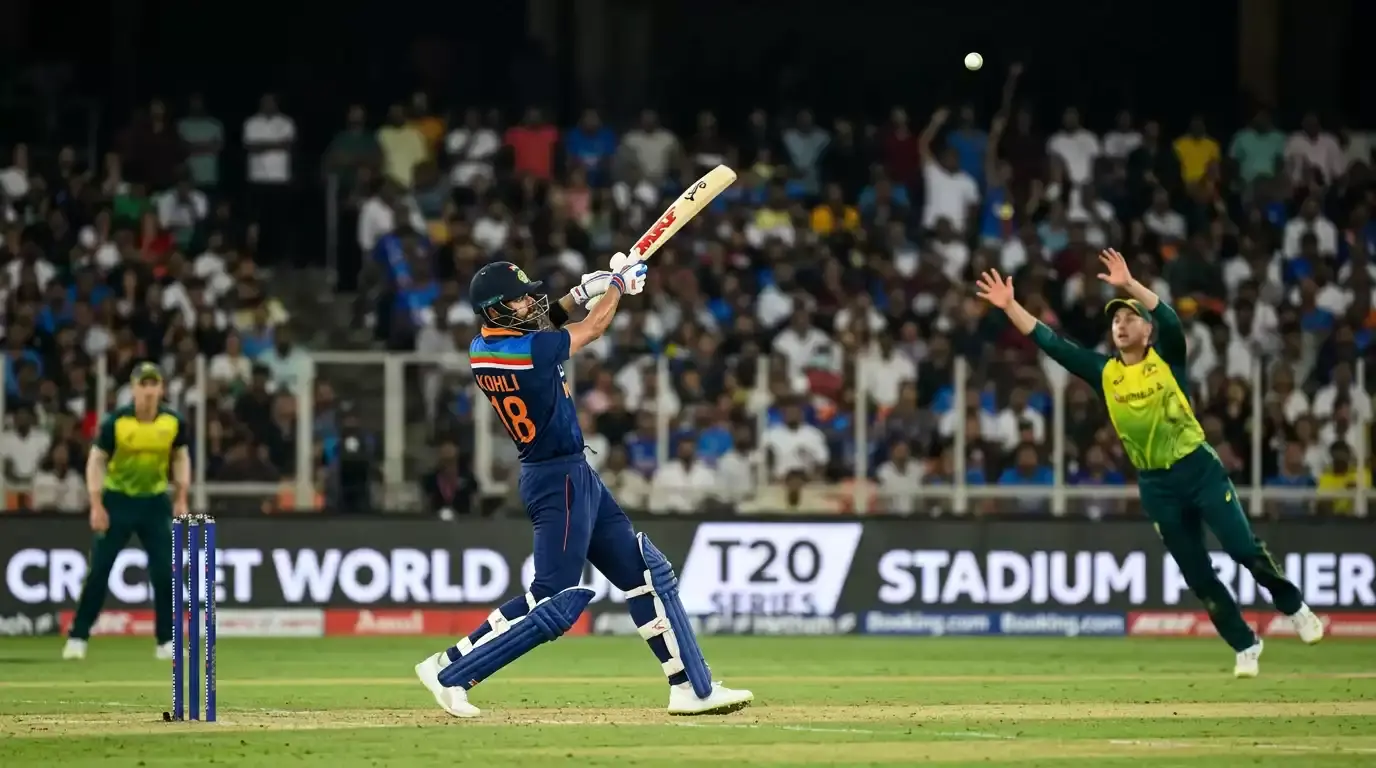
Player fours is the more reliable line. Fours come more frequently and from a wider range of shots, so variance is lower and the model is more confident. Lines typically sit between 3.5 and 6.5 depending on batter and format. The under is often the better statistical bet because batters who get out cheaply still hit boundaries, while batters who survive long innings often turn fours into sixes once they are set.
Strike rate props are listed on top-order batters in white-ball cricket. The line might be 130.5 — over the strike rate of 130.5 runs per 100 balls, under it. These markets are heavily condition-dependent and price moves in-play track the runs scored per ball with high sensitivity.
Bowling figures props cover total wickets, total runs conceded, total maidens, and economy rate. A bowler’s line might be 1.5 wickets, 32.5 runs conceded, and an economy of 8.0. These are offered on each bowler in the playing XI and close immediately when the bowler starts his spell. Read the rules on substitute bowlers — settlement gets ugly when a frontline bowler bowls one over and is then withdrawn.
Outright Markets: Tournament Winner, Group Stage, Top Run-Scorer of a Series
Outright markets move on a different timescale. You are not pricing a four-hour event — you are pricing a four-month tournament, sometimes a full international cycle. The County Championship 2026 starts on 3 April, and Surrey are priced at 7/4 for Division 1 with Durham at 5/7 in Division 2. Those prices were live in early February. They will move every week from now until September.
Tournament winner is the cleanest outright. One winner, one settlement, paid at the end of the competition. Pricing combines historical performance, squad strength, fixture difficulty, and money already on the book. Liquidity is highest at the top — favourites get the most traffic — and thinnest in the middle of the table where the prices look attractive but no one is sure how much weight to put on them.
Group stage markets are smaller-window outrights. In a tournament with a league phase followed by knockouts, you can bet on “winner of the group stage” or “team to top the group” with settlement at the end of the round-robin. The prices are usually crisper than the full tournament winner because the event ends sooner and the variance is contained.
Top run-scorer of a series is the outright that catches me out most often. Five-Test Ashes series, four-Test India tour, three-match ODI series — bookmakers offer “leading run-scorer across the series” with prices that look generous on the openers and short on the captains. The trap is that opener prices reflect the assumption they will play every Test. Drop a Test through rest rotation or injury, and the favourite loses 20 percent of pricing edge in one absence.
Each-way is offered on most outrights. You stake on the win and the place — usually top three for a tournament winner market, top two for a top run-scorer market. The place fraction is typically a quarter or a fifth of the win odds. Each-way is the friendliest format for outright betting because the runner-up scenarios cover most of the realistic variance, and the slowest-paying market on the card.
Handicap and Draw No Bet: Asian Lines in a UK Context
Handicap markets arrived in UK cricket pricing from Asian sportsbook structures. They are still treated as niche on most domestic operators, but the pricing logic is straightforward. Run handicaps assign a points spread to one team — Side A is plus 22.5 runs, Side B is minus 22.5 runs — and your bet wins if the team you back covers the spread.
The point of handicap pricing is to bring the favourite back to roughly even money. If Side A is 4/11 outright, that price is unappealing — a £100 bet returns £36.36 profit. Apply a minus-22.5 run handicap, and the price shifts to evens. You take a stronger opinion (Side A must win by more than 22.5 runs) in exchange for a better price. The market is sharper in T20 than in Test because run differentials in T20 cluster tightly around a known distribution.
Asian handicap variants split the line — half-line handicaps remove the possibility of a push, quarter-line handicaps split the stake across two adjacent lines. UK operators rarely offer quarter lines on cricket. They will offer half-lines at 22.5, 17.5, 12.5 depending on the matchup.
Draw no bet is the simpler cousin and earns its place on Test cards because the three-way market has a meaningful third outcome. I covered the mechanic in the match-result section: stake refunded on a draw, price compresses from 6/4 to roughly 5/6 in exchange. Worth flagging the edge case — a tied limited-overs match settles by Super Over, and DNB settles on the Super Over winner rather than voiding.
Bet Builder: Combining Cricket Selections Inside One Wager
Bet builders are the format every UK operator promotes hardest, because they offer the appearance of a customised wager while shifting the maths firmly in the bookmaker’s favour. The mechanic is simple: pick selections from a single match — match result, top batsman, total runs, player props — and the engine calculates a combined price for the parlay.
What the bet builder does in the background is multiply implied probabilities while preserving operator margin on every leg. A two-leg builder at 5/4 and 6/5 should price out as a multiplied decimal of 2.25 times 2.20, which is 4.95 — fractional 79/20. UK books typically list this kind of two-leg bet at 7/2 or 4/1, which is shorter than the pure multiplication. The shortfall is the operator’s correlation adjustment, and on most builders it costs the punter between three and eight percent of fair value.
Correlation is why builders are not pure parlays. Back Team A to win and the opening batter to be top batsman, and those events are positively correlated — winning teams tend to have top batsmen. The engine recognises this and prices the combination tighter than independent legs would suggest. The reverse works the same way: back Team A to win and the Team B opener for top batsman, and the engine lengthens the price.
That correlation modelling is where soft pricing occasionally appears. If you back a player’s runs over and a player’s sixes over on the same batter, you are betting on two correlated outcomes. The engine should shorten the combined price aggressively. Some books do this perfectly. Others apply a rough multiplier that under-prices the correlation, and you can extract a couple of percent of edge by stacking correlated legs the engine fails to recognise. A quirk of how individual operators built their models, not a strategy.
Sportsbook Back Bet vs Exchange Lay Bet: What the Market Type Changes
The first time I used a betting exchange instead of a traditional sportsbook, it took me three afternoons to stop flinching at the layout. Two columns of prices, back and lay, decimals only, a depth indicator showing how much money was waiting at each tick. It looked like a market-maker’s terminal — because that is what an exchange is.

A sportsbook back bet is the standard format: the operator quotes you a price, you stake at that price, the operator takes the other side of the trade. The bookmaker is the counterparty on every wager. Pricing reflects the operator’s view, the operator’s risk appetite, and the operator’s margin overhead.
An exchange does not quote prices. It matches punters against each other. If you want to back England at 11/8, you can take that price only if another punter is willing to lay England at 11/8 — that is, willing to act as the bookmaker for your bet. If the price you want is not available, you can queue an offer at it and wait. The exchange takes a commission on winnings, typically between two and five percent depending on the operator and your turnover.
The advantage of an exchange is that prices are often sharper. Without an operator margin baked into every line, the gap between the best back and the best lay closes to one or two ticks. That makes exchanges the cleanest venue for fair-value benchmarks — if a sportsbook offers 5/4 on a market the exchange is pricing at 11/8 back and 13/10 lay, the sportsbook is paying you more than the consensus probability implies.
Lay betting is the other half of the exchange proposition. You bet on an outcome not to happen. Laying Surrey to win Division 1 means you profit if anyone except Surrey wins. Lay liability equals stake times (decimal odds minus one), so laying at 11/4 with a £10 stake commits you to £27.50. Sportsbooks do not offer lay positions — only exchanges do. It is the single most useful tool in cricket trading and the hardest to use without losing money on the learning curve.
Liquidity, Maximum Stakes, and Why Some Markets Get Suspended
Sportradar’s 2025 integrity report flagged 59 suspicious cricket matches across the calendar year, more than triple any previous year going back to 2021. That single number explains why operators suspend cricket markets faster and harder than markets in almost any other sport. A book that looks at unusual betting patterns and pulls the line is a book protecting its margin — and unfortunately also a book protecting you from a bet that may already be moving on inside information.
Liquidity in cricket is uneven. The headline match-winner line on a Vitality Blast game might take six-figure stakes without flinching. A specific player-prop line on the same match might cap at £200. Top batsman in a County Championship match might not let you place more than £50 in a single bet, because the underlying volume of money on that market is small and the book cannot offset a large losing position elsewhere.
Maximum stakes are not published as a single figure on most UK sportsbooks. They are calculated dynamically per market, per account, per moment. A new account with no betting history may see a £500 limit on a flagship line. An account that has won consistently on cricket props for a year may see that same line capped at £20. The model treats winning players as risk, and limits drop accordingly.
Markets get suspended for three reasons. Live event triggers — wicket, boundary, end of over — pause the line for a few seconds while the engine resets. Unusual money flow pauses the line for longer while the trader looks at it. Integrity flags from monitoring services trigger longer suspensions that sometimes end with the market not reopening at all. If you want to understand how operators read these signals and how a punter should react to them, the deeper analysis sits in our companion piece on cricket value betting strategy and where edge actually lives. For a comprehensive overview of all available odds and strategies, return to our trusted UK cricket betting guide.
