

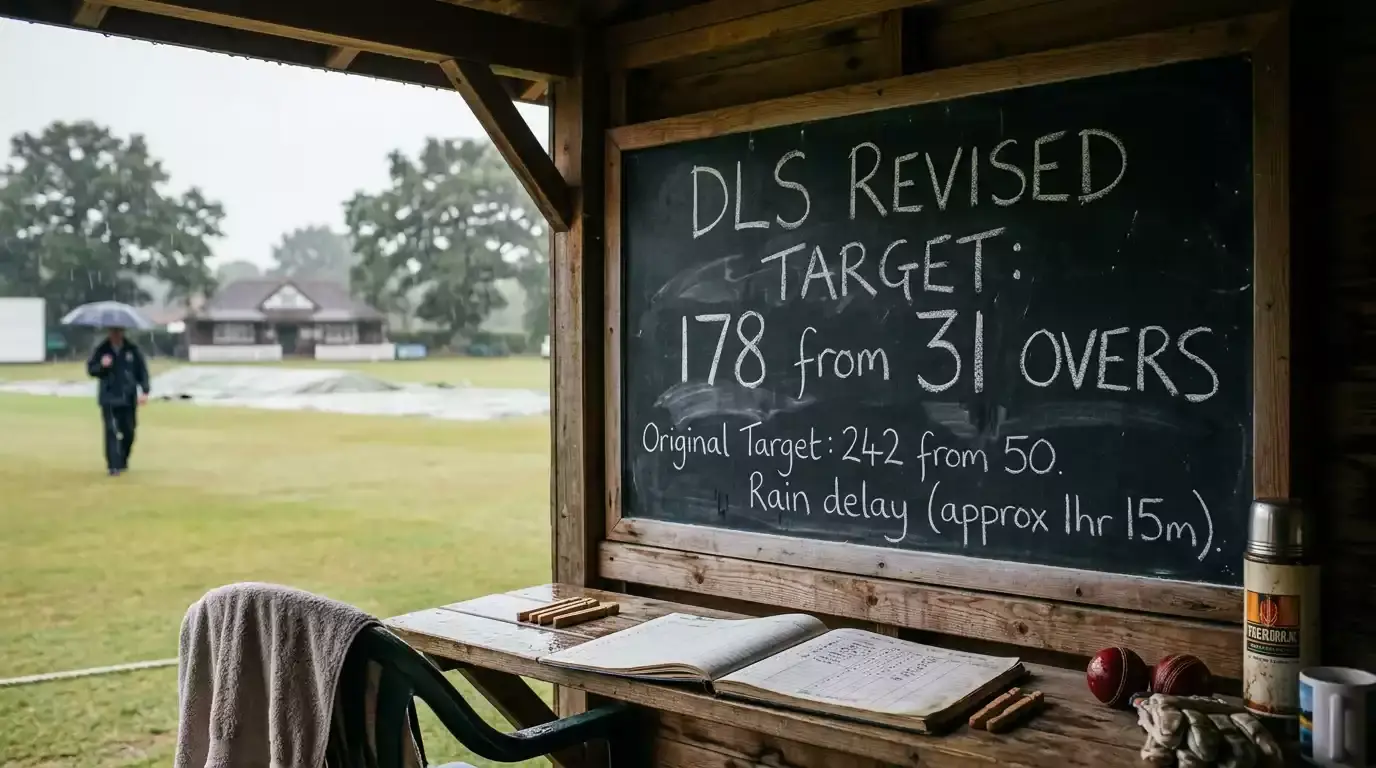
Applying DLS Calculations to Live Cricket Bets
I’ve watched grown men shout at television sets during a Manchester drizzle, and almost none of the shouting had anything to do with the cricket. It was about a target on a screen that had quietly moved while the covers were on. Eight seasons in and I still see punters check their bet slip during a rain delay as if the figure on it is fixed. It isn’t. The Duckworth-Lewis-Stern method — DLS — sits underneath every limited-overs market and quietly rewrites the maths the moment a single ball is lost.
The numbers around it are unforgiving. Sportradar’s odds product tracks over 7,000 pre-match and live cricket matches a year, and a meaningful slice of those are limited-overs games played in conditions where rain is at least possible. If you live in the UK and bet on the Vitality Blast, which packs 133 matches into the window from late May to mid-September, you will meet DLS more often than you’d like. Treating it as a footnote is how perfectly good bets quietly become losing ones.
How Duckworth-Lewis-Stern Actually Recalculates the Target
DLS isn’t a forecast. It’s an accountant. The method treats every batting innings as having two depleting resources — overs remaining and wickets in hand — and assigns a percentage of total run-scoring capacity to every combination of those two numbers. Lose overs to weather and the resource percentage drops; lose wickets and the same thing happens. The revised target is built around the chasing team’s available resources versus the team that batted first.
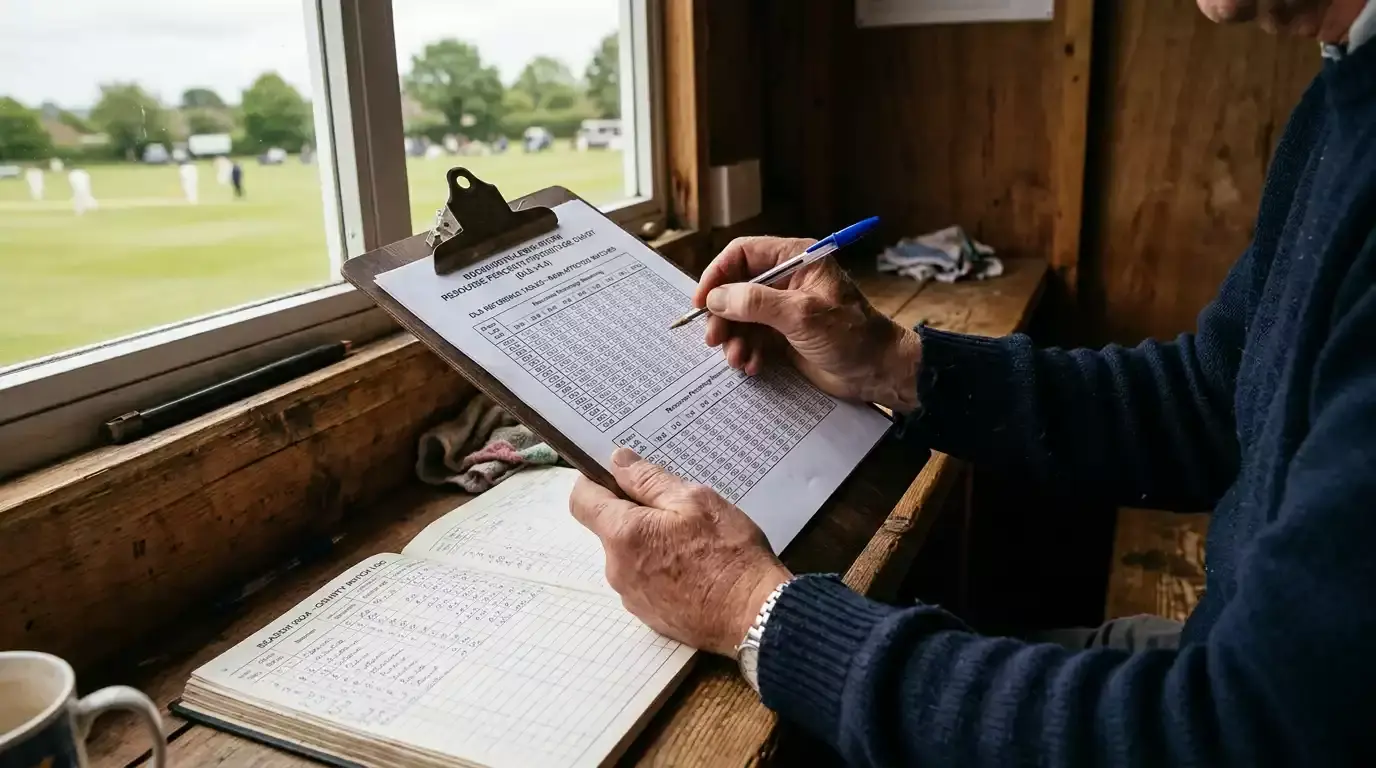
Take a T20 where the side batting first posts 168 from their 20 overs, using 100 percent of resources. Rain then reduces the chase to 14 overs with 10 wickets in hand. According to standard DLS resource tables, 14 overs with all wickets in hand is roughly 79 percent of full resources. The par score becomes 168 multiplied by 0.79, which rounds to 133. Add one and you get the revised target: 134. That’s not a flat run-rate adjustment. It’s not “overs lost, scale linearly”. It is a non-linear curve that gets generous when wickets are in hand and brutal when they’re not.
The Stern in the name is the upgrade for the modern game — Tony Stern reworked the original Duckworth-Lewis curves in 2014 because high-scoring T20 chases were behaving differently to the 50-over data that built the first version. If you’re betting on a Hundred match where 180 looks par, you’re betting against a resource model trained on exactly that kind of scoring rate. The maths is current. Treat it as the rulebook, not as a rough guide.
Par Score Markets: Pricing a Game That May Never Finish
I love the par-score market because it punishes lazy thinking. The sportsbook offers you a line — the chasing team’s score at a given over, projected against the DLS par at that same moment — and you bet over or under. It’s the cleanest expression of “is the chase on track” you’ll find on a cricket card. It also reprices faster than almost any other live market.
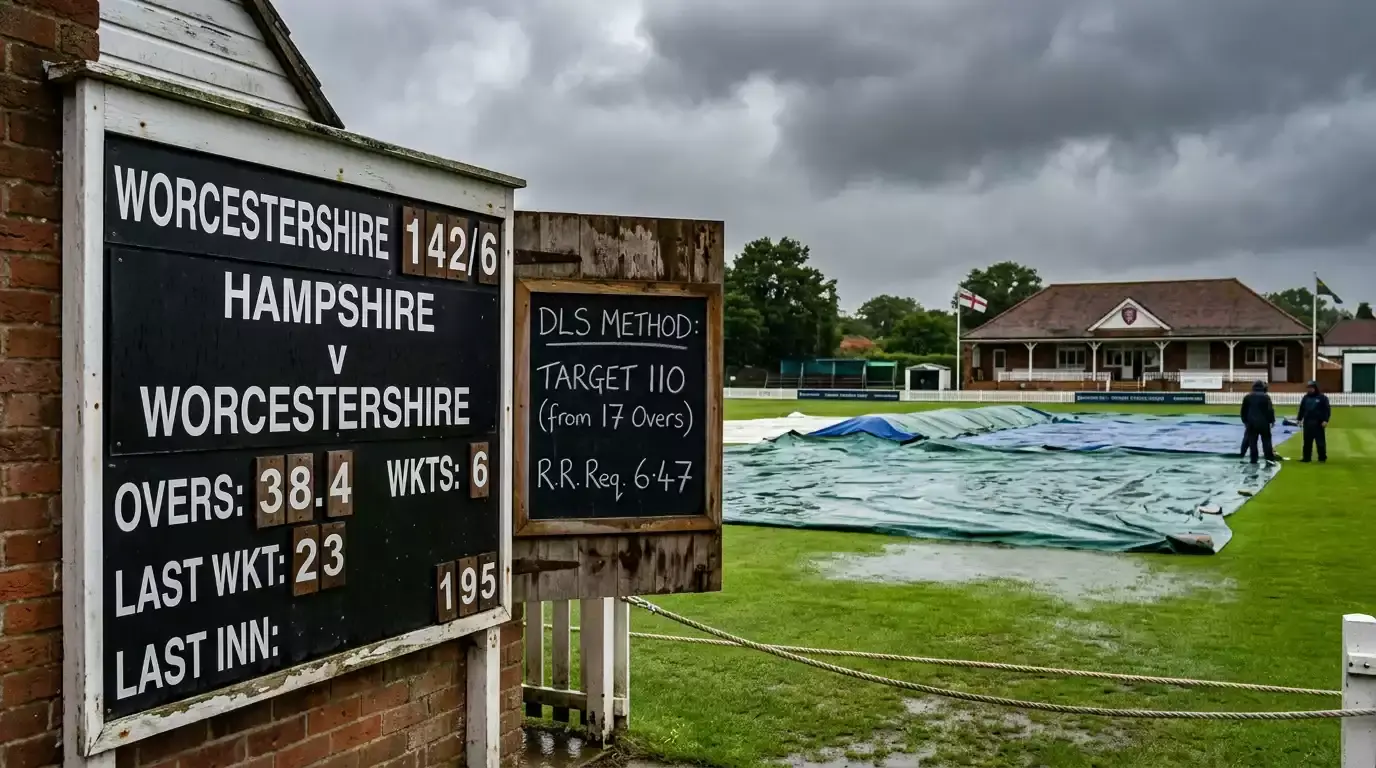
Two things move the par line. The first is overs bowled. As soon as we move from the fifth to the sixth over, the resource calculation shifts, and the par for “10 wickets in hand at that point” changes with it. The second is wickets. Lose two openers cheaply and the par jumps upward, because remaining resources collapse far more than the chase’s actual progress would suggest. Punters who haven’t sat with a DLS table get this backwards and assume a quick wicket only matters to the match-winner market.
The cleanest play I’ve made on par is during a Vitality Blast game at Edgbaston three seasons back, where rain pushed the second innings into a 12-over chase. The visiting side had lost an opener in the third over and the par line at 8 overs sat artificially low because the book had front-loaded a wickets-in-hand assumption. I took the over at evens. The chasers were behind par on the scoreboard but ahead of par on DLS, and the market took 20 minutes to catch up. That’s the entire opportunity in this market: the book’s number, your reading of the resource curve, and whether the two have diverged.
How UK Sportsbooks Settle Rain-Affected Bets
Here’s where every UKGC-licensed operator looks identical and slightly different at the same time. The framework is identical — DLS is the official ICC method, and every reputable book uses it for settlement. The detail varies in the rulebook: minimum-overs requirements, dead-heat handling on early abandonments, treatment of no-result settlements, and whether outright markets refund or stand.

A standard T20 settlement rule looks like this: if at least five overs of the second innings have been completed, DLS applies and the match has a winner; if fewer than five overs are bowled in the second innings, the match-winner market is void and stakes are refunded. ODIs typically require 20 overs of the second innings. The Hundred uses its own “balls bowled” equivalent — usually 25 balls of the second innings — but the principle holds. The same rules cover the “to win the toss and the match” double, top-batsman markets, and bowler totals.
Side markets get tricky. Top batsman, top bowler, method of first dismissal — most of these settle on the actual events of the abandoned game if the innings was deemed to have started under DLS-eligible terms. If the match never reached the threshold, those markets void. I always read the specific rules on a Hundred-on-the-Hundred card before I commit, because the sub-five-over rule from T20 doesn’t always transfer cleanly to a 100-ball format.
In-Play Behaviour During Rain Breaks: Suspensions, Reopens, Cash-Out
Rain is the only thing on a cricket card that produces silence from the sportsbook’s quoting engine. As soon as play stops, every live market on that match goes into suspension. Cash-out offers disappear. Already-placed bets sit on the slip and accrue nothing — no movement, no decay, no early payout — until the umpires call something. That something is one of three things: play resumes on the original terms, play resumes on revised DLS terms, or the game is abandoned and settlement happens.
When the markets reopen on revised terms, they don’t reopen at the price you last saw. The book has had time to recalculate the DLS par for the new overs allocation and update probabilities. Match-winner odds shift, totals are repriced lower, and top-batsman markets compress because there are fewer overs for an opener to compile a big score. If you had a cash-out offer at 12 quid before the rain and the new terms favour your bet, that cash-out figure might come back at 14. If they don’t, it might come back at 7. The number is not the same number — and there’s no “hold” on the old price.
DLS in T20, ODI, The Hundred: Where the Math Diverges
The same equation does different jobs in different formats. In a 50-over ODI, DLS has 50 overs of scoring data per innings to work with, and the resource curve is at its smoothest. Rain interruptions in ODIs tend to produce sensible-looking par scores because the format has the longest behavioural runway for the model. In T20, the resource curve is steeper at both ends — early wickets matter much more, and the back-end death overs are weighted heavily. A two-over rain delay in a T20 can swing the par line in ways that look harsh on the chasing side until you remember they’ve also kept all 10 wickets back.
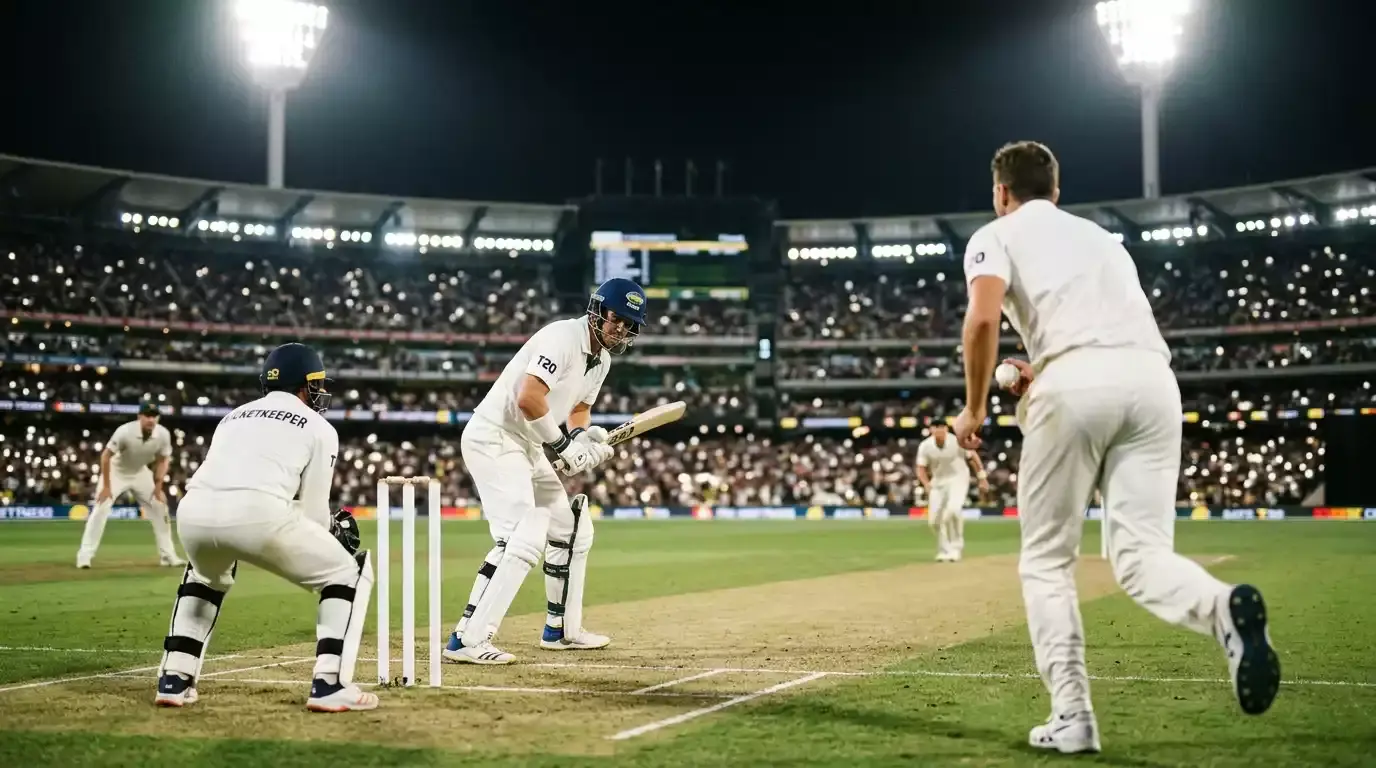
The Hundred is the format where I see most casual punters getting the maths wrong. Because it’s measured in balls rather than overs, the DLS adaptation looks different in the sportsbook UI — and the cut-off thresholds are slightly tighter. A 30-ball minimum on the second innings is roughly equivalent to a five-over T20 rule, but the resource percentage at that point isn’t quite a clean translation. Read the book’s specific rules every time, because what looks like the same format from a betting perspective has a different floor for “match counts”.
Rain is not the enemy of a cricket bet. The enemy is assuming your bet is the bet you placed. The DLS method changes the question being asked of the match the moment a single ball is lost, and the punters who know the resource curve are the ones who hold their cash-out the right side of even when the umpires walk back on.
For pre-match reading on the conditions that lead into a rain-delayed scenario, the pitch and weather work outlined in our guide to cricket pitch reports and weather is where I start every match-day routine.
